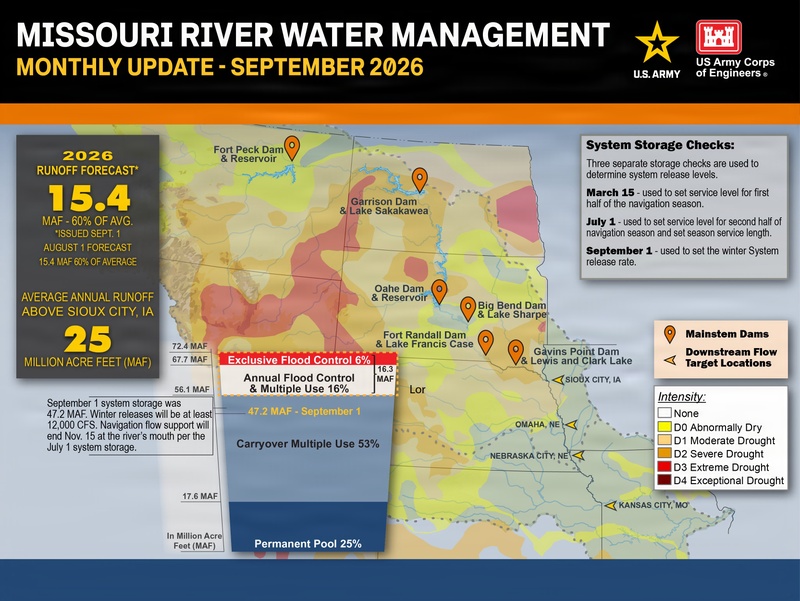
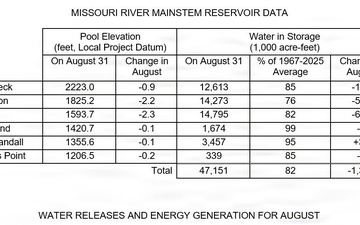
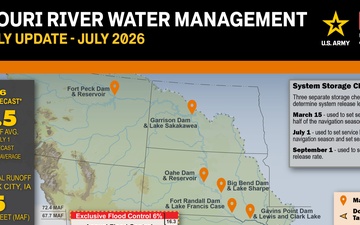
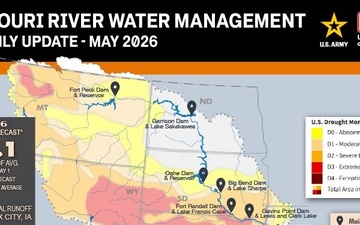
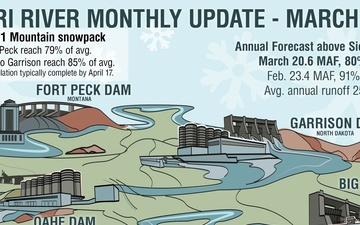
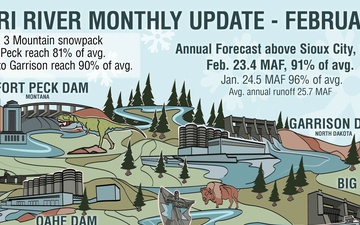
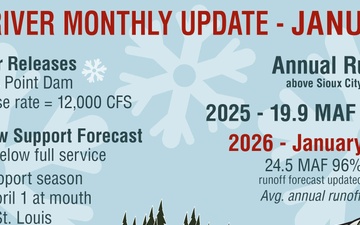
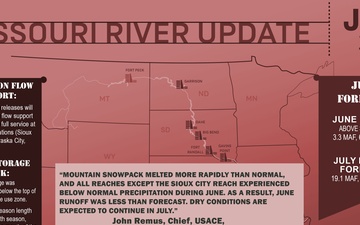
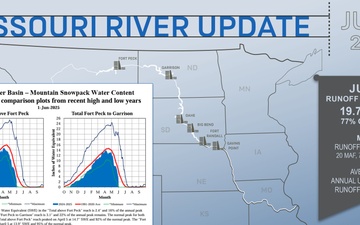
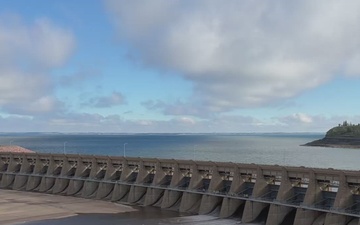
OMAHA, NE – August runoff in the Missouri River Basin above Sioux City, Iowa was 1.0 million acre-feet (MAF), 73% of average. Runoff was well below normal in the Fort Peck and Garrison reaches due to dry soil moisture conditions and areas of below-normal precipitation. Runoff was above normal for the Oahe, Fort Randall, and Gavins Point reaches, and near normal in the Sioux City reach, mostly due to above-normal precipitation during parts of August.
“August runoff was higher than forecast in the lower reaches of the upper Missouri River Basin above Sioux City due to late summer rainfall. In addition, rainfall below Gavins Point allowed the System reservoirs to maintain lower release rates while meeting the reduced navigation flow...
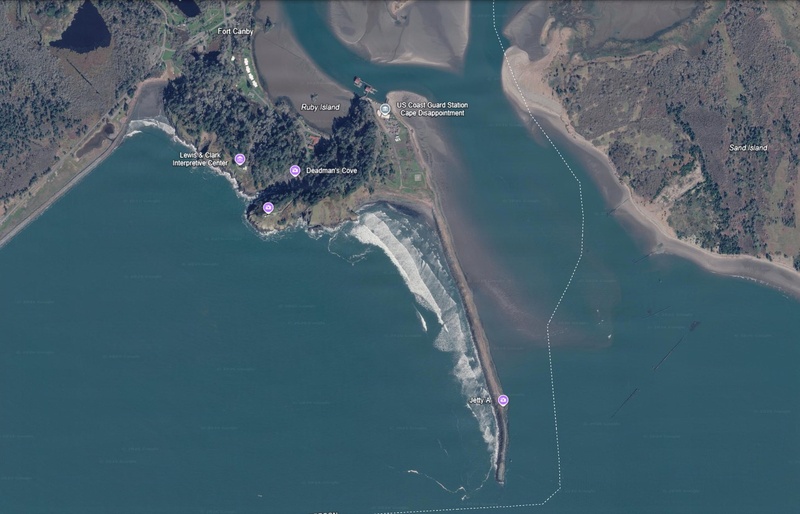
This satellite image shows the rugged headlands of Cape Disappointment and Jetty A extending into the turbulent meeting point of the Columbia River and the Pacific Ocean. Known as the "Graveyard of the Pacific," this region requires the constant vigilance of the nearby U.S. Coast Guard station to manage one of the world's most dangerous maritime passages.
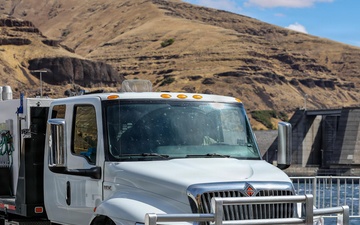
At McNary Lock and Dam, Unit 14 is first in a program to replace 75-year-old turbines across all 14 main generating units. The first installation uses a five-bladed adjustable runner designed for McNary, with project objectives that include improved reliability, turbine efficiency and fish passage. The work reflects continued investment in critical Columbia River infrastructure and the teams responsible for delivering it safely.