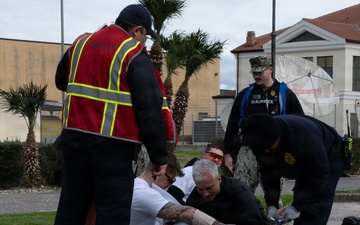
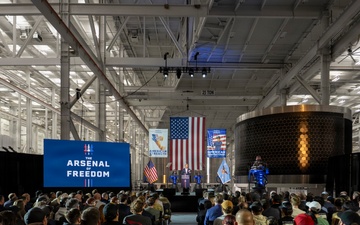
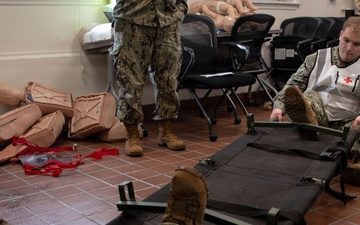
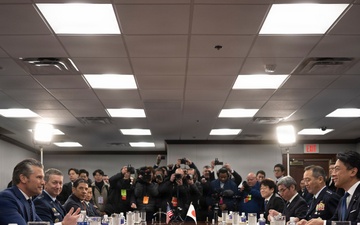
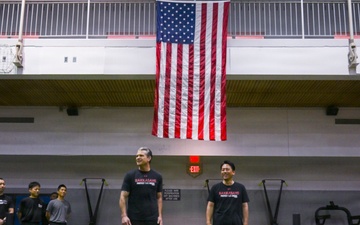
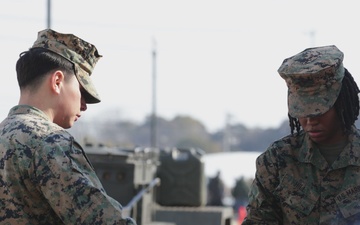
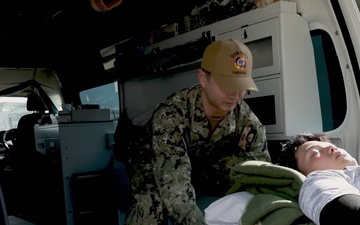
U.S. Marines and Sailors with Headquarters and Headquarters Squadron, Marine Corps Air Station Iwakuni, Marine Wing Support Squadron 171, Marine Aircraft Group 12, U.S. Navy Sailors with the Naval Family Branch Clinic Iwakuni and Japan Ground Self-Defense Force members participate in a simulated natural disaster scenario during exercise Nankai Rescue 2026 at MCAS Iwakuni, Jan. 24, 2026. Exercise Nankai Rescue 2026 is a bilateral exercise designed to enhance coordination between the U.S. and Japan in support of humanitarian and disaster relief efforts. The Nankai trough is an active seismic underwater fault line that runs along Japan’s Pacific coast. (U.S. Marine Corps video by Cpl. Isabella Mancini)
Hungry individuals don’t put much thought into the packaging of their food. When people grab a snack, they generally rip into it and toss it aside to get to the good stuff.
Batteries for cellphones and other small devices deplete quickly outside in the winter. To make sure warfighters are focused on the mission — and not the temperature or malfunctioning equipment — War Department experts are creating specialized technology and adapting current equipment to survive in frigid climates.
WASHINGTON — United States Army Soldiers proved the most lethal and combat-ready force in the world in 2025. From showcasing advanced warfighting capabilities and tactics, securing and defending the nation from within our borders, to proving our skills in international conflict, there is no doubt the U.S. Army’s training prepares Soldiers to fight and win.
WASHINGTON — The United States Army has consistently transformed to meet the needs of its people, equipment, tactics and strategy over the past 250 years. The year 2025 was no different. Army senior leaders demonstrated this year that no challenge is too great to overcome if new ways of thinking are applied to find solutions. The Army addressed quality-of-life concerns integral to Soldier morale, identified “out-of-the-box” methods to...