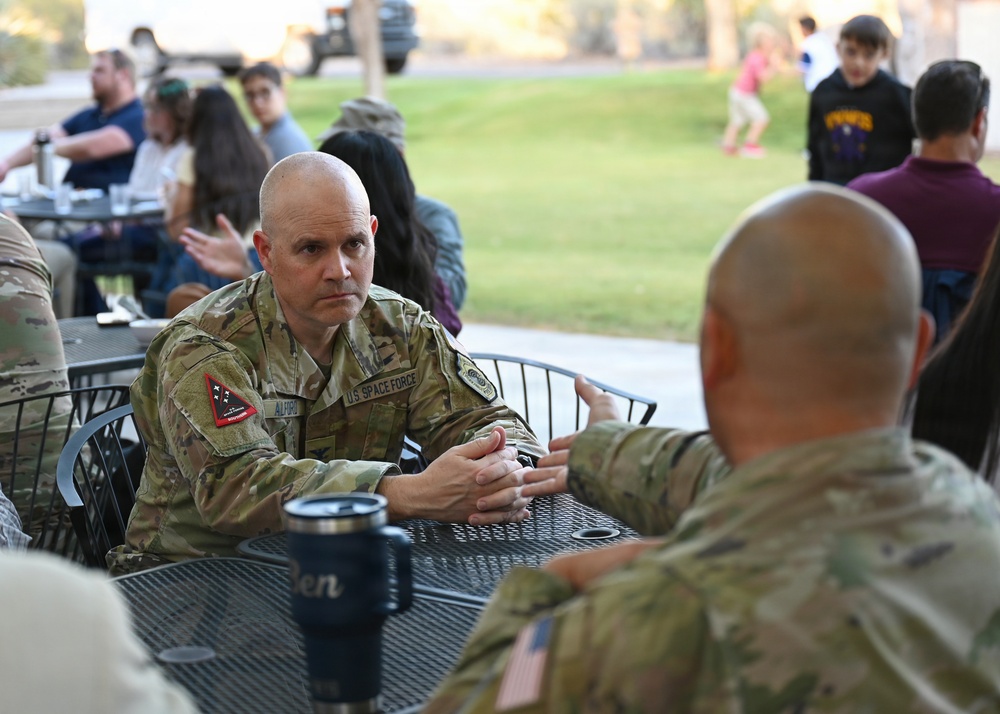
Photo By Staff Sgt. Abbey Rieves | U.S. Space Force Col. Brandon Alford, Space Forces Southern commander, interacts with participants during a space immersion tour at the Space4 Center in Oracle, Arizona, May 27, 2026. The immersion tour was designed for furthering SPACEFOR-SOUTH’s relationship with space educational facilities. (U.S. Air Force photo by Staff Sgt. Abbey Rieves) see less
| View Image Page
ORACLE, Az—U.S. Guardians assigned to Space Forces Southern, Foreign Liaison Officers and family members stepped into the world of orbital operations during an immersive space domain awareness experience in Oracle, Arizona, May 27.
The University of Arizona’s Space4 Center is the nation's largest academic space domain awareness program, supporting ongoing research, education and partnership opportunities.
“SPACEFOR-SOUTH has been integrating with the U of A to build a military and academia partnership,” said U.S. Space Force Lt. Col. Alina Matson, SPACEFOR-SOUTH director of operations. “It benefits us in a lot of ways. It's a national approach to space from a scientific to national security front a win-win situation.”
In addition to furthering SPACEFOR-SOUTH’s relationship with space educational facilities, the visit provided an opportunity to showcase space capabilities to critical military representatives from partner nations. Collaborations like these encourage interoperability opportunities and strengthen partnerships for combined space operations throughout the U.S. Southern Command area of responsibility.
“Thank you for the opportunity to share this with our foreign liaison officers here,” said Chilean air force Col. Ignacio BAEZA Muñoz, Air Forces Southern foreign liaison officer. “Without a doubt, the visit was of immense cultural, professional, and personal value.”
Including the Guardian and FLO family members in the immersion experience helped families better understand the complex space missions their loved ones support on a day-to-day basis.
“You don’t have this kind of facility in every country; in Chile, there is one and we have never been there,” said Karole, spouse of Muñoz. “We didn’t have the opportunity to see something like this [before] and it's amazing to learn, to share, and to meet new people. It gives you an opportunity to not just investigate and learn, but to be part of something.”
From tracking satellites to monitoring space debris, families were able to see how space capabilities directly impact everyday activities, like weather forecasting, banking systems and cell phone networks, which depend entirely on successful satellite operations.

 Subscribe






