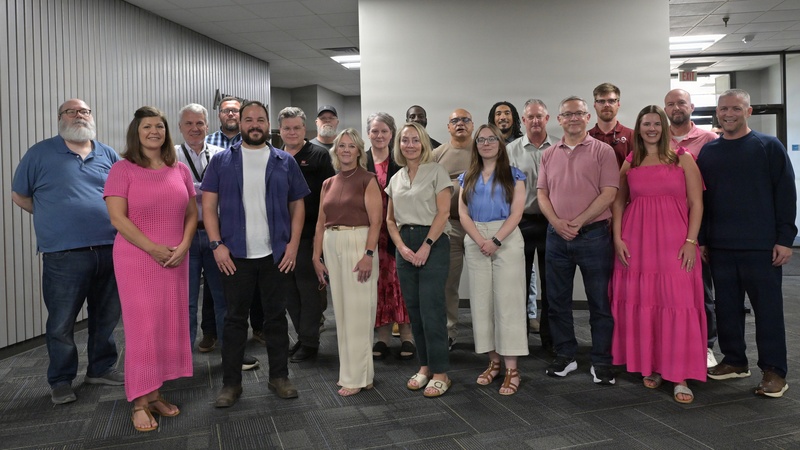
TULSA, Okla. —The Tulsa District, U.S. Army Corps of Engineers was named the “2026 District of the Year for Excellence in Contracting” through the Excellence in Contracting Awards Program, Aug. 20.
The ECAP recognizes the achievements and contributions of the USACE contracting workforce for continuing and exceptional commitment to the nation through the USACE acquisitions mission.
“Being named District of the Year is an incredible honor, but what I am most proud of is the teamwork behind it. Delivering a program of this scale is not just a contracting achievement because it is a district-wide effort that requires a true 'One Team' mindset,” said Brian Hutchison, Chief of Contracting Division, Tulsa District, USACE. “Our...
Stratocumulus clouds hover over Keystone Dam near Sand Springs, Okla., as the sun lights the gates and stilling basin on a calm morning, Sept. 1, 2026. Keystone Dam is one of eight Tulsa District, U.S. Army Corps of Engineers dams with a hydroelectric power mission. The two 35,000 kW generating units were designed to produce up to 70 megawatts combined. The structure's primary purpose is to reduce flood risk for communities along the Arkansas River downstream. Constructed between 1957 and 1964, Keystone Dam's authorized purposes include water supply, navigation, recreation and fish and wildlife. (U.S. Army photo by Brannen Parrish)
Oologah Auxiliary Dam releasing approximately 6,200 cubic feet of water per second into the Verdigris River near Oologah, Okla., June 25, 2026. Oologah Dam and Oologah Lake are owned and operated by the Tulsa District, U.S. Army Corps of Engineers. Oologah Dam was completed in 1974. The main spillway was closed for repairs to the stilling basin in May 2026 and rainfall in the region in May and June required use of the auxiliary dam and spillway for water releases.