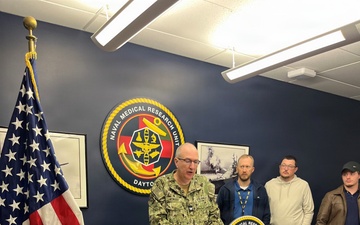
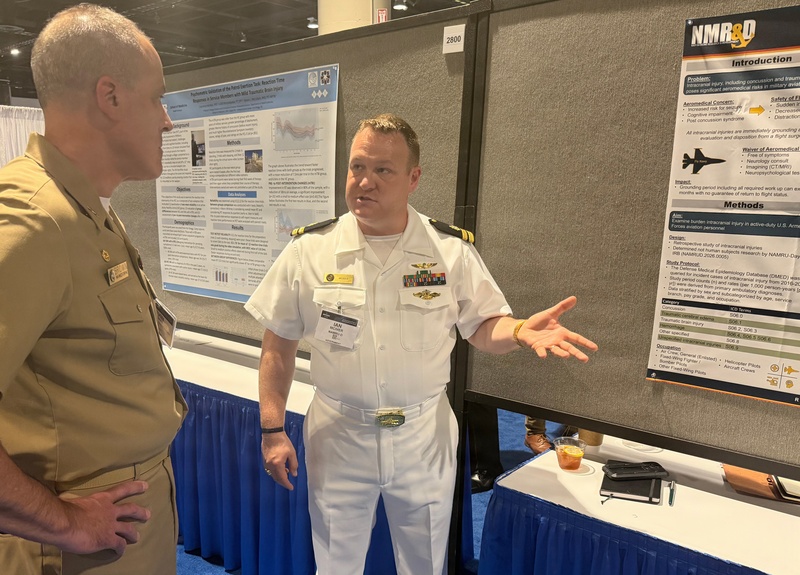
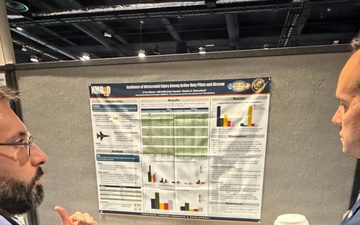
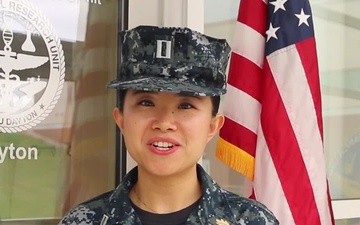
KISSIMMEE, Fla. (Aug. 4, 2026) Lt. Cmdr. Ian McIver, a flight surgeon with Naval Medical Research Unit (NAMRU) Dayton, discusses his research poster, “Incidence of Intracranial Injury Among Active-Duty Pilots and Aircrew,” with Rear Adm. Kevin J. Brown, commander of Naval Medical Forces Pacific (NMFP), during the Military Health System Research Symposium (MHSRS). MHSRS is the DoD’s premier scientific meeting, focusing specifically on the unique medical needs of service members. This annual educational symposium brings together healthcare professionals, researchers and DoD leaders for four days of critical learning, intensive idea sharing and relationship building. NAMRU Dayton, part of Navy Medicine Research & Development, participates in medical research and development efforts dedicated to advancing warfighter lethality by protecting and enhancing health, readiness and performance through cutting-edge toxicology, environmental health and aerospace medical studies. Navy Medicine’s 44,000+ talented and ready forces optimize health readiness, deliver quality healthcare and provide global expeditionary medical support to warfighters. (U.S. Navy photo by Zachary Wilson /Released)
Taken: 08.04.2026 | Photo by Zachary Wilson