What began as a dredging operation to deepen Savannah Harbor evolved into what might be one of the most significant underwater archaeological discoveries in Savannah’s history, and now, those artifacts have officially been unveiled at their new home, the Savannah History Museum.
In early 2021, U.S. Army Corps of Engineers dredge crews working on the Savannah Harbor Expansion Project unexpectedly lifted a cannon from the riverbed during dredging operations. Another scoop, and two more followed. At that point, dredging work was halted and archeologists and divers were called in to investigate.
The discovery led to a coordinated recovery effort that ultimately uncovered 21 cannon and additional artifacts, including anchor fragments and pieces of a ship’s bell, from the bottom of the Savannah River, where they had remained hidden for nearly 250 years.
Some of the cannon were brought up in pieces, and two of the fragmented cannon have been on display at the Savannah History Museum as place holders and unintentionally demonstrated the effects of corrosion without proper conservation. Fortunately, 17 cannon and a few other artifacts were sent to the Conservation Research Laboratory at Texas A&M University in February 2023. They remained there for more than three years while experts carefully removed corrosion, stabilizing the iron, removed wood plugs, paper wads, cannon balls and intact gunpowder wads from inside 14 of the cannon. They also conducted scientific analysis on the artifacts.
“Research suggests the cannons are connected to vessels scuttled by British forces in 1779 during the Siege of Savannah, which is noted as one of the bloodiest battles of the American Revolution,” said Andrea Farmer, U.S. Army Corps of Engineers’ Savannah District archeologist. “According to historical documents, the ships were intentionally scuddled in the river to block French forces attempting to retake the city. Although inconclusive, we believe the cannon possibly come from the HMS Savannah and the HMS Venus.”
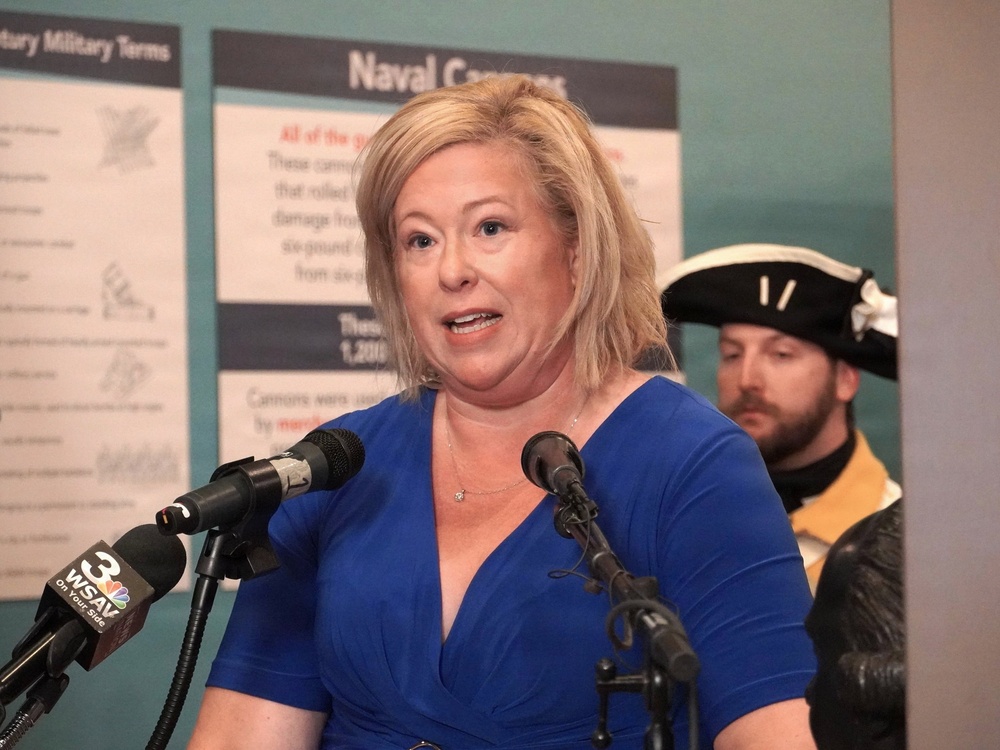
The 17 fully conserved cannon and other artifacts officially returned to Savannah June 3, 2026, and today (July 2), these relics from the past began a new chapter; They officially went on public display at the Savannah History Museum as the “Loyalists and Liberty: Savannah in the American Revolution” exhibit, after the official unveiling ceremony.
“The discovery and conservation efforts have been a true partnership between the U.S. Army Corps of Engineers, Georgia Coastal Heritage Society, Chronicle Heritage, Texas A&M, archaeologists, divers, historians and preservation specialists,” said Col. Ron Sturgeon, U.S. Army Corps of Engineers’ Savannah District commander. “And those partnerships are ultimately about connections. Connections between agencies, connections to our past, connections to the people who lived through those events and connections to the history that helped shape our nation and this city.”
The harbor improvement project ultimately uncovered a tangible connection to the United States’ fight for independence and provided new insight into Savannah’s pivotal role in the Revolutionary War. Coastal Heritage Society has collaborated alongside the Corps of Engineers and conservation experts to plan for the artifacts’ long-term curation. Museum staff have spent months designing mounts, preparing exhibit space and developing interpretive displays that place the cannon within the broader story of Savannah’s role in the nation’s founding.
Today, the cannon are more than archaeological artifacts on display for all to see. They represent what can be accomplished when partnerships are forged and those organizations work together toward a common goal.
“Now, when visitors walk into the Savannah History Museum, they will encounter artifacts that were once buried beneath the river and helped shape the city’s history,” said Nora Fleming Lee, Coastal Heritage Society chief executive officer. “Thanks to years of collaboration among public agencies, academic institutions and nonprofit partners, these long-lost treasures have returned home and will now be shared with the public for generations to come.”
The exhibit opening coincides with the United States’ 250th anniversary celebrations. Unfortunately, because the paper artifacts found inside the cannon are delicate and will deteriorate quickly if exposed to light and other elements for too long, they will not be a permanent part of the display.
| Date Taken: |
07.02.2026 |
| Date Posted: |
07.02.2026 17:37 |
| Story ID: |
569322 |
| Location: |
SAVANNAH, GEORGIA, US |
| Web Views: |
256 |
| Downloads: |
0 |
PUBLIC DOMAIN

This work, From riverbed to museum: Revolutionary War cannon found during Savannah Harbor Expansion Project have a new home, by Cheri Dragos-Pritchard, identified by DVIDS, must comply with the restrictions shown on https://www.dvidshub.net/about/copyright.