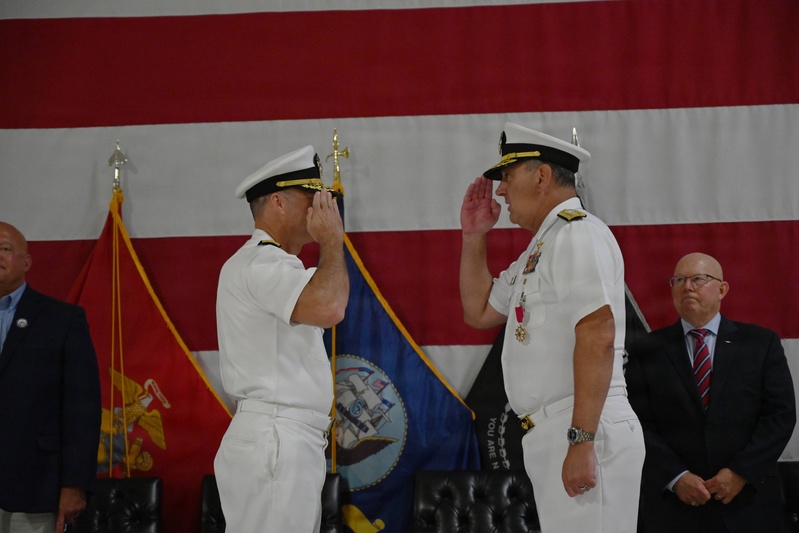
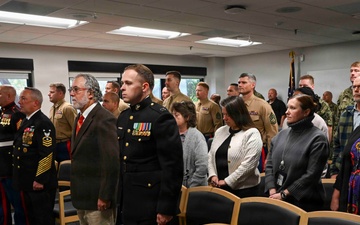
Naval Safety Command (NAVSAFECOM) held a change of command ceremony at the Center for Naval Aviation Technical Training Unit Oceana Ceremonial Hangar on Sept. 11, where Rear Admiral Todd E. Whalen relieved Rear Adm. Dan “Dino” Martin as the 60th commander of the Navy’s safety organization. Retired Vice Admiral DeWolfe Miller III delivered remarks as the keynote speaker.
Martin, a career F/A-18 Hornet pilot, assumed command of NAVSAFECOM in August 2024.
“As I stand here before you, I am proud of the achievements that the men and women of the Naval Safety Command have made over the past two years,” Martin said. “Two years ago, I said, ‘Self-inflicted wounds that pull player off the field are just that: self-inflicted. These...
09.11.2026 | VIRGINIA BEACH, VIRGINIA, US |
Courtesy Story
Naval Safety Command (NAVSAFECOM) held a change of command ceremony at the Center for Naval Aviation Technical Training Unit Oceana Ceremonial Hangar on Sept. 11, where Rear Admiral Todd E. Whalen relieved Rear Adm. Dan “Dino” Martin as the 60th commander of the Navy’s safety organization. Retired Vice Admiral DeWolfe Miller III delivered remarks as the keynote speaker.
Martin, a career F/A-18 Hornet pilot, assumed command of NAVSAFECOM in August 2024.
“As I stand here before you, I am proud of the achievements that the men and women of the Naval Safety Command have made over the past two years,” Martin said. “Two years ago, I said, ‘Self-inflicted wounds that pull player off the field are just that: self-inflicted. These...
09.11.2026 | VIRGINIA BEACH, VIRGINIA, US |
Courtesy Story
Naval Safety Command (NAVSAFECOM) held a change of command ceremony at the Center for Naval Aviation Technical Training Unit Oceana Ceremonial Hangar on Sept. 11, where Rear Admiral Todd E. Whalen relieved Rear Adm. Dan “Dino” Martin as the 60th commander of the Navy’s safety organization. Retired Vice Admiral DeWolfe Miller III delivered remarks as the keynote speaker.
Martin, a career F/A-18 Hornet pilot, assumed command of NAVSAFECOM in August 2024.
“As I stand here before you, I am proud of the achievements that the men and women of the Naval Safety Command have made over the past two years,” Martin said. “Two years ago, I said, ‘Self-inflicted wounds that pull player off the field are just that: self-inflicted. These...
09.11.2026 | VIRGINIA BEACH, VIRGINIA, US |
Courtesy Story
This video was made in Adobe After Effects and Adobe Premiere Pro to promote weapons safety. The Naval Safety Command enables the Navy's ability to identify, communicate and account for risk through assessments, investigations and Navy-wide policy development. (U.S. Navy video by Mass Communication Specialist 2nd Class Felix Castillo Reyes)
In the Marine Corps, accountability isn't a buzzword; it's the bedrock of trust between the Marine on your left and right. We are entrusted with immense responsibility, from the fire team to the Marine Expeditionary Force, and with that comes an absolute requirement for accountability, not just for our careers, but for the readiness of our unit and the welfare of our team.
Tower rappelling is a high-risk activity demanding strict adherence to safety protocols. Whether for training, rescue or recreation, proper use of equipment, knowledge of knots and effective rope management are important to prevent accidents and ensure a safe descent.
One of the unique features of the Staff Non-Commissioned Officer Degree Completion Program (SNCODCP) is it allows enlisted Marines to finish their degree by attending college full-time and fully funded on a college campus.
The Marine Corps operates in some of the world’s loudest environments. The importance of hearing conservation in the Marine Corps cannot be overstated. Auditory readiness often makes the difference between mission success and failure.
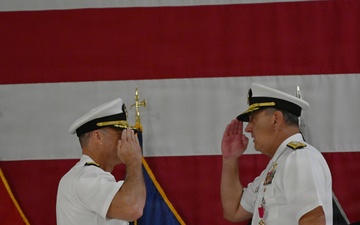
Rear Admiral Todd E. Whalen (left) relieves Rear Adm. Daniel P. Martin (center) as the 60th commander of the Naval Safety Command during a change of command ceremony at the Center for Naval Aviation Technical Training Unit, Sep. 11, 2026. The Naval Safety Command enhances the Navy's ability to identify, communicate and account for risk through assessments, investigations, and Navy-wide policy development. (U.S. Navy photo by Mass Communication Specialist Benjamin F. Davella III)