
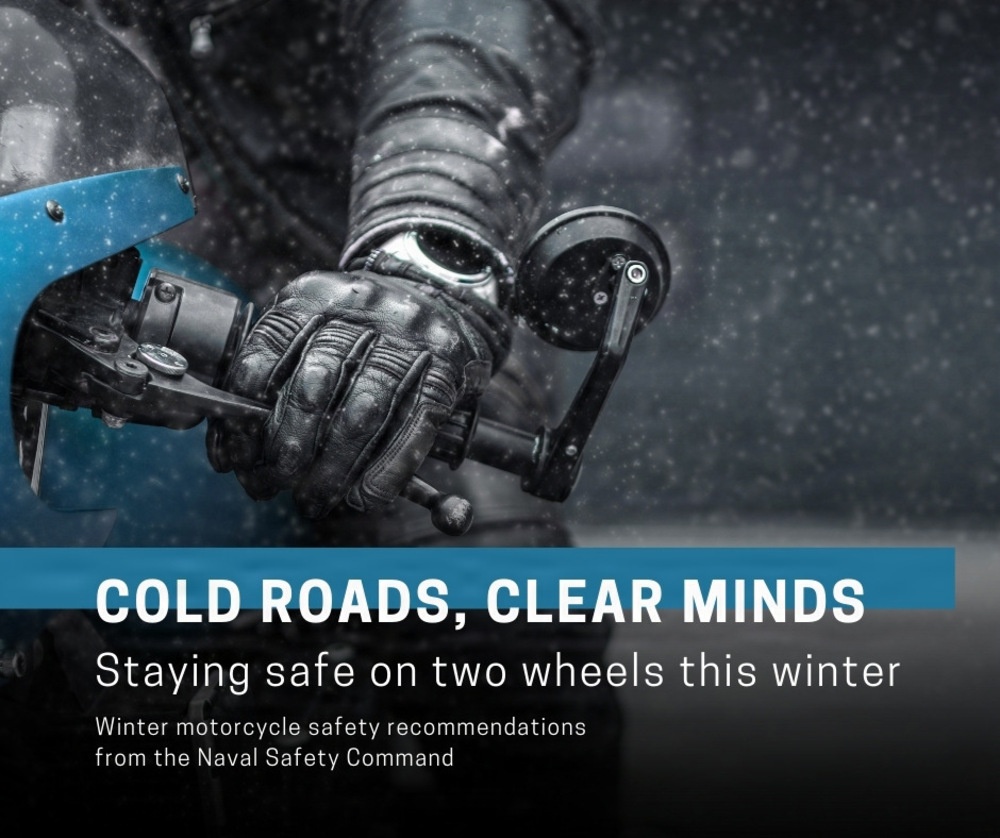
Photo By Melissa Wenger | Whether you're a casual rider or someone who rides year-round, winter motorcycle...... read more read more
 Subscribe
As we experience shorter days and colder temperatures, many motorcyclists choose to store their bikes for the winter season. In areas where freezing or near-freezing conditions are routinely present, riders should make every effort to use alternate modes of transportation. However, for some riders, winter riding becomes an integral part of their riding experience. Whether you're a casual rider or someone who rides year-round, winter motorcycle riding requires more than just a willingness to brave the elements; it demands preparation, skill and the right mindset.
In winter, cold weather is enemy No. 1, and gear becomes your first line of defense. “Dress for the crash, and not for the ride,” said Senior Chief Adam Terrell, Naval Safety Command’s (NAVSAFECOM) Motorcycle and Traffic Safety representative with over a decade of riding experience. “Layers will protect you both from the cold weather and crash-related injuries.”
Riders can protect themselves from the top down, starting with layers beneath a high-quality DOT-approved helmet. As Terrell suggests, “Wear a balaclava, [which is] just a hood you can wear over your head that fits inside of your helmet that'll cover everything from your nose, your mouth, all the way down your neck, and you can tuck it into your jacket.” A neck gaiter or storm collar can also keep your neck warm and dry during winter weather.
Between winter’s cold weather conditions and shorter daylight hours, reduced visibility becomes a major concern. Ensure your helmet provides a snug fit and prevents fogging, which is especially important as your breath steams up the face shield. Consider a heated visor or anti-fog spray to maintain clear visibility. Moisture-wicking base layers topped with weatherproof insulation are essential for staying warm and dry during winter rides. Sweating in the cold can accelerate the risk of hypothermia, making moisture-wicking layers crucial for managing perspiration. Windproof and waterproof outer layers with insulation trap heat and block moisture, ensuring you stay comfortable and protected against the elements.
Keeping your hands and feet warm is crucial for comfort and safety during winter motorcycle rides. Insulated, weatherproof gloves prevent numbness from the cold, which can reduce dexterity and control. Water-resistant boots with good insulation keep your feet dry and warm. A solid tread can ensure better traction while riding in winter conditions.
Each of these items should ensure warmth doesn’t impede safety. “Just like you would get dressed for walking around in the winter, you get dressed for riding in the winter,” said Terrell. “But you don't want to dress in so many layers that either you overheat or you are unable to maneuver the bike because you’re too stiff. You still need to feel your brakes and controls, even in the coldest conditions.”
Winter weather presents more than just cold temperatures; it also brings hazards like ice, snow and reduced visibility. From wearing proper gear to adapting to treacherous road conditions, it’s crucial to take a proactive approach to prepare for winter’s challenges.
Before hitting the road, it's important to properly warm up both yourself and your bike, as cold temperatures can significantly impact your tire performance and overall handling. “When you throw a cold tire on a cold street, you have less traction,” said Terrell. “If you throw a warm tire on a cold street, you still have less traction. It’s crucial to make sure your tires are properly inflated, in good condition and have ample tread life.”
Frosty conditions also influence how the rubber meets the road, literally. “Anything on a road affects a motorcycle's ability for traction,” said Terrell. “Whether it be snow, salt, sand, leaves or grass clippings, those are all like ice to us because we only have two points of contact on the road, and that's our front and our back tires. So we should approach rain or snow with the same level of caution.”
Winter weather can also be unpredictable, with sudden changes. Riders should be cautious about road conditions that may look clear but are deceptively dangerous. “Areas that are normally sketchy like side streets and on/off ramps with overhanging trees or heavily shaded areas become death traps when you factor in winter weather conditions,” said seasoned motorcycle rider Ryan Lowder, NAVSAFECOM Traffic Safety Program manager.
It's important to stay flexible and adapt your riding style as conditions change. “Riders must be especially vigilant for black ice, which is nearly invisible,” said Lowder. “A sudden change in grip can indicate ice. If you feel your tires slipping, immediately reduce speed and try to regain control by counter steering in the direction of the skid. Be careful to avoid over-correction.”
Winter conditions can also make it harder for drivers to see motorcyclists. In addition to riding with your headlights on, opt for high-visibility clothing with reflective elements, making you more noticeable to other road users. “The brighter, the better,” Terrell emphasized. “If you have a reflective vest, wear it. You always want to wear contrasting colors, nothing dark. When it comes time for things like fog, the best thing that you can do is wear reflective equipment.”
Winter riding can be both a mental and physical test. Physically preparing both your bike and your gear is equally as important as mental preparation. “There's the psychological aspect of you acknowledging that you're cold,” said Terrell. “Being cold affects everybody, but if you've taken the right precautions, you can minimize the effects of the weather and focus more on the ride.”
One of the biggest risks of winter riding is overconfidence. Many riders are used to good weather conditions and underestimate the challenges posed by cold weather. Winter requires more skill and awareness, and it’s easy to let your guard down, which can lead to serious accidents. Cold weather can impair your physical abilities. Your reaction time may be slower when you’re bundled up, and the cold can cause stiffness in your joints, which can make it harder to maneuver your bike.
Riders should reduce their speed and increase their following distance to account for longer stopping times and slippery road conditions. “Reduced tire grip due to moisture, temperature and the presence of ice can prove deadly if not identified and accounted for,” said Lowder. “Reducing speed to match conditions and not overriding your skill level is essential.”
When riding in adverse weather, it's important to be smooth with all actions. Avoid abrupt acceleration and braking, as sudden movements can lead to skidding on slippery surfaces. Staying flexible is vital. Keep a relaxed posture and be prepared for sudden shifts in weight distribution. Being rigid can make the bike harder to control in unpredictable winter conditions.
According to Terrell, "Most modern motorcycles come with different ride modes, which adjust the motorcycle's traction control, power output, throttle response, anti-lock braking and suspension to improve stability." These built-in features are designed to enhance safety by optimizing performance in challenging winter conditions.
It’s important not to entirely rely on these modes and to make sound decisions, too. “It still comes down to the input of the rider,” said Terrell. “If they know that they're coming up on a stop sign and the road conditions are different than when they're dry, then they'll need to increase their stopping distance while staying as visible as they can to the drivers behind them.”
Riding a motorcycle in the winter requires careful preparation, the right mindset, and the appropriate equipment. By taking the time to equip yourself properly, adjust your riding style and ensure your motorcycle is ready for cold weather, you can safely enjoy the ride, even in the harshest conditions. Stay smart, stay safe and keep riding responsibly!
For year-round motorcycle safety resources, visit NavalSafetyCommand.Navy.mil/Motorcycle-Safety.
| Date Taken: | 12.02.2025 |
| Date Posted: | 12.04.2025 12:53 |
| Story ID: | 552950 |
| Location: | US |
| Web Views: | 333 |
| Downloads: | 2 |

This work, Cold roads, clear minds: staying safe on two wheels this winter, by Melissa Wenger, identified by DVIDS, must comply with the restrictions shown on https://www.dvidshub.net/about/copyright.


No keywords found.




