(Courtesy article by Marissa Lindsey-Farnham and Sepp Scanlin, U.S. Army Transportation Museum)
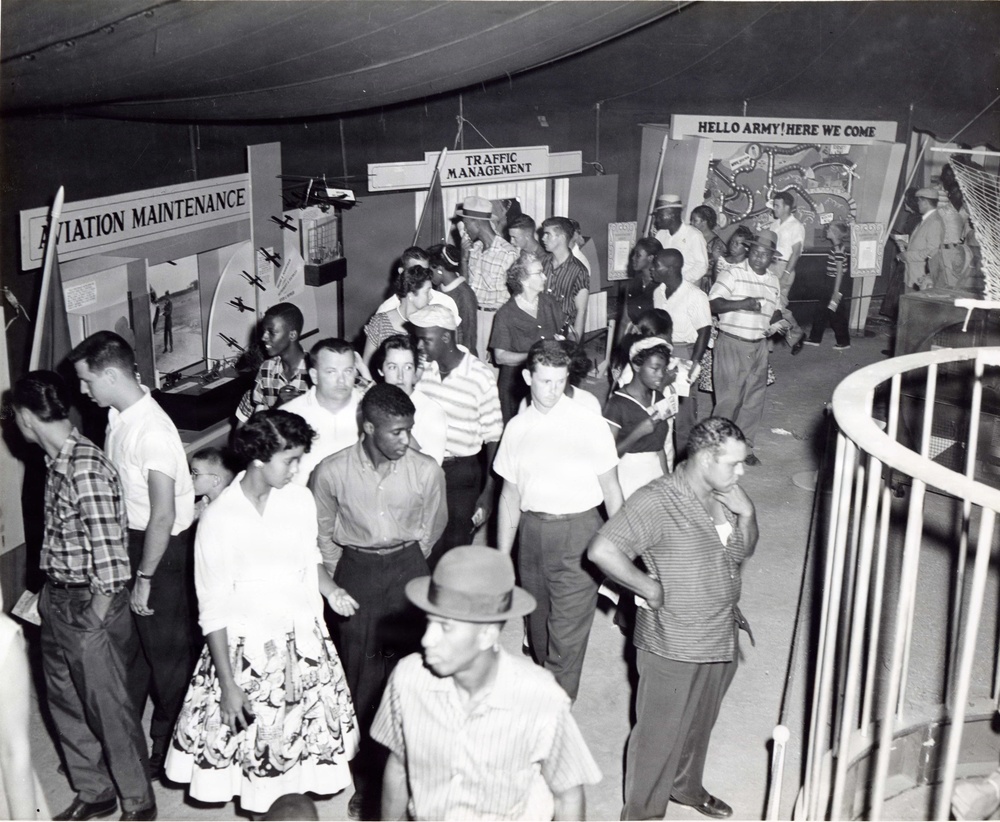
The Transportation Corps, one of only two branches established during World War II, saw the utility of preserving its history to train and inspire the Soldiers of the Transportation Corps during its earliest years. The first efforts came in the form of the “Transportation Circus” established in 1949 and operated through the 1950s. Operated by the newly consolidated U.S. Army Transportation School at Ft. Eustis, Virginia, the “Transportation Circus” provided displays and presentations on the role of transportation during conflict and within the modern Army. From Army Divers to the rapidly expanding field of Rotary Wing Aviation Maintenance, the circus showcased Transportation Corps diverse technology and various skills and specialties.
An interest in preserving the Transportation Corps’ developing history to help inform the future led some early advocates to convert elements of the Transportation Circus into a permanent Army Transportation Museum. In 1959, the new museum acquired its first residence consolidating material from the Transportation Circus with unique piece of technology like the Army Avro-Car, one of only two ever built, in a former warehouse on Ft. Eustis, Virginia. The move was an organic effort within the Transportation Corps; artifacts were donated by veterans or transferred directly from the Transportation Corps itself. It operated as an ad hoc organization with volunteer labor, until June 11, 1965, when the Museum was formally recognized as part of the Army Museum System.
With formal recognition of the museum, the Transportation Corps began to explore building a dedicated museum facility to house the growing collection and history. In 1970, the Army Transportation Museum Foundation was formed as a non-profit to support the raising of funds to build a permanent museum. The members and veterans of the Transportation Corps gave their full support, raising enough funds in the first year to begin the construction project. The formal groundbreaking was held in 1971, and the Museum Building was opened on July 9,1976 as part of the nation’s bicentennial celebrations. The museum has operated from this structure for 50 years – educating, inspiring and preserving the history of the strategically significant aspects of military logistics: Transportation.
The museum’s exhibits provide a chronological display of the Army Transportation from a Revolutionary War wagon through the “Eve of Destruction” gun truck only recently returned directly from Vietnam. The outdoor vehicle park held experimental hover cars, helicopters and the last Army steam engine. In two years, the museum reached 250,000 total visitors. Serving as a recruiting tool, the museum was a natural focal point in the Army’s shift to all-volunteer service and supported engagement with the American public. The stories of rail operators, interstate truck commerce, and the adoption of containerized cargo told in real time, highlighting the unique training in technological field critical to not only the Army but American industry, a role the U.S. Army Transportation Museum continues to fulfill today.
In the 50 years since the original building was opened, it has expanded and improved through the efforts of the museum’s original sponsors, the Army Transportation Museum Foundation. With their support, two additional interior expansions and three large outdoor pavilions have been added to better communicate the story and preserve the artifacts. Today, the U.S. Army Transportation Museum houses over 7,000 artifacts, to include 133 original vehicles, each artifact as varied as the General Herman Haupt frock coat from the U.S. Military Railroad of Civil War fame, the civilian Women’s Motor Transport Corps of America jacket, to the modern armored trucks driven in Iraq and Afghanistan. The museum hosts the only display of U.S. Army trains and U.S. Army watercraft, further highlighting these critical skills and capabilities not well known in the wider Army or to the American public. The museum remains one of the most highly visited of the Army broad array of museums, due to its unique artifacts and broad impacts in history, while continuing to educate thousands of Soldiers yearly.
The Transportation Corps has honored and preserved its history since its inception in the museum building at Ft Eustis; educating, inspiring and preserving that history for 50 years. You can visit the museum which is located at 300 Washington Blvd Fort Eustis, VA after stopping by the Ft Eustis Visitor Center and present a state issued Real ID to gain access to the base.
| Date Taken: |
07.16.2026 |
| Date Posted: |
07.16.2026 17:01 |
| Story ID: |
570119 |
| Location: |
FORT EUSTIS, VIRGINIA, US |
| Hometown: |
FORT EUSTIS, VIRGINIA, US |
| Web Views: |
171 |
| Downloads: |
0 |
PUBLIC DOMAIN

This work, Fifty Years of Moving History – 50th Anniversary of the U.S. Army Transportation Museum, must comply with the restrictions shown on https://www.dvidshub.net/about/copyright.

 Subscribe






