Hawaiʻi National Guard Modernizes its National Guard Response Force
Photo By Rachel Blaire |
Soldiers with the Hawai'i National Guard conduct civil disturbance training at the......read moreread more
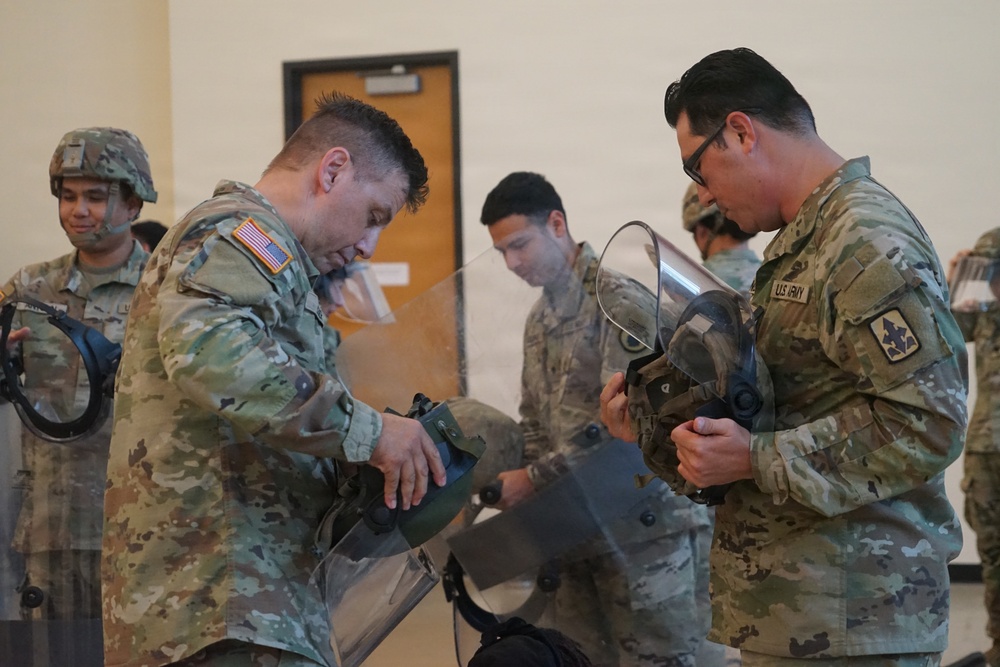
Photo By Rachel Blaire | Soldiers with the Hawai'i National Guard conduct civil disturbance training at the 29th Readiness Center, Kalaeloa, Hawaiʻi, on March 20, 2026. The training, where soldiers acted as both protesters and responders, is part of an effort to meet updated federal guidelines for the National Guard Response Force, which focuses on de-escalation, site security and the protection of critical infrastructure. (U.S. Army National Guard photo by Rachel Blaire) see less
| View Image Page
Hawaiʻi National Guard Modernizes its National Guard Response Force
The Hawaiʻi National Guard has conducted training in recent months to meet updated federal guidelines for its National Guard Response Force (NGRF). All 54 states, territories and the District of Columbia are modernizing their NGRFs as well.
The initiative follows a presidential executive order issued last year, and the Department of War guidance directing the National Guard resource, train and organize a more standardized responseforce by April 1, 2026.
“The NGRF is not a new concept, but what is new, is the level of funding we received to train our service members,” said Maj. William Keahi, Hawaiʻi National Guard’s Reaction Force Trainer.
For more than 20 years, NGRFs have been readily available to governors, Congress and the President to assist during emergencies but have varied in composition, training and equipment readiness across the states. NGRF capabilities include civil disturbance operations, crowd control, area security, critical infrastructure protection and disaster response.
The Hawaiʻi National Guard serves a dual state and federal mission at the call of the governor and the president. However, the Governor, at his discretion, would call the Hawaiʻi NGRF into action in response to requests for support from civil authorities.
“The Hawaiʻi National Guard has a promise to always stand ready to serve the people of Hawaiʻi and these Soldiers and Airmen are keeping that promise,” said Keahi.
In Hawaiʻi, the NGRF consists of over 500 Guardsmen statewide, including mostly Soldiers of the Hawaiʻi Army National Guard sourced from multiple units and the Security Forces Airmen of the Hawaiʻi Air National Guard to provide a scalable, joint response. The NGRF Guardsmen can be ready within 24 hours of activation, prepared to respond to Hawaiʻi’s needs, like the activation during the Maui Wildfires in 2023 where they assisted local law enforcement with safeguarding neighborhoods.
The Guardsmen are equipped with personal protective gear and trained with non-lethal equipment. The training focused on de-escalation, site security and the protection of critical infrastructure during domestic operations and natural disaster response. The Hawaiʻi Air National Guard Security Forces were instrumental in the training of the NGRF, due to their highly specialized skills and experience.
1st Lt. Jerod Zheng, a military intelligence office with D Company, 227th Brigade Engineer Battalion, Hawaiʻi Army National Guard, talked about the most interesting part of his training.
“It was learning about the tactics that are utilized in order to keep the peace and deescalating a crowd,” said Zheng.
Zheng works for law enforcement in his civilian job and compared the two.
“The training was similar, but there are differences, it was nice to learn about the differences when dealing with crowds,” he said.
Hawai’i’s NGRF is not a Quick Reaction Force as some states have been tasked to implement and differs from the executive order’s call for a D.C. military police battalion in the nation’s capital.

 Subscribe






