Real Flames, Real Lessons: 419th Fire Protection Flight Completes Live-Fire Certification
Photo By Anthony Pham |
Staff Sgt. Elisha Parker, 419th Fire Protection Flight fire officer, advances to the......read moreread more
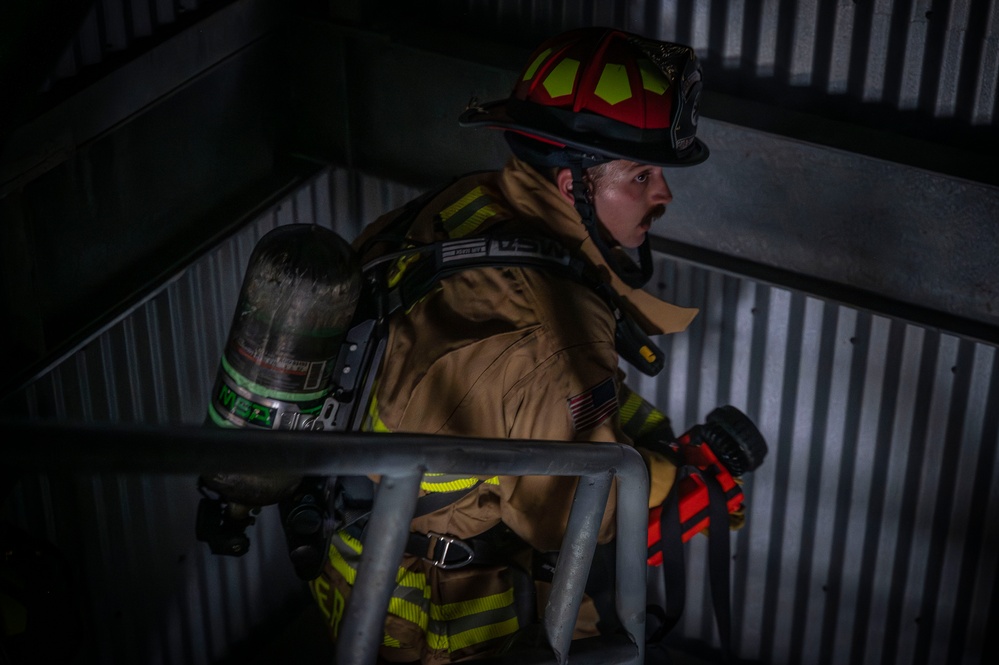
Photo By Anthony Pham | Staff Sgt. Elisha Parker, 419th Fire Protection Flight fire officer, advances to the second floor to locate and remove simulated victims during live-fire certification Sept. 6, 2025. The certification ensures 419th firefighters meet Air Force standards for aircraft-incident and base-emergency response. (U.S. Air Force photo by Tech. Sgt. Anthony Pham) see less
| View Image Page
Real Flames, Real Lessons: 419th Fire Protection Flight Completes Live-Fire Certification
HILL AIR FORCE BASE, Utah – Heat shimmered above the Frank Forte Structural Training Grounds as 25 firefighters from the 419th Civil Engineer Squadron’s Fire Protection Flight advanced lines, breached doors and pulled mannequins to safety during their annual live-fire certification Sept. 6, 2025. Senior leaders from the 419th Fighter Wing watched closely as crews worked through the smoke, noise and chaos that mirror real-world aircraft and structural fires.
The full-scale exercise stressed realistic conditions: dense smoke, roaring flames and the disorienting loss of visual cues that can occur in an aircraft or hangar blaze. Crews practiced hose advancement, search-and-rescue procedures and coordinated ventilation while trainers control burn patterns to replicate operational complexity.
“This isn’t a drill in name only,” said Tech. Sgt. Heather Carmody, a fire crew chief with the 419th Fire Protection Flight. “When you’re flowing water and putting out actual fire, communication changes, the heat changes how you move, and you have to trust your training and your crew.”
“The flight’s mission centers on safeguarding Airmen and critical assets to maintain base readiness. Many 419th firefighters bring dual experience to the job, serving as civilian firefighters and paramedics in the local community and applying that expertise to military operations. That blend of civilian and military experience strengthened the drills,” said Bradley Klemesrud, 419th Fighter Wing Commander.
Certification evaluates individual and team proficiency across multiple tasks, from rapid interior search and rescue to tactical ventilation and coordinated suppression. Instructors measured performance under stress, ensuring members meet Air Force standards for response to aircraft incidents and base emergencies.
For leadership, attendance offered more than observation. The wing commander and senior staff stepped through parts of the exercise and debriefed with crews afterward, gaining a clearer view of operational demands and training shortfalls.
“Seeing leaders walk the course gives them firsthand insight into what our crews face,” Carmody said. “It helps them make informed decisions about equipment, training time and investments that keep aircraft and Airmen safe.”
Aircraft fire scenarios remain a top training priority because of the unique risks of fuel, confined spaces and critical systems, complicate suppression and rescue. Live-fire opportunities allow crews to practice extinguishment techniques, victim extraction and coordination with maintenance and operations personnel under realistic constraints.
The 419th Fire Protection Flight used the certification to validate current skills and identify areas for growth. Trainers documented lessons learned, including equipment placement, radio procedures and task sequencing, which will feed into future training cycles.
“Preparedness is not static,” said Klemesrud who observed the exercise. “We must drill under the same pressures our members will face in a contingency environment. That realism saves lives and protects our mission.”
With certification complete, the flight will continue routine training and pursue additional realistic scenarios to broaden readiness. The exercise reinforced a central message for leaders and Airmen alike: consistent investment in training and resources ensures the 419th can respond decisively when minutes matter.

 Subscribe






