
 Subscribe
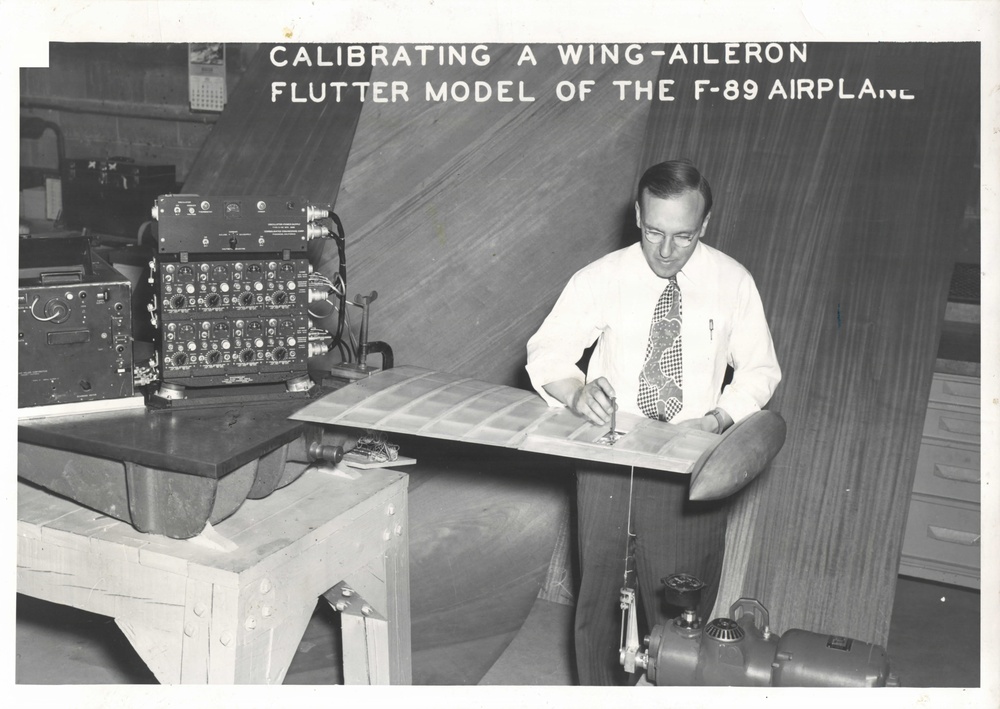
High speed aerodynamics required starting from scratch in technical areas thought to be well understood. Flutter, or the tendency of aerodynamic surfaces to oscillate unintentionally, had been controlled on low-speed aircraft through the addition of small weights or structural modifications, but at high speeds, it could be catastrophic. In-house R&D and testing, such as with this F-89 Scorpion subscale wing wind tunnel model, contributed to understanding the flutter phenomenon. (NMUSAF)
From the Aiming Higher: A Visual History of the First Century of Air Force Research and Development publication.
AFRL History Office
Air Force Research Laboratory
Wright-Patterson Air Force Base, Ohio
| Date Taken: | 06.01.2018 |
| Date Posted: | 11.19.2026 14:59 |
| Photo ID: | 10103913 |
| VIRIN: | 180601-F-EG995-7703 |
| Resolution: | 5855x4151 |
| Size: | 2.2 MB |
| Location: | US |
| Web Views: | 5 |
| Downloads: | 0 |

This work, Aiming Higher [Image 83 of 83], by Kenneth M McNulty, identified by DVIDS, must comply with the restrictions shown on https://www.dvidshub.net/about/copyright.


No keywords found.