
 Subscribe
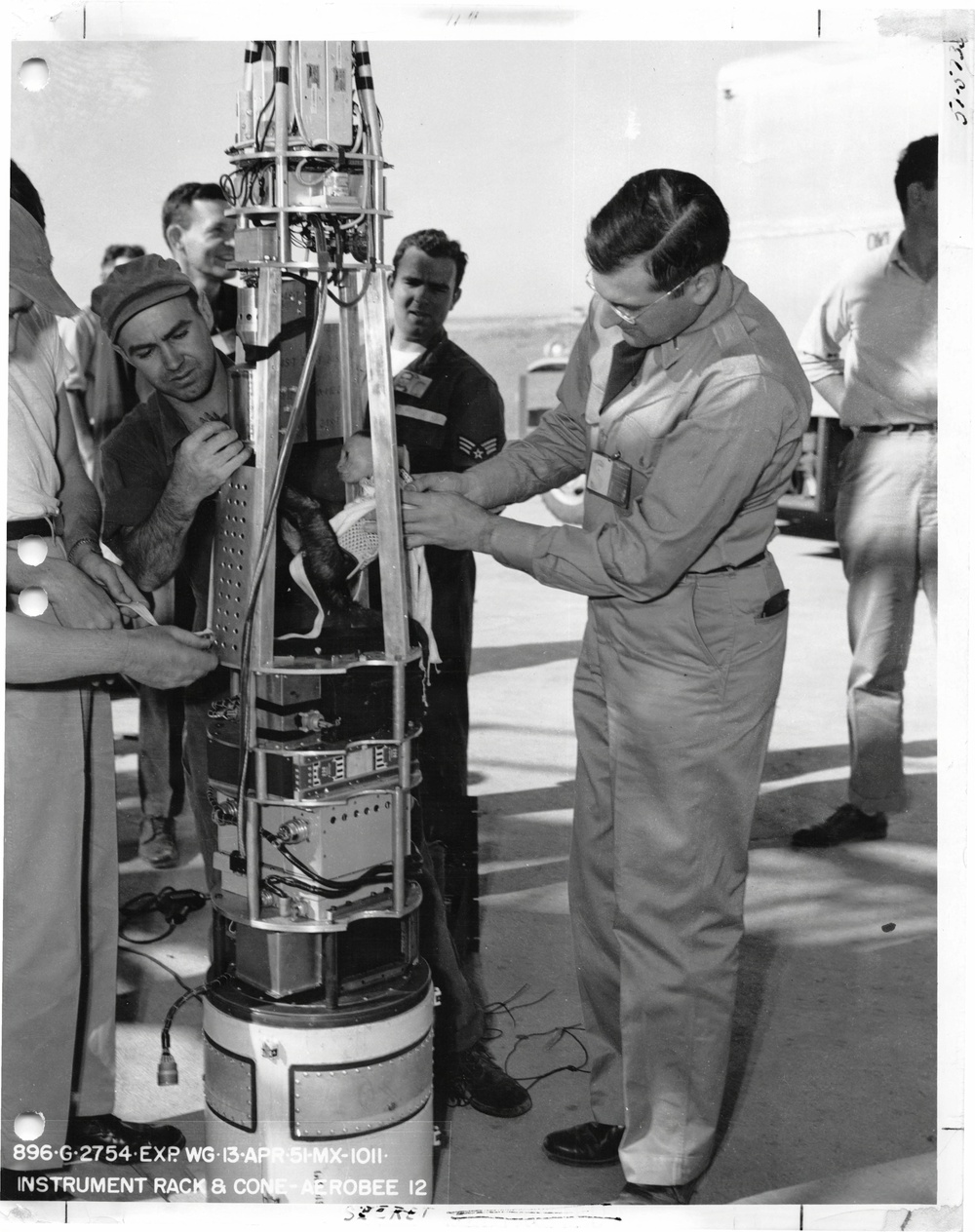
The aeromedical community that Harry Armstrong founded in the 1930s had grown in prominence by the 1950s and consisted of three main components: The Aeromedical Laboratory in Dayton, the School of Aviation Medicine in San Antonio, and the Aero Medical Field Laboratory in New Mexico. Researchers from all three flew animal test subjects, like this Rhesus monkey, atop V-2 and Aerobee rockets in the New Mexico desert. This flight, Aerobee-12 in 1951, returned its cargo safely to Earth after reaching an altitude of 37 miles. It was the first launch of a biological payload on the Aerobee series rocket. (AFRL)
From the Aiming Higher: A Visual History of the First Century of Air Force Research and Development publication.
AFRL History Office
Air Force Research Laboratory
Wright-Patterson Air Force Base, Ohio
| Date Taken: | 06.01.2018 |
| Date Posted: | 11.19.2026 14:59 |
| Photo ID: | 10103909 |
| VIRIN: | 180601-F-EG995-6502 |
| Resolution: | 4772x6033 |
| Size: | 1.88 MB |
| Location: | US |
| Web Views: | 8 |
| Downloads: | 0 |

This work, Aiming Higher [Image 83 of 83], by Kenneth M McNulty, identified by DVIDS, must comply with the restrictions shown on https://www.dvidshub.net/about/copyright.


No keywords found.