
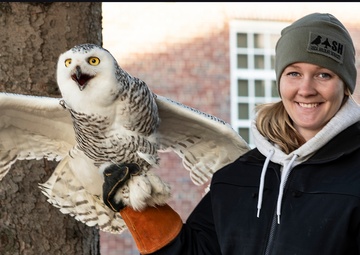
Photo by Terry Atwell | 127th Wing | 01.07.2020
SELFRIDGE AIR NATIONAL GUARD BASE, Mich.— Megan Baker, a wildlife biologist with the U. S. Department of Agriculture, assigned to the 127th Wing Safety Team here, handles a snowy owl before relocating it on Jan. 7, 2020. Baker captures, tags and safely relocates aviary wildlife in the vicinity of Selfridge as part of the Air Force’s Bird/Wildlife Aircraft Strike Hazard (BASH) program.......
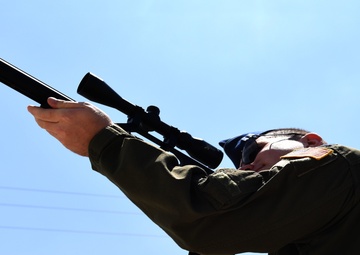
Photo by Airman 1st Class Mercedes Bizzotto | 7th Bomb Wing | 05.15.2018
U.S. Air Force Capt. Kyle Schneider, 317th Airlift Wing flight safety officer, aims an airsoft rifle into the sky at Dyess Air Force Base, Texas, May 15, 2018. It is required that domed-sized pellets are used when shooting at birds or wildlife to prevent damage to aircraft or the hangars. (U.S. Air Force photo by Airman 1st Class Mercedes Porter)...
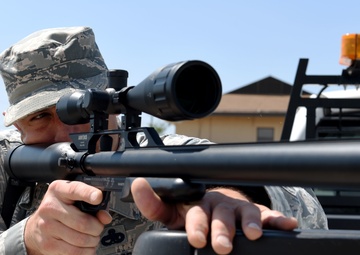
Photo by Airman 1st Class Mercedes Bizzotto | 7th Bomb Wing | 05.15.2018
U.S. Air Force Master Sgt. Brett Pate, 317th Airlift Wing flight safety noncommissioned officer, aims an airsoft rifle into a field at Dyess Air Force Base, Texas, May 15, 2018. Airsoft rifles are used by the 317th AW Bird/wildlife Aircraft Strike Hazard team to rid C-130J Super Hercules’ hangars and flightline of birds that cause hazards to the aircraft. (U.S. Air Force photo by Airman 1st......
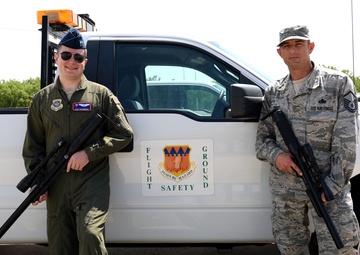
Photo by Airman 1st Class Mercedes Bizzotto | 7th Bomb Wing | 05.15.2018
U.S. Air Force Capt. Kyle Schneider, 317th Airlift Wing flight safety officer, left, and Master Sgt. Brett Pate, 317th AW flight safety noncommissioned officer, stand next to their government issued ground safety truck at Dyess Air Force Base, Texas, May 15, 2018. The months of August through October and March through May, are known as phase two for flying conditions. Phase two is when bird......
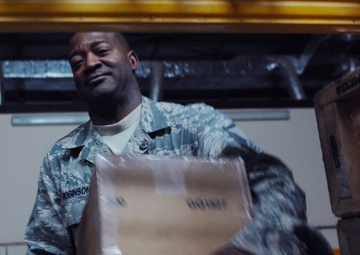
Photo by Senior Airman Christopher Hubenthal | 332d Air Expeditionary Wing | 08.10.2009
Master Sgt. Patrick Robinson, weapons safety manager of the 332nd Air Expeditionary Wing, gathers 12 gauge shotgun shells for the Bird/Wildlife Aircraft Strike Hazard program in the munitions storage area here Aug. 10. The BASH program is designed to help reduce the bird population on the airfield, which can be hazardous to aircraft traffic on the flight line....
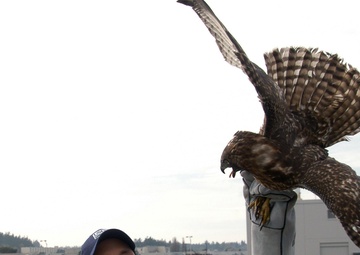
Photo by Petty Officer 2nd Class Tucker Yates | U.S. Navy | 11.06.2007
Dane Ledbetter, U.S. Department of Agriculture Wildlife Services, holds a juvenile red-tailed hawk that was trapped on boarrd Naval Air Station Whidbey Island as part of the bird aircraft strike hazard program. The BASH program sets up non-lethal traps to catch birds and reduce the risk of bird strikes to increase aircraft safety. The bird will be banded and relocated to a release site away 40......




