Beyond the Diamond: Ohio Air National Guard Equips NCOs for the Frontlines of Airman Care
Photo By Shane Hughes |
U.S. Air Force Command Chief Master Sgt. Todd McGuire, senior enlisted advisor of the......read moreread more
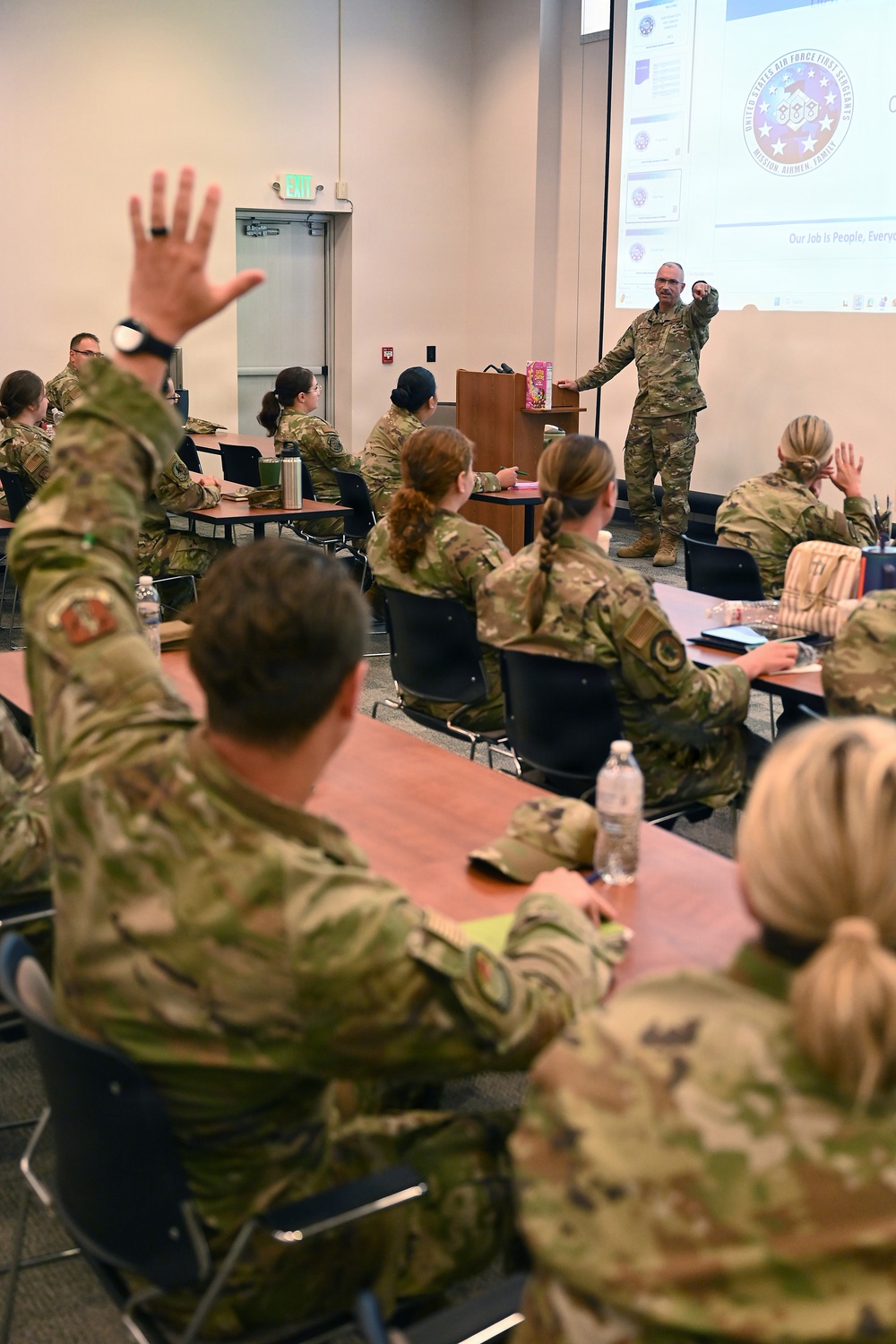
Photo By Shane Hughes | U.S. Air Force Command Chief Master Sgt. Todd McGuire, senior enlisted advisor of the 121st Air Refueling Wing, calls on a student July 17, 2026 during the Additional Duty First Sergeant Symposium at Springfield-Beckley Air National Guard Base. The week-long event was a statewide certification course designed to equip airmen to act as additional duty first sergeants. (U.S.Air National Guard phot by Shane Hughes) see less
| View Image Page
Beyond the Diamond: Ohio Air National Guard Equips NCOs for the Frontlines of Airman Care
SPRINGFIELD, Ohio — Nearly 30 noncommissioned officers from across the Ohio Air National Guard graduated from the Additional Duty First Sergeant Symposium held at Springfield-Beckley Air National Guard Base after learning the critical skills needed to assist first sergeants in their role of supporting and leading airmen.
The week-long event was a statewide certification course designed to equip airmen to act as additional duty first sergeants.
“While the title is a first sergeant symposium, it's more so about growing your NCOs, your senior NCOs into becoming leaders,” said Senior Master Sgt. Catherine Hammett, the 121st Medical Detachment senior enlisted leader. “It’s focused on taking that knowledge base that we've got here and empowering airmen below us who maybe don’t realize that they're a leader, but they just need somebody to show them.”
A central theme of the symposium was preparing leaders to guide airmen through difficult hardships. Tech. Sgt. Derek Swank, a vehicle maintenance supervisor assigned to the 200th RED HORSE Squadron, noted the immediate relevance of this training.
“We’ve had a lot of tragedy in the Ohio National Guard this year,” Swank said. "So it's very valuable to get this training to help your fellow airmen when they need it the most.”
To achieve this level of care, the curriculum introduced attendees to various support networks.
“This course brings all of the support resources in and actually gives them presentation on how they support first sergeants and how they support airmen, including representatives from family readiness, the director of psychological health, and the Sexual Assault Prevention and Response program's victim advocates,” Hammett said.
"There are so many resources that maybe people don't know about,” said Tech. Sgt. Jacob Finney, a security forces defender assigned to the 179th Security Forces. “Coming to the course, getting those resources and then taking out and broadening and spreading it through the squadrons and the units I think is going to benefit the upcoming airmen and the future Air Force.”
Beyond formal programs, attendees learned the importance of human connection and empathy.
“Leaders must be trustworthy, be approachable, and then just be open and vulnerable,” Finney said. “A first sergeant has to be there and help the airmen with troubling times if they need help opening up, open up with them, be vulnerable for them and then just be able to grow.”
“The biggest takeaway for me was learning how to be professional but also to be myself to learn myself, the things that maybe trigger me or strengthen me, to be able to then recognize that in other people and help them develop the same skills,” said Tech. Sgt. Kyndall Wilson, a unit training manager assigned to the Force Support Squadron at the 178th Wing.
The power of shared experiences and mentorship was a highlight for many attendees.
“The guest speakers were amazing and they shared their years of experience and time as a first sergeant and just their years as leaders and what they learned, mistakes that they've made, and their own advice that they gave us, and I feel like that is what is going to stick with me,” said Staff Sgt. Keslie Honeycutt, a logistics specialist assigned to the 180th Fighter Wing.
“We are not able to do the mission if we do not take care of the people,” Honeycutt said, summarizing the core message of the symposium.

 Subscribe






