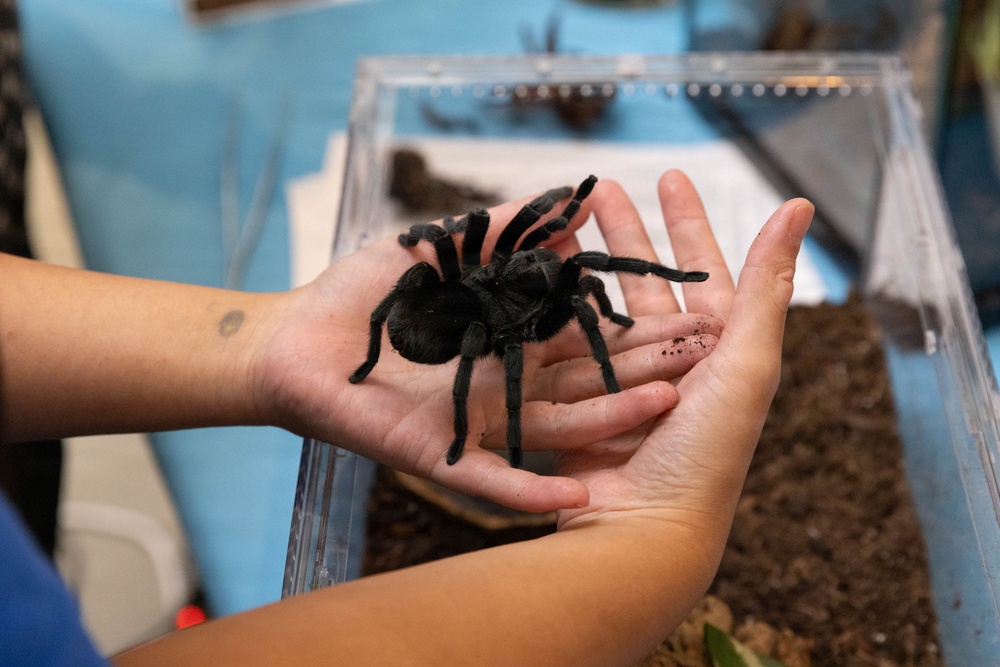
Mosquitoes, ticks, flies, and pollinators drew a crowd at the National Museum of Health and Medicine's Bugapalooza on June 13. Nearly 400 visitors attended the annual event to explore the world of insects through hands-on activities, exhibits, and conversations with military and civilian experts.
Throughout the day, visitors learned how insects affect health, support the environment, and affect military readiness. Children explored interactive stations, families met researchers, and guests discovered simple ways to stay safe from insect-borne diseases.
While each presenter brought a different area of expertise, one message stood out: education is one of the best tools for prevention.
"The first way that anyone protects themselves is by learning. Education is our number one priority," said Navy Lt. Cmdr. Jodi Fiorenzano, with the Armed Forces Pest Management Board.
Experts explained that understanding insects is important not only for public health, but also for military operations. Insects and the diseases they carry have affected military forces throughout history and remain a threat today.
"Historically infectious diseases have impacted soldiers much more than bullets and shrapnel. A huge portion of those infectious diseases are vector-borne diseases," said Army Maj. Paul Lenhart, an entomologist with the Walter Reed Army Institute of Research.
Army Maj. Aduba Obinna, with the U.S. Army Medical Research Institute of Infectious Diseases, said vector-borne diseases can have a serious impact on military units. "Vector-borne diseases affect soldiers more than combat itself. It can incapacitate a whole unit," Obinna said.
Presenters also explained how military teams prepare before service members deploy. Experts study local health threats to help protect forces operating around the world.
"We cannot put forces on the ground anywhere without first making sure that they’re going to be safe and the environment is going to be safe," said Navy Lt. Jacob Kabbah, with the Navy Bureau of Medicine and Surgery.
The event also focused on steps visitors can take to protect themselves and their families. Experts encouraged the use of insect repellent, protective clothing, and routine tick checks after spending time outdoors.
"Use repellent when they go outside, and make sure their home is as sealed as possible. Screens are intact, and door seals are good," Lenhart said.
By the end of the day, visitors left with more than fun memories and hands-on experiences. They left with a better understanding of how education, research, and prevention help protect service members, families, and communities.
From mosquitoes and ticks to pollinators and other helpful insects, Bugapalooza 2026 showed that even the smallest creatures can have a big impact on our world.
NMHM thanks all presenters, volunteers, and visitors who helped make Bugapalooza 2026 a success. We look forward to welcoming everyone back next year for another day of science, discovery, and bug-filled fun.
To learn more about the NMHM, or about upcoming events, please check us out on the web, or social media.
| Date Taken: |
06.26.2026 |
| Date Posted: |
06.26.2026 09:26 |
| Story ID: |
568653 |
| Location: |
SILVER SPRING, MARYLAND, US |
| Web Views: |
324 |
| Downloads: |
1 |
PUBLIC DOMAIN

This work, Small Creatures, Big Mission: NMHM Bugapalooza 2026 Connects Science and Military Readiness, by Kenya Baylor, identified by DVIDS, must comply with the restrictions shown on https://www.dvidshub.net/about/copyright.