MAXWELL AIR FORCE BASE, Ala. —Not every decision a commander makes is measured in timelines, resources or maneuver. Some are measured in trust. Others carry moral weight. Many affect families, unit cohesion and the long-term health of the force.
Those moments rarely arrive with clear answers. They require judgment—grounded in ethics, informed by experience and shaped by an understanding of the people involved. Preparing leaders and advisers for those situations is a deliberate part of how Air University strengthens decision advantage across the joint force.
At the Air Force Chaplain Corps College, that preparation focuses on the human dimension of warfighting—where authority, responsibility and conscience intersect, and where the application of military power carries lasting human consequences.
“Our graduates operate in environments where decisions affect real people, not merely abstract problems,” said U.S. Air Force Chaplain, Col Jonathan T. Runnels, commandant of the Air Force Chaplain Corps College. “They are prepared to advise commanders on religion, morals, ethics, morale, and well-being as leadership decisions affect Airmen, Guardians and their families.”
As part of the Ira C. Eaker Center for Leadership Development, the Chaplain Corps College educates chaplains and religious affairs Airmen across the Total Force. Graduates serve alongside commanders in tactical, operational, and strategic levels of leadership, offering advisement on issues that influence spiritual fitness, religious support, resilience, morale, ethical conduct and the trust that underpins effective command. That role directly supports readiness and mission effectiveness.
“In complex environments, leaders are expected to act decisively while remaining accountable for how command authority is applied,” Runnels said. “Our role is to ensure commanders have advice that keeps both mission requirements and ethical consequences in view.”
That responsibility reflects Air University’s broader focus on aligning education with warfighting impact. Across its schools and centers, the institution develops leaders who can navigate complexity without losing sight of responsibility—ensuring decisions made under pressure remain credible, ethical and sustainable.
“At the Eaker Center, leadership development is about preparing warfighters for responsibility, not just authority,” said U.S. Air Force Col. Raymond K. Rounds, commander of the Ira C. Eaker Center for Leadership Development. “Effective leaders understand that the “how” of decision-making often directly leads to the success of the outcome.”
Rounds noted that chaplains and Religious Affairs Airmen strengthen command teams by offering a perspective grounded in trust and credibility—qualities that become especially important during periods of operational stress, transition or sustained competition.
“Strong command teams depend on advisers who can speak candidly, understand the pressures leaders face and help them maintain perspective when the stakes are high,” Rounds said. “That influence grows through education, experience, character, and a shared embodiment of the warrior ethos.”
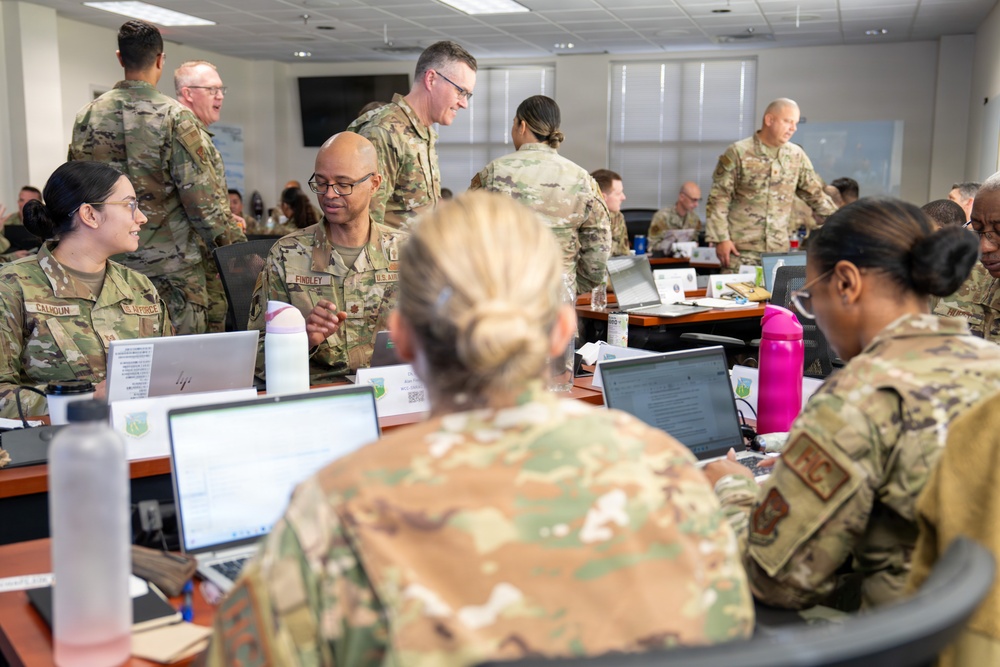
At the Chaplain Corps College, education emphasizes religious accommodation, spiritual fitness, and leadership advisement. In practice, this often takes shape in ministry of presence, listening, and advice informed by ethical frameworks, diverse religious belief systems, and the realities of military service. Students work through scenarios reflecting the ambiguity and emotional weight of real-world operations, preparing them to support commanders with clear counsel and disciplined judgment under pressure.
“Our graduates leave knowing that leadership is often exercised in conversations most people never see,” Runnels said. “Being present, earning trust, and advising with clarity—those quiet acts shape outcomes in meaningful ways.”
This preparation strengthens resilience not only for individuals but across units and command teams. By developing advisers capable of sustaining sound judgment in prolonged, high-pressure environments, Air University strengthens the force’s ability to endure and adapt in competition and conflict.
As modern command environments become increasingly data-rich and time-constrained, chaplains are also prepared to operate alongside leaders who rely on complex information flows and emerging decision-support tools. While ethical judgment remains a human responsibility, understanding how commanders process information—including data-driven and AI-enabled inputs—helps ensure counsel remains timely and relevant.
“Commanders make decisions faster than ever,” Runnels said. “Our responsibility is to help them think clearly about the ethical impact, even as the pace and complexity of decision-making increase.”
Through institutions like the Air Force Chaplain Corps College, Air University strengthens the advisory foundations of command. By aligning ethical leadership development with operational realities, the institution ensures commanders are supported by trusted counsel when decisions carry lasting consequences.
As the Department of the Air Force prepares for future conflict, the ability to apply military power decisively and responsibly remains central to readiness, legitimacy, and winning. Air University’s role is not only to develop how the force fights—but also how it decides, leads and safeguards the people entrusted to it.
| Date Taken: |
03.05.2026 |
| Date Posted: |
03.05.2026 15:01 |
| Story ID: |
559470 |
| Location: |
MONTGOMERY, ALABAMA, US |
| Web Views: |
268 |
| Downloads: |
0 |
PUBLIC DOMAIN

This work, Where Commanders Turn When Decisions Carry Human Consequence, by Billy Blankenship, identified by DVIDS, must comply with the restrictions shown on https://www.dvidshub.net/about/copyright.

 Subscribe






