
Courtesy Photo | The U.S. Army Corps of Engineers, Louisville District completes the reonvation of one...... read more read more
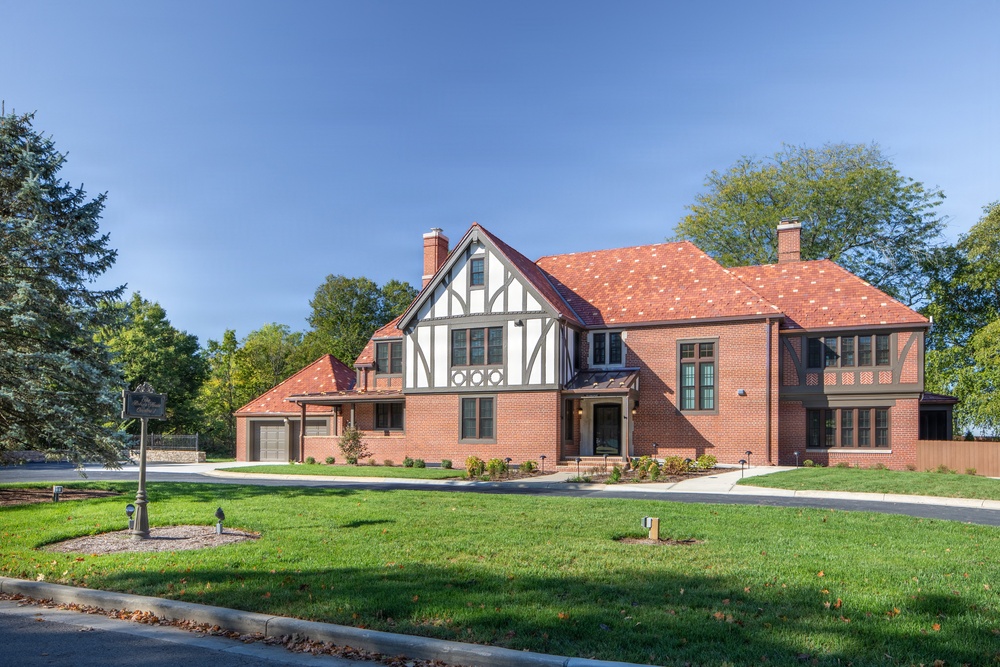
WRIGHT-PATTERSON AIR FORCE BASE, Ohio — The U.S. Army Corps of Engineers, Louisville District is leading a massive $70.7 million overhaul of the "Brick Quarters" Historic District, balancing the delicate preservation of 1930s Tudor Revival architecture with the need for modern military housing standards to support America’s warfighters and their families.
The intensive undertaking involves the complete modernization of 29 historic homes on base that were originally built in the mid-1930s. Divided into three phases, the project upgrades safety, comfort, and energy efficiency without erasing the district’s defining character.
"The goal is to bring each home up to modern standards of safety, comfort, and efficiency without losing the architectural integrity that makes this neighborhood unique," said Tina Quebatay, project engineer, USACE Louisville District’s Wright-Patterson Air Force Base Resident Office.
Crews are currently stripping the homes down to the studs to facilitate interior and exterior restorations. The work includes structural repairs, new garages, and room additions designed to match original profiles. Behind the historic facades, workers are threading new mechanical, electrical, plumbing, and fire protection systems through the aging structures.
However, retrofitting 90-year-old infrastructure for 21st-century living presents significant engineering challenges.
"Renovating homes that were built in the 1930s comes with its share of surprises, and many of them only show up once the work actually begins," Quebatay said. "These included framing irregularities, older joist modifications, cracked foundation areas, hollow clay tile interior walls, and wall cavities that were too shallow for modern utilities and insulation."
Quebatay noted the team often encounters obsolete construction methods, requiring on-site verification to adapt modern blueprints to Depression-era craftsmanship.
Bringing modern climate control to the historic structures is a primary focus. To improve energy efficiency, the renovated homes will feature dual-zoned HVAC systems, vapor-permeable air barriers, and energy-efficient storm windows.
Bryan Workman, a construction representative with the WPAFB Resident Office, noted that structural repairs have been the primary hurdle.
"The main challenge has been the structural fixes and repairs that these homes have needed," Workman said. "Another challenge has been the integration of the new HVAC units and ductwork. When the homes were built in the 30s, they were not designed for the systems that we have today, so laying out and installing these new systems have been a challenge due to the tight quarters."
Despite the modern upgrades, strict preservation requirements govern the project. Historic brick cannot be painted, and original wood trim, windows, and half-timbering are repaired or replaced in-kind.
"One of the QC [Quality Control] activities that really stood out for me was creating the masonry, stucco, and clay roof tile mockups," Quebatay said. "This was our way of making sure any new work blended in with the original 1930s Tudor Revival materials. The mockups became the benchmark for the entire project."
The project relies on a partnership between USACE, the Air Force Civil Engineer Center, Wright-Patterson Civil Engineering Group, and the contractor.
"Teamwork, partnering, and communication have been the key in taking on these challenges and finding solutions," Workman said. "We have completed infield walks, gotten our eyes on the problems, and have talked through the issues with our engineers, SMEs [subject matter experts], and contractors."
Phase 1 turnovers began May 2025 with the final phase anticipated for completion in 2027.
| Date Taken: | 12.08.2025 |
| Date Posted: | 12.08.2025 15:22 |
| Story ID: | 553421 |
| Location: | WRIGHT-PATTERSON AIR FORCE BASE, OHIO, US |
| Web Views: | 62 |
| Downloads: | 0 |

This work, Louisville District modernizes historic ‘Brick Quarters’ at Wright-Patterson AFB, by Charles Delano, identified by DVIDS, must comply with the restrictions shown on https://www.dvidshub.net/about/copyright.


No keywords found.





