
 Subscribe
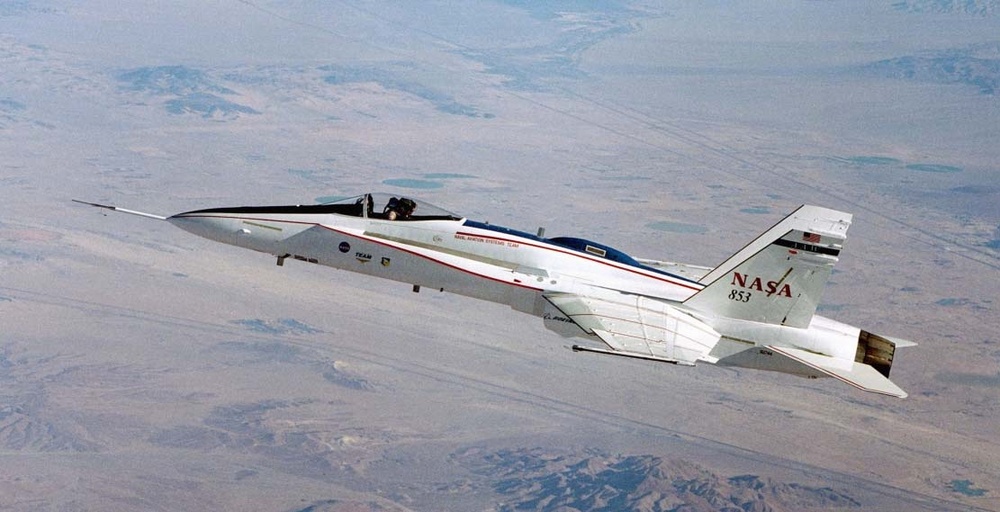
Cooperating with NASA and several private companies, AFRL’s Air Vehicles Directorate was able to create a lighter, thinner wing that used a wing’s tendency to twist in flight to induce an advantage. To do so, they modified wing structure to permit increased flexibility and employed thinner aluminum and composite panels with an aluminum honey comb structure. (NASA)
From the Aiming Higher: A Visual History of the First Century of Air Force Research and Development publication.
AFRL History Office
Air Force Research Laboratory
Wright-Patterson Air Force Base, Ohio
| Date Taken: | 06.01.2018 |
| Date Posted: | 11.19.2026 14:58 |
| Photo ID: | 10106184 |
| VIRIN: | 180601-F-EG995-8190 |
| Resolution: | 1111x569 |
| Size: | 128.33 KB |
| Location: | US |
| Web Views: | 30 |
| Downloads: | 5 |

This work, Aiming Higher [Image 65 of 65], by Kenneth M McNulty, identified by DVIDS, must comply with the restrictions shown on https://www.dvidshub.net/about/copyright.


No keywords found.