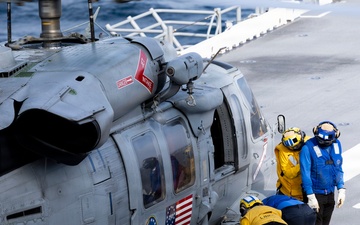
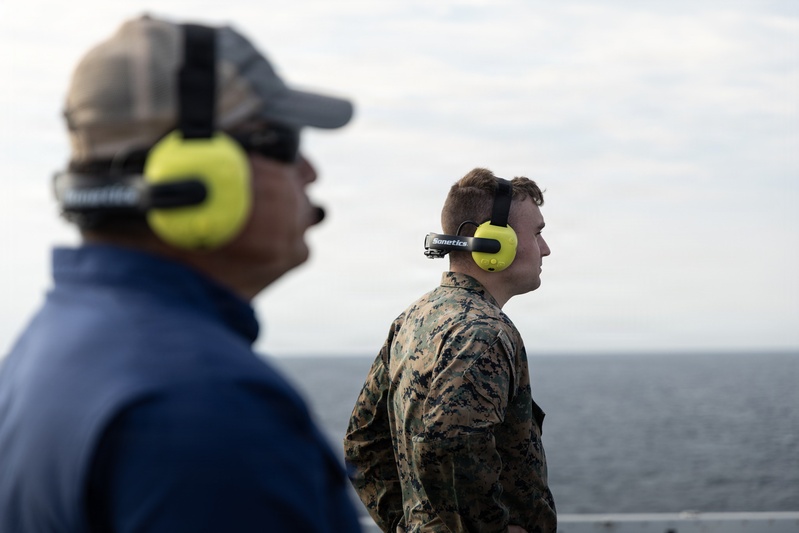
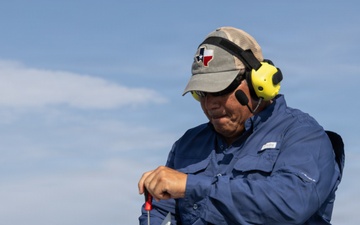
U.S. Marine Corps Staff Sgt. Tanner Landis, right, an intelligence surveillance reconnaissance systems engineer with the 26th Marine Expeditionary unit, and Ricardo Orozco, a contractor with AeroVironment, observe a JUMP 20 Group 3 Unmanned Aerial System flight check during Type Commander’s Amphibious Training aboard the San Antonio-class amphibious transport dock ship USS Arlington (LPD 24) off the coast of North Carolina, June 10, 2026. TCAT is a military exercise designed to enhance mobility and integration between the U.S. Marine Corps and the U.S. Navy. The amphibious force is an integrated powerhouse providing sea, land, and air operations, giving geographic combatant commanders a more flexible, agile force for aggregated or dis-aggregated operations across the globe. (U.S. Marine Corps photo by Cpl. Osmar VasquezHernandez)
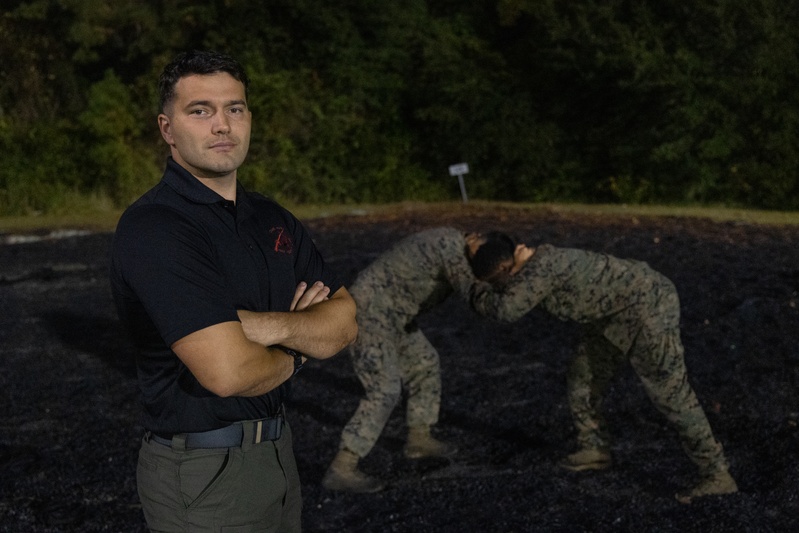
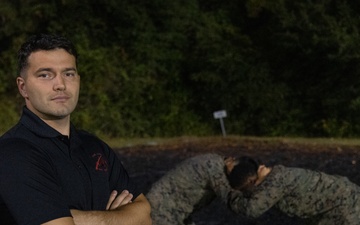
CAMP LEJEUNE, N.C. – Martial arts and combative sports are a skillset many people use for various ways. Some want to learn how to defend themselves in case they are ever attacked. Others have been involved in these sports for years and compete professionally. For U.S. Marine Corps Staff Sgt. Charles Copeland, the fire and effects coordination center chief at the 26th Marine Expeditionary Unit (MEU), martial arts and combative sports taught him how to be comfortable being uncomfortable.
Copeland grew up in a small town in Minnesota . Even when he was younger, he always found himself being told he couldn’t participate in challenging sports because of his smaller stature compared to the rest of the kids around him.
“I just...
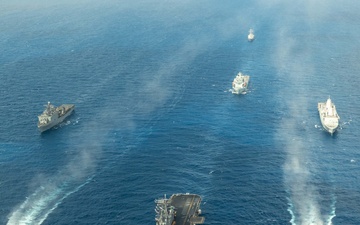
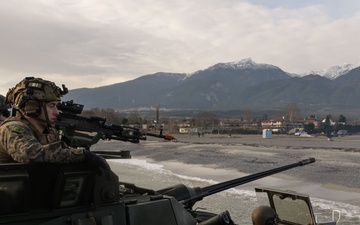
SOUDA BAY, Greece – U.S. Marines and Sailors with the 26th Marine Expeditionary Unit (Special Operations Capable) (MEU(SOC)), embarked aboard the ships of the Bataan Amphibious Ready Group (BATARG) conducted advanced ARG/MEU readiness sustainment training, Naval Support Activity Souda Bay, Greece, Feb. 16-20, 2024.