
Story by Capt. Madison Reynolds | Marine Rotational Force - Darwin | 09.10.2024
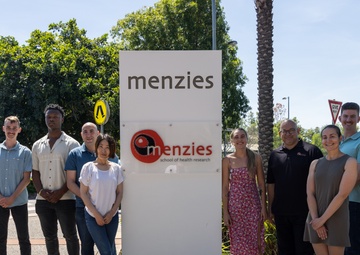
U.S. Sailors with the Marine Rotational Force – Darwin 24.3 Marine Air-Ground Task Force supported the Tropical and Emerging Infectious Diseases team within the Global and Tropical Health Division at Menzies School of Health Research in Darwin, Northern Territory, Australia, from March to Sept. This collaboration enhances medical capabilities, treatment approaches, and training procedures......

Courtesy Story | Defense Threat Reduction Agency's Chemical and Biological Technologies Department | 08.12.2020
DTRA CB is learning why one stubborn bacterium just loves humans so much. In a large family, there is at least one rebel. In the bacterial family of Burkholderia, which includes over 100 siblings, Burkholderia pseudomallei is this outlier because of its ability to virulently infect humans. The U.S. Centers for Disease Control and Prevention labels B. pseudomallei as a Category B bioterror......
Courtesy Story | Defense Threat Reduction Agency's Chemical and Biological Technologies Department | 11.01.2019
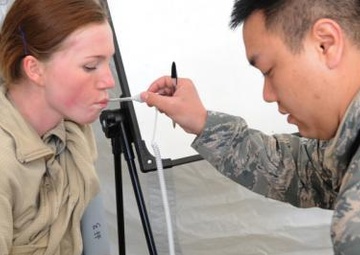
Sarah, a woman in her 20s, has had a dry cough and fever for two weeks. She’s in upstate New York, awaiting her next deployment; she was recently stationed in northern Australia. Based on her symptoms and Sarah’s self-report of an exposure to an aunt with pneumonia the week before, the local doctor diagnoses Sarah with pneumonia. Even after completing her antibiotic regimen, Sarah’s......

Courtesy Story | Defense Threat Reduction Agency's Chemical and Biological Technologies Department | 08.21.2018
A rainy day can do much more than ruin your weekend plans, it can also spread disease through soil and water contamination. For warfighters, this could negatively impact mission readiness by disrupting troop disposition or health. Understanding how environmental and weather factors affect disease outbreaks is vital to safeguarding our service members. Therefore, the Defense Threat Reduction......
Courtesy Story | Defense Threat Reduction Agency's Chemical and Biological Technologies Department | 02.16.2018
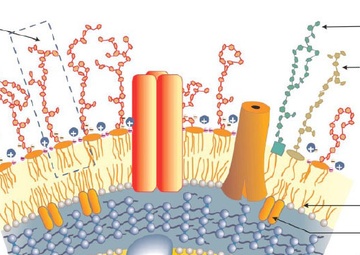
The last case of smallpox in the United States was reported more than 65 years ago, and in 1977 the disease was eradicated due to the development of a vaccine. Vaccinations such as this are critical to protecting our warfighters and the public from biological threats, but many threats still lack countermeasures. Melioidosis, a Centers for Disease Control category B agent, claimed 89,000 lives......
Courtesy Story | Defense Threat Reduction Agency's Chemical and Biological Technologies Department | 06.22.2017
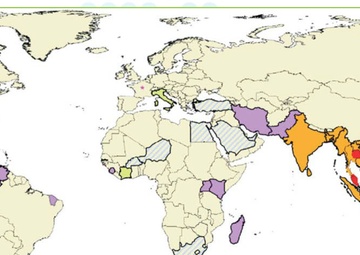
Diagnosing any disease is similar to solving a puzzle. Doctors and patients piece together symptoms and run diagnostic tests until the entire picture develops. But, without a reliable diagnostic test, medical personnel are missing vital pieces, relying only on parts of the information. Currently no definitive diagnostic test exists for Burkholderia, a category B agent caused by Burkholderia......
Courtesy Story | Defense Threat Reduction Agency's Chemical and Biological Technologies Department | 01.10.2017
More than 100 antibiotic compounds have been discovered since Alexander Fleming invented penicillin in 1928, but none within the past 30 years. Now a joint venture between the Defense Threat Reduction Agency’s Joint Science and Technology Office, U.S. Army Medical Research Institute of Infectious Diseases (USAMRIID), Joint Program Executive Office (JPEO) and Paratek Pharmaceuticals, a......
Courtesy Story | Defense Threat Reduction Agency's Chemical and Biological Technologies Department | 06.30.2016
The U.S. Department of Defense is working to develop effective countermeasures against the pathogen melioidosis, a biowarfare agent, to better protect warfighters. Recent collaboration between the U.S. and Southeast Asia partners is addressing research gaps and prioritizing research avenues from this threat....




