

Courtesy Story | Defense Threat Reduction Agency's Chemical and Biological Technologies Department | 12.14.2016
Warfighters face a variety of threats including chemical substances, such as chlorine, that have the potential to be turned into weapons. First discovered in 1774 and later used as a chemical weapon during World War I and the ongoing Syrian conflict, chlorine is one of the most commonly manufactured chemicals in the United States. Chlorine plays an integral role in our daily lives – from a......
Courtesy Story | Defense Threat Reduction Agency's Chemical and Biological Technologies Department | 10.25.2016
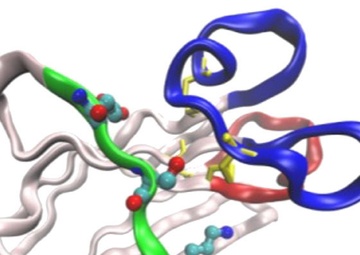
Fort Belvoir, Va. The shark is one of the oldest species on earth dating back more than 450 million years, but now their antibodies are being used in new research funded by the Defense Threat Reduction Agency’s Joint Science and Technology Office. Shark antibodies provide an alternative, cost-effective approach in developing diagnostic and therapeutic tools for increased warfighter......
Courtesy Story | Defense Threat Reduction Agency's Chemical and Biological Technologies Department | 05.24.2016
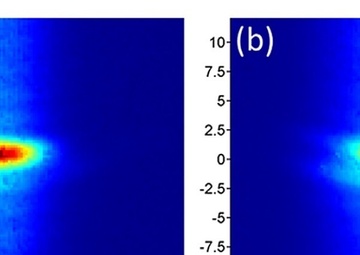
Harvard University principal investigator Professor Federico Capasso, one of the inventors of the quantum cascade lasers (QCLs), and Harvard researcher, Dr. Patrick Rauter, report recent progress in the development of multi-wavelength QCL arrays citing significant extensions in lengths. This recent Defense Threat Reduction Agency-funded research program highlighted impressive scientific......

Courtesy Story | Defense Threat Reduction Agency's Chemical and Biological Technologies Department | 05.24.2016
In a world of uncertain futures, with annual budget cuts looming and warfighter safety at risk because of evolving threats, scientists at the Defense Threat Reduction Agency’s Joint Science and Technology Office are learning how to do more with less. Dr. Brian Pate of DTRA is leveraging existing resources to increase data-driven approaches to technology and global threat forecasting....
Courtesy Story | Defense Threat Reduction Agency's Chemical and Biological Technologies Department | 05.24.2016
Much like the skin is the body’s first line of protection, a warfighter’s uniform acts in a similar way against chemical and biological threats. However, the research, development and production of uniforms to equip more than two million troops does not come at a small cost. To address this issue, the Defense Threat Reduction Agency’s Joint Science and Technology Office, in collaboration......
Courtesy Story | Defense Threat Reduction Agency's Chemical and Biological Technologies Department | 04.29.2016
Exposure to a chemical or biological agent poses serious risks to warfighters. Accurately modelling the trajectory patterns of chemical and biological warfare agents is critical to ensure the safety of our combat forces....
Courtesy Story | Defense Threat Reduction Agency's Chemical and Biological Technologies Department | 04.29.2016
There have been 24 Ebola outbreaks since 1976 though none as deadly as the recent West African epidemic. New research conducted by the Defense Threat Reduction Agency’s Joint Science and Technology Office, uses neutralizing antibodies to reduce mortality rates in Ebola infected animals. This research could inspire medical countermeasures to better protect warfighters, civilians and......
Courtesy Story | Defense Threat Reduction Agency's Chemical and Biological Technologies Department | 04.29.2016
Blueprints are critical for success when building infrastructure, whether constructing a skyscraper or software system. Creating a blueprint of how to better protect warfighters led the Defense Threat Reduction Agency to fund a software tool that can quickly model how harmful agents affect warfighter shelters and equipment during a chemical or biological attack....




