FORT BELVOIR, Va. -- The Defense Logistics Agency is assisting U.S. forces as they provide humanitarian relief as part of Operation Tomodachi following devastating earthquake and resulting tsunami near Sendai, Japan, March 11.
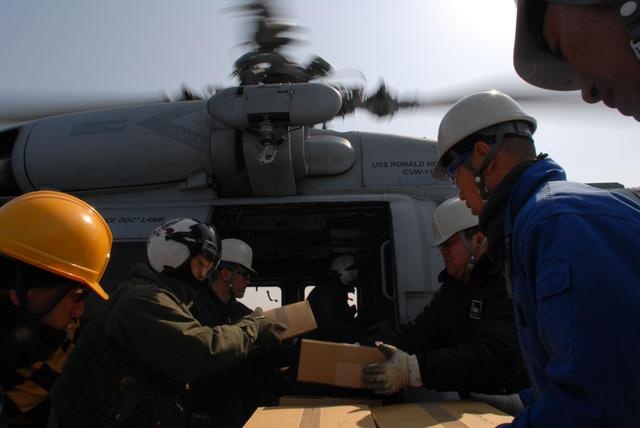
Although the government of Japan has not requested anything specific from the agency in the wake of the magnitude 9.0 earthquake, the U.S. Defense Department is providing fuel to Japanese helicopters conducting search and rescue operations from the deck of the USS Ronald Reagan and working on other issues, said Navy Capt. Kevin Henderson, DLA Energy Pacific commander. Fuel has also been supplied to a sewage plant in Yokosuka to avert an emergency, and efforts are being made to ensure American bases in northern Japan still have access to fuel.
“Our main concern right now is making sure our military customers in northern Japan get the fuel they need to support operations and take care of families.” Henderson said. “We are working parallel paths to ensure the uninterrupted supply of fuel.”
Beyond that, DLA Pacific is largely concerned with making sure it is ready to distribute emergency relief supplies as soon as they’re requested.
“Two C-130s with meals ready to eat and food from DLA Troop Support’s subsistence prime vendors were delivered to Misawa Air Base, and additional deliveries of water, MREs, diapers, blankets and medical supplies are being prepared for immediate delivery,” Navy Cmdr. Jason Bridges, DLA Troop Support Pacific commander said.
“Although we have not had specific requests, there is a more robust [operations tempo] supporting the ongoing relief operations in Japan. This ultimately results in increases in our routine business. We are properly positioned to provide supplies and ensure we can have them in the right place at the right time,” Army Col. Sheila Bryant, DLA Pacific commander, said.
Dual explosions at the Fukushima-Daiichi Nuclear Plant and the potential of a meltdown there have prompted DLA Distribution Yokosuka and DLA Troop Support to check inventories of potassium iodide tablets, used to counteract the effects of radiation exposure, and radiological equipment, she said. Potassium iodide can block the absorption of radiation into the thyroid, according to the U.S. Food and Drug Administration’s website.
While those supplies have not been requested, Bryant said DLA officials want to make sure they know how much the agency has and where it is, allowing a quick response if U.S. forces or Japanese officials request it.
“Right now, we don’t know what’s enough,” she said. “However, our liaison officers are embedded with [U.S. forces], and we will pick up on their demand signals and be as proactive as possible."

 Subscribe






