
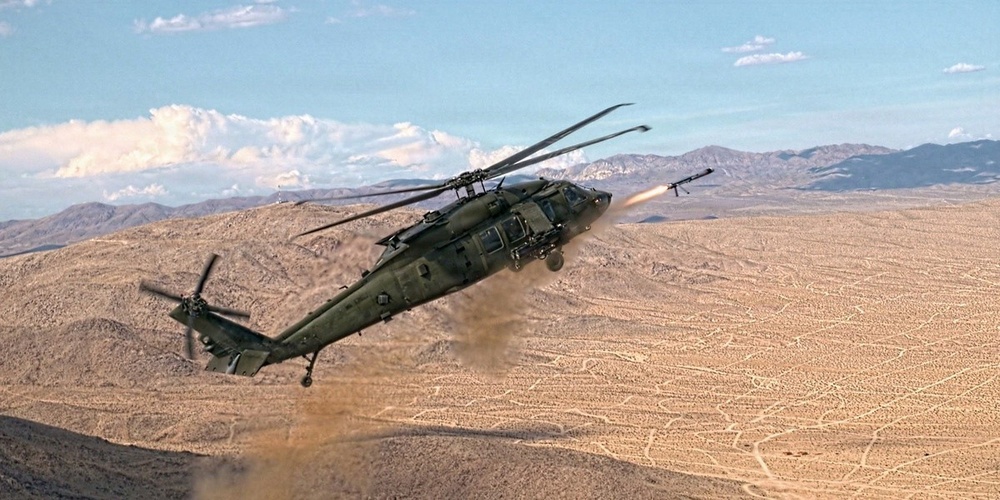
Courtesy Photo | UH-60M Black Hawk successfully deploys Launched Effects during PCC6. Photo by Mr. Jose...... read more read more
 Subscribe
JOINT BASE LANGLEY-EUSTIS, Va. —The United States Army is transforming to meet future threats head-on. The Futures and Concepts Command, or FCC, is the Army’s answer to staying at the forefront of military innovation.
Activated on Feb. 12, 2026, the establishment of FCC as a command comes after Secretary of the Army Daniel Driscoll announced theArmy Transformation Initiative, an effort aimed to accelerate modernization and improve force structure to ensure the Army remains the world’s most lethal and ready land force.
As a subordinate command under the new U.S. Army Transformation and Training Command, FCC serves as the conceptual and intellectual foundation of Army modernization.
Through the execution of concepts, experimentation, requirements, research, and integration, FCC works to inform and provide decisive advantage to Army senior leaders and deliver essential capabilities to Soldiers worldwide.
A Brief History FCC’s journey to this point has been one of constant evolution and a testament to the Army's ability to adapt and reform itself to meet emerging threats.
Beginning with the formation of the U.S. Army Combat Developments Command in 1962 and later the establishment of the U.S. Army Training and Doctrine Command in 1973, decades of Army modernization efforts and force redesign put the Army on the path to where it is today.
After the Vietnam drawdown in the late eighties, it was imperative the Army gained and maintained the technological edge in weapons and equipment, which led to the development of the Big Five systems – the M1 Abrams tank, M2 Bradley Fighting Vehicle, AH-64 Apache helicopter, UH-60 Black Hawk helicopter, and Patriot missile system.
As the Army shifted its focus towards asymmetric warfare tactics to face the Global War on Terrorism, modeling and simulation became a prominent element in concept and requirements-validation and weapons development, giving way to the concept of battle laboratories in the early nineties.
The creation of the TRADOC Futures Center in 2003 resulted from the Army’s need to consolidate the development of joint and Army concepts and capabilities. The Futures Center was tasked to develop and integrate joint and Army concepts, architecture, doctrine, organizations, training, materiel, leadership and education, personnel, and facilities, or DOTMLPF, capabilities.
The Futures Center was later redesignated in 2006 as the U.S. Army Capabilities Integration Center, responsible for looking into the future operational environment and developing concepts and joint doctrine for how the Army would need to fight.
Soon after the Army’s transition to Multi-Domain Operations, ARCIC was once again redesignated in 2019 to the Futures and Concepts Center under the newly established Army Futures Command.
Expanding FCC’s Role in Army Transformation FCC’s transition from a center to a command prompted subsequent reorganization to accommodate the command’s expanding role in the Army.
FCC is now comprised of five subordinate commands, nine directorates, and two coordinating directorates, along with the Directorate of Concepts and Futures Integration Directorate at FCC headquarters. Each of these are dedicated to a portion of the research and development process of concepts and requirements development, experimentation, research and analysis, and integration.
The Futures Integration Directorate and the Directorate of Concepts work closely together to identify warfighting capability gaps within the Army and develop informed concepts to help Army senior leaders make informed decisions on which technologies to invest in for the future.
FCC’s transition also prompted the merger of the Army’s Cross-Functional Teams and Capability Development Integration Directorates, creating the nine new Future Capability Directorates, located across the country, that coincide with the nine Centers of Excellence under the U.S. Army Combined Arms Command.
This new structure improves collaboration and unity of command and effort, improving the speed, cohesion and effectiveness of our modernization activities. FCDs directly support the Army Transformation Initiative’s three lines of effort – delivering critical warfighting capabilities, optimizing force structure, and eliminating waste and obsolete programs.
The former DEVCOM Analysis Center and TRADOC Research and Analysis Center also merged to create the new Transformation Decision Analysis Center under FCC.
TDAC supports the Army's decision-making processes through comprehensive systems and formation effectiveness analyses that are crucial for informing key decisions made by the Army, Joint Forces, and the Office of the Secretary of War.
Additionally, the U.S. Army Combat Capabilities Development, U.S. Army Medical Research and Development Command, and 75th Innovation Command joined the Joint Modernization Command as direct reporting units to FCC to further extend the command’s capabilities.
FCC Looking Forward As FCC begins this new chapter under T2COM, it forges the vision of turning war-fighting concepts into war-winning capabilities, ensuring the Army is grounded in rigorous thought, credible experimentation, and synchronized integration.
Through the new Project Convergence model, FCC will evolve the Project Convergence Capstone experiments from a single, CONUS-based event to a continuous series of experiments embedded within global Army and Joint exercises. This leverages existing combat training center rotations and in-theater exercises to increase the frequency of learning and accelerate modernization.
The lessons from these experiments allow FCC to define clear, data-driven material and organizational requirements that will enable the command to oversee the integration of new capabilities, ensuring they arrive as part of a complete, battle-ready formation to our sister command CAC for fielding.
This unified pipeline cements FCC as the intellectual and operational engine of Army modernization. By closing the gap between concepts and delivered combat capabilities, the command delivers the decisive lethality and overmatch needed to dominate the modern battlefield.
For every challenge that lies ahead and every battlefield of tomorrow, FCC is already there pioneering the solutions and delivering the capabilities that will ensure our future force is ready to win against any adversary in any domain.
This article is part of a larger FCC overview story series. For latest FCC-related news, visit http://www.army.mil/FuturesandConceptsCommand.
| Date Taken: | 09.09.2026 |
| Date Posted: | 09.09.2026 15:46 |
| Story ID: | 574195 |
| Location: | US |
| Web Views: | 28 |
| Downloads: | 0 |

This work, U.S. Army Futures and Concepts Command: An Overview, by Nina Borgeson, identified by DVIDS, must comply with the restrictions shown on https://www.dvidshub.net/about/copyright.


No keywords found.




