
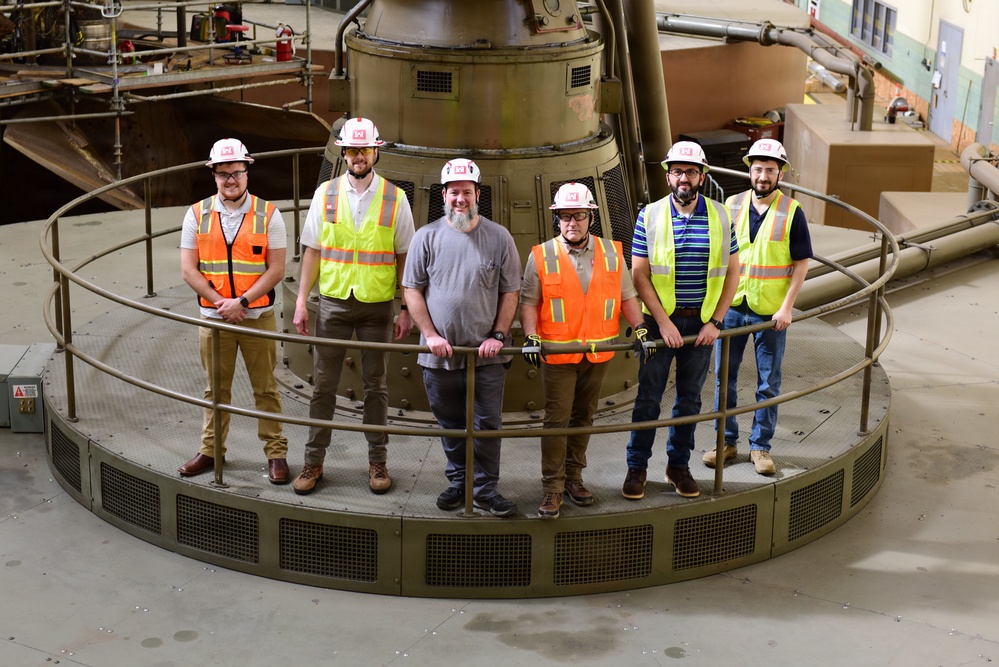
Photo By Leon Roberts | Nate Brock, project manager; Chris Stoltz, Section 212 Program manager; Chris...... read more read more
NASHVILLE, Tenn. (Aug. 24, 2026) – Today isNational Hydropower Day, and the U.S. Army Corps of Engineers Nashville District is celebrating the dedicated maintenance teams and operators who deliver ready, reliable, resilient, and clean energy to the region.
This year’s theme,“Hydro Works,”highlights how water power directly benefits local communities. During times of peak demand or extreme weather, hydropower is a vital, rapid-response resource.
Massive scale, local impact
USACE is the largest owner and operator of hydroelectric power plants in the United States, generating more than 25% of the nation’s hydropower and ranking among the nation’s top 10 power producers overall.
While USACE directly operates and maintains 356 individual generating units at 75 multi-purpose power-producing projects across five USACE divisions and 16 districts across the nation, the Nashville District operates and maintains 28 hydropower units at nine power plants in the Cumberland River Basin to meet the growing energy demands of 4 million customers across eight states.
Powered by human grit and innovation
Loren McDonald, Nashville District’s Hydropower Branch chief, said the district’s hydropower plants continue to operate because of the people who maintain them.
“Our highly skilled team of operators, electricians, mechanics, electronics mechanics, engineers, and support staff keep these facilities operational despite the age of our infrastructure,” McDonald said. “I am constantly amazed by what our team can do, and I would put them up against any public or private crew. They are committed and report for duty regardless of weather and are ready to respond immediately whenever emergencies arise.”
This regional network:
“By operating during periods of peak demand, we can offset some of the highest-cost generation on the system,” McDonald said. “During the most recent winter storm event in late January and early February, our hydropower generation had an estimated value of $21.65 million over 14 days, helping offset higher-cost generation during the event.”
The hydropower maintenance crews have taken on major maintenance efforts in the past year including replacing gate chains, while also helping modernize how we operate and maintain our facilities. They have installed new equipment to support centralized control and furthered the development and deployment of an in-house SCADA system, while balancing contractor coordination and routine maintenance.
Modernizing American Infrastructure
In keeping with the U.S. Army’s Civil Works Program initiative of “Building Infrastructure, Not Paperwork,” USACE is boosting America’s clean energy production by modernizing the Army’s existing hydropower facilities. By partnering with the private sector, USACE can upgrade these outdated turbines to modern, more efficient models, allowing USACE to generate significantly more renewable energy from the same amount of water. This initiative increases America’s supply of clean power and strengthens energy independence without building new dams, and at minimal cost to the taxpayer.
"On this National Hydropower Day, the Trump Administration celebrates the amazing clean energy that powers our great nation's communities,"said Assistant Secretary of the Army for Civil Works Adam Telle."By Building Infrastructure, Not Paperwork (BINP), the U.S. Army is eliminating bureaucratic delays and making easier to leverage Public-Private Energy Partnerships that modernize our vital American hydropower infrastructure and deliver bountiful amounts of renewable energy to the grid."
The Section 212 Program: Powering the next century
The Nashville District’s hydropower assets in the Cumberland River basin are getting a boost from the Section212 Hydropower Rehabilitation Program. Authorized by the Water Resources Development Act of 2000, the Section212 Program, the work focuses on the disassembly, rehabilitation, and reassembly of all turbine generators, non-routine maintenance of power train equipment, at Barkley, Cheatham, J. Percy Priest, Old Hickory, Center Hill, Cordell Hull, Dale Hollow, Wolf Creek, and Laurel dams.
ChrisStoltz, Section 212Program manager for the Nashville District, said the modernization efforts are breathing new life into the Nashville District’s aging assets, ensuring they continue to provide clean energy for the next generation.
“The hydropower plants in the Cumberland River Basin provide 910 megawatts of capacity,” Stoltz said. “Much of this infrastructure is aging, averaging nearly 65 years, with some equipment more than 75 years old.”
The Section 212 Program rehabilitates, replaces, and modernizes these assets, helping ensure the continued delivery of reliable, affordable electricity across the region.
“They have stayed online for 75years thanks to the grit and skill of our maintenance teams. But as this infrastructure reaches its twilight years, we have found a way to keep the lights on for the next century,” Stoltz added.
The Nashville District is authorized to direct revenue from hydropower sales back into the rehabilitation, replacement, and modernization of the facilities that generate it. These investments are then repaid to the Treasury over time through incremental customer rate adjustments. It is a circular, common-sense approach to infrastructure: The power sold today builds the powerhouse of tomorrow.
The work is modernizing critical ancillary systems, such as powerhouse cranes, high-voltage transformers, and excitation systems, to lay the groundwork for the main effort: full turbine-generator rehabilitations. Project managers collaborate closely with site teams, engineers, and the Army Corps’ Hydropower Design Center, combining field knowledge with national lessons learned to reduce construction risk and extend reliable operation for decades.
“With a successful overhaul at Center Hill Dam already under our belts, we are currently in the thick of major replacements at Barkley and Old Hickory Dams and finalizing the plans and specifications for Wolf Creek Dam,” Stoltz said.
He stressed that the men and women of the Nashville District are the human expertise behind these efforts. From the designers drafting the next generation of specifications to the powerhouse crews keeping the machines spinning today, this program is a testament to unwavering professional dedication.
For more information on the USACE Hydropower Program, please visithttps://www.google.com/url?q=https%3A%2F%2Fwww.usace.army.mil%2FMissions%2FCivil-Works%2FHydropower%2F.
Doug Garmin at USACE Headquarters contributed to this story.
The public can obtain news, updates and information from the U.S. Army Corps of Engineers Nashville District on the district’s website athttps://www.lrd.usace.army.mil/About/Districts/Nashville-District/, on Facebook athttp://www.facebook.com/nashvillecorpsand on X (formerly Twitter) athttp://www.x.com/nashvillecorps. Follow us on LinkedIn for the latest Nashville District employment and contracting opportunities athttps://www.linkedin.com/company/u-s-army-corps-of-engineers-nashville-district.
| Date Taken: | 08.24.2026 |
| Date Posted: | 08.24.2026 12:56 |
| Story ID: | 573089 |
| Location: | NASHVILLE, TENNESSEE, US |
| Web Views: | 33 |
| Downloads: | 0 |

This work, Hydro Works: Nashville District powering the region’s grid, by Leon Roberts, identified by DVIDS, must comply with the restrictions shown on https://www.dvidshub.net/about/copyright.


No keywords found.





