
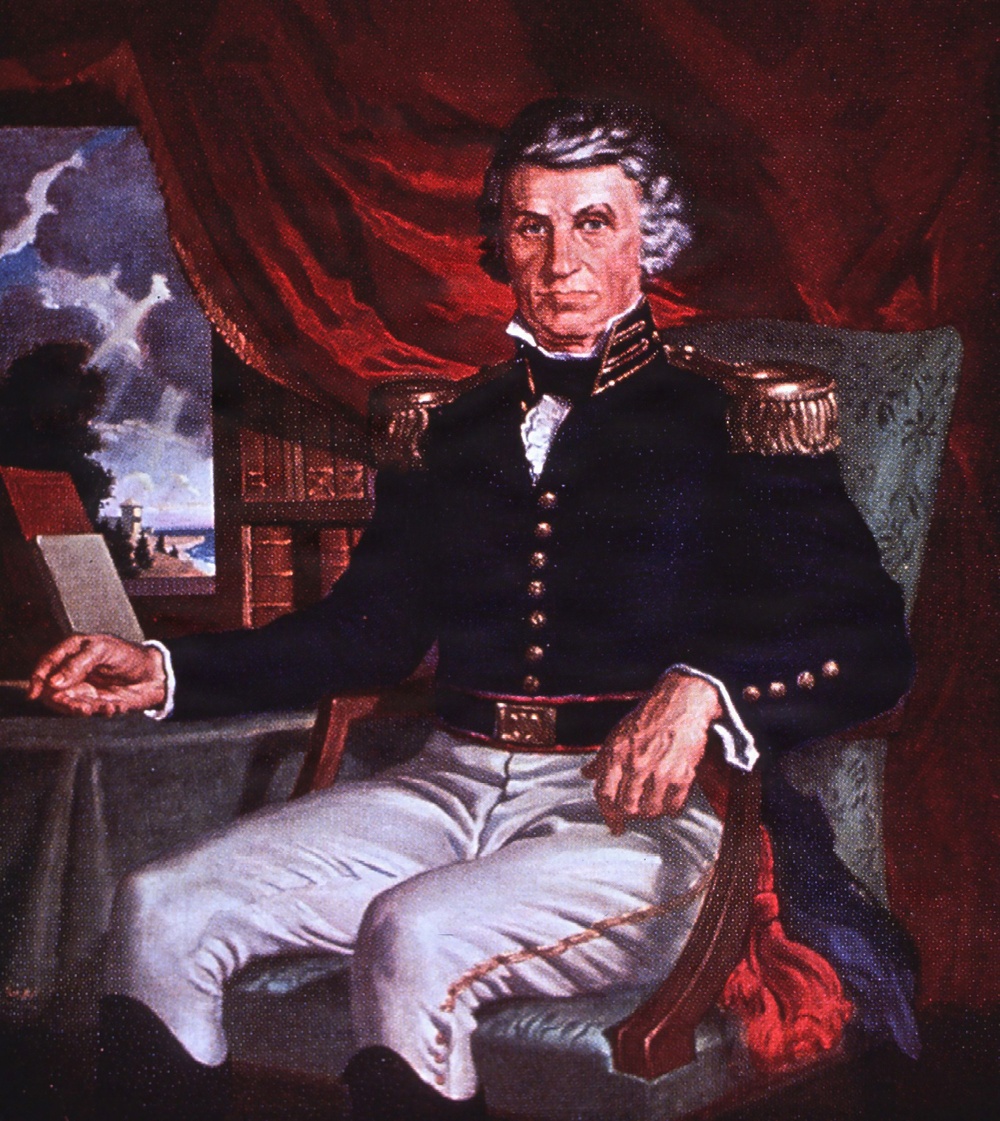
Courtesy Photo | Known as the “Father of Gastric Physiology,” Maj. (Dr.) Williams Beaumont showed...... read more read more
Long before modern laboratories or research programs, Maj. (Dr.) William Beaumont’s work placed military physicians at the center of scientific discovery. His legacy lives on at the military medical center that carries his name, William Beaumont Army Medical Center at Fort Bliss, Texas.
Beaumont, known as the “Father of Gastric Physiology” for his medical experiments and published research on the human digestive system, became a foundational figure in military medical history by turning careful observation into practical science. Through national accolades, the hospital continues to deliver first-rate quality and safety in warfighter healthcare.
Early wartime research leads to lasting impact
Beaumont, born in 1785 in Connecticut, took a different route to military medicine — instead of attending a formal medical school, he apprenticed under a doctor in Vermont. This hands-on training focused on patient observation rather than textbooks. As described in his biography, “The William Beaumont Papers: A Life in Letters,” published by Jesse Myers in 1912, he learned by observing patients, keeping detailed notes, and building skills through direct practice.
At the outbreak of the War of 1812, Beaumont joined the U.S. Army as a surgeon's mate. Over the next three years, he gained experience treating soldiers and performed numerous autopsies. He participated in the capture of York in 1813 and the Battle of Plattsburgh in 1814. Beaumont resigned when the Treaty of Ghent ended the war in 1815.
Those years gave him front-line experience in combat medicine. After the war, he entered into private practice. But that career was put on hold when he rejoined the U.S. Army in 1819.
Beaumont’s career-defining moment came while stationed at Fort Mackinac, Michigan, in 1822. Beaumont saved the life of Alexis St. Martin, a young man who suffered a devastating gunshot wound to the abdomen. The injury left a permanent opening in St. Martin’s stomach, giving Beaumont the opportunity to study digestion in a way no physician had done before. Because of these studies and his expert knowledge of gastric function, Beaumont was dubbed the "Father of Gastric Physiology."
Over the next several years, he conducted experiments and documented how gastric fluids worked, how food broke down, and how factors such as emotion could affect digestion. The U.S. Army later described this as the first direct study of digestion and the first American physiological research. In Beaumont’s personal papers, as published by Myers, he noted his ongoing area of study “affords an excellent opportunity for experimenting upon the gastric fluids and process of digestion.”
In 1833, after conducting 238 experiments, he published “Experiments and Observations on the Gastric Juice and the Physiology of Digestion,” Beaumont’s research became a cornerstone of modern gastroenterology and is credited as the foundation of modern gastric physiology.
His innovations transformed medicine from guesswork to science-based practice. This discovery allowed U.S. Army doctors to better manage soldiers' health and recovery.
In 1835, Beaumont was ordered to St. Louis, Missouri, where he lived the rest of his life. He submitted a conditional resignation in 1840, ending 25 years of military service. He died in 1853 at age 68.
Legacy lives on at William Beaumont Army Medical Center
WBAMC continues Beaumont’s heritage through using evidence-based medical practices supporting service members and their family members at Fort Bliss and the White Sands Missile Range.
The original Fort Bliss Post Hospital was built in 1893 to support regimental missions along the Mexican border. In 1916, a new base hospital at Fort Bliss became operational, and was designated as U.S. Base Hospital, Fort Bliss, Texas. Five years later, the U.S. Army renamed the facility William Beaumont General Hospital in Beaumont’s honor. In 1972, construction of a new, 12-story hospital was completed and became known as William Beaumont Army Medical Center.
With 130 inpatient beds, 10 operating rooms and a state-of-the-art simulation center the medical center is designed to support modern military healthcare. The center also maintains strong education and training roles, including graduate medical education and other professional training programs.
WBAMC has received recognition for high-quality, safe, and effective patient care, including:
WBAMC also enjoys a long-standing resource-sharing program with the VA El Paso Health Care System that allows joint-use delivery of healthcare services, optimizing the use of clinical and nonclinical resources and enhancing access for military and veterans.
Beaumont’s importance goes beyond gastroenterology; his work demonstrated military physicians could be scientists as well as clinicians. With the hospital’s mission to support warfighters by “improving health and building readiness — making extraordinary experiences ordinary and exceptional outcomes routine,” WBAMC honors its namesake through excellence and nationally recognized healthcare to keep service members medically ready.
| Date Taken: | 05.18.2026 |
| Date Posted: | 05.18.2026 10:39 |
| Story ID: | 565498 |
| Location: | US |
| Web Views: | 25 |
| Downloads: | 0 |

This work, Maj. (Dr.) William Beaumont’s legacy and impact live on through exemplary care, by Robert Hammer, identified by DVIDS, must comply with the restrictions shown on https://www.dvidshub.net/about/copyright.

No keywords found.





