By Tyler Barth
PICATINNY ARSENAL, N.J. – Although a behavior lab is not what one usually associates with an arsenal, the Tactical Behavior Research Laboratory (TBRL) here contributes mightily to improving warfighting capabilities.
Led by Gladstone Reid within the U.S. Army Combat Capabilities Development Command (DEVCOM) Armaments Center, the TBRL delves into the human side of armaments performance, carrying out behavioral analysis and gathering performance data so a design can be optimized early in development.
The laboratory’s work emphasizes integrating objective performance data, subjective feedback and physiological measurements, all to better understand how armament technology affects Soldiers in battlefield scenarios.
Those employed there such as engineering psychologist and Ph.D. Dominic Cheng, biomedical engineer and Ph.D. Jose Rodriguez, measurement and automation engineer Robert DeMarco and biologist Alexis Cady seek to study performance through the Soldier’s eyes, ensuring that new systems both retain convenience and effectiveness on the battlefield. Modern military technology, the researchers noted, isn’t just about making systems more advanced, but ensuring the systems work with the end user, as a system impressive on paper must be trustworthy and straightforward for any success.
The lab monitors cognitive and physiological factors while Soldiers employ new armament systems in virtual combat simulations; gathering performance data early on so designs can be refined well ahead of full production, saving both time and money. Additionally, the TBRL examines human response to verify and validate weapon and system effectiveness.
One recent experiment for Cheng, for example, examined the ideal controller layout for teleoperated ground vehicles. Soldiers from the Robotics Requirement Division at Fort Benning tried out eight different controllers in a simulated environment, with the controllers being tested on mobility and lethality tasks, after which the TBRL provided test and survey results to the customer. Cheng said some of the Soldiers preferred one type of controller but performed better with another type, which he found particularly interesting.
“It suggests that it’s not sufficient to just give Soldiers surveys and ask what they like. It’s important to also measure their performance as well to see how they actually work,” Cheng said.
Another major area of work is human systems integration, with current efforts focused on the Artillery Execution Suite (AXS), the Army’s transformational and updated ballistics software. Biomedical engineer Florence Chua works here, leading a multi-disciplinary effort focused on performance and user interface and interaction design, all to evaluate how fire support systems perform in time sensitive scenarios.
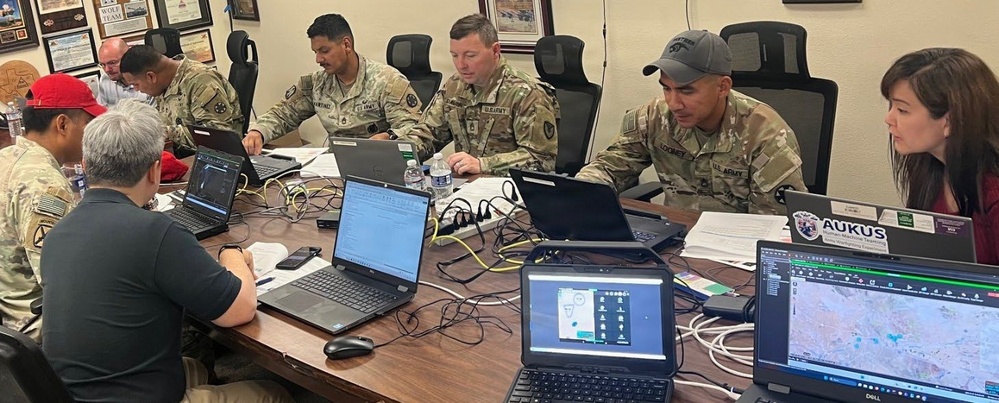
Work here combines task performance data with Soldier feedback to identify usability issues and potential sources of error. Recent efforts have included usability tests of AXS with Soldiers in realistic scenarios conducted in collaboration with Program Manager Command and Control Applications, Product Manager Combat Arms Applications, and the Wolf Team at the National Training Center at Fort Irwin, Calif. Findings are used to refine system design to ensure it meets real world operational needs.
“Seconds matter. If the system slows a Soldier down, that’s a problem. We need to catch that early and fix it,” Chua said.
The lab’s work, researchers agreed, goes well beyond simple opinion gathering, and combines Soldier feedback with objective measurement, taking into account both how a Soldier believes they performed and their thoughts, and how they actually performed. These Soldiers, they added, are very thorough with their feedback and do not hold anything back, providing a truth not attainable through many other methods.
Many tasks at the TBRL require creating realism within a testing environment, virtual or otherwise, while maintaining the stress, uncertainty, pressures and consequences of real combat. Those at the lab noted the challenge of creating a set of consequences to simulated events in a safe and repeatable manner useful for experimentation.
Rodriguez, Cady and DeMarco are leading Acquisition-Ready Ecosystem for Soldier Exposure (ARES), a Chief of Staff of the Army effort aimed at maturing a wearable system that captures both physiological and blast exposure data in real time to enable integrated Soldier monitoring in operational environments. The TBRL currently seeks a company that can integrate physiological and blast overpressure sensors. Another related effort, the Blast Overpressure Lightweight Tracker (BOLT), is aimed at making blast overpressure acquisition more portable and less expensive by trying to miniaturize what’s usually a large and expensive setup into a transportable all-in-one.
Another project with potential is the Soldier System Silent Speech Interface. According to DeMarco, this is a naturalistic control system that reads users’ muscle movements to carry out commands, instead of voice activation. Through this and other possibilities such as gesture control, Soldiers will be able to carry out tasks through glances and mouthing words.
The much-publicized Integrated Visual Augmentation System (IVAS) project was tested at the TBRL in 2023. The overall IVAS program was an effort to refine an augmented reality headset based on Microsoft HoloLens 2 technology, providing Soldiers with enhanced situational awareness by creating an all-in-one heads-up display complete with mapping, thermal and night vision, communication and more.
As part of IVAS testing, the TBRL performed a System Operational Perception & Performance Evaluation of the system to capture operationally relevant performance measures during a mobility course at the nearby tactical village, and a dry fire Battle Drill 2A mobility exercise in a wooded area to further assess mobility. They also conducted a shoot-and-move exercise at the Lower Field-Urban Area Security Initiative Training Structure, and a Close-In Visual-Manual Task Performance Test, an assessment of Soldier ability to locate items and operate them through instructions.
The TBRL has developed innovative data collection methods to understand how Soldiers and their units interact with AI-enabled autonomous weapon systems. By embedding with Soldiers during force on force, field, and demonstration exercises the researchers gather insights into trust in these novel systems, methods for improvement, operational fitness, and approaches for Soldier-machine integration into forces. This data will be used by the Robotics Requirements Division in critical conversations about future autonomy.
For the lab’s researchers, every day brings something varied with it, with topics ranging from AI to blast overpressure and more, but the lab keeps its focus on Soldier perspectives and interactions, in part by leveraging three of its research members, who all have prior military service. The lab’s researchers have a highly varied background, too, such as with team lead Dr. Darnell Simon, a biomedical engineer, and research lead Dr. Elizabeth Mezzacappa, who comes from medical psychology. According to Rodriguez, the lab thoroughly challenges researchers through difficult yet surmountable tasks that require learning new skills.
“We have scientists, engineers, biologists, computer scientists, all of them teaming together to cover whatever arises,” said DeMarco. “Being able to not be pigeonholed into one specific program over and over is one of the highlights of this lab.”
Collectively, the researchers expressed hope that in the continued growth of the lab, where the TBRL will be even more data-driven and integrated, noting the shift toward experimental environments where physical systems, virtual environments, physiological sensory testing, automation and AI-assisted analysis all work in tandem. The lab’s strength, the team said, lies in giving the Army a faster and more accurate way to see how Soldiers use new technologies before locking in final designs, which speeds up the delivery of capability to the warfighter.
| Date Taken: |
05.14.2026 |
| Date Posted: |
05.14.2026 11:26 |
| Story ID: |
565262 |
| Location: |
PICATINNY ARSENAL, NEW JERSEY, US |
| Web Views: |
18 |
| Downloads: |
0 |
PUBLIC DOMAIN

This work, Tactical Behavior Research Laboratory serves as bridge between Soldier and system, must comply with the restrictions shown on https://www.dvidshub.net/about/copyright.