Service Beyond the Uniform: Finding a New Mission Between the Chalk Lines
Courtesy Photo |
U.S. Army Reserve Staff Sgt. Fred Brown, a mass communication specialist and president......read moreread more
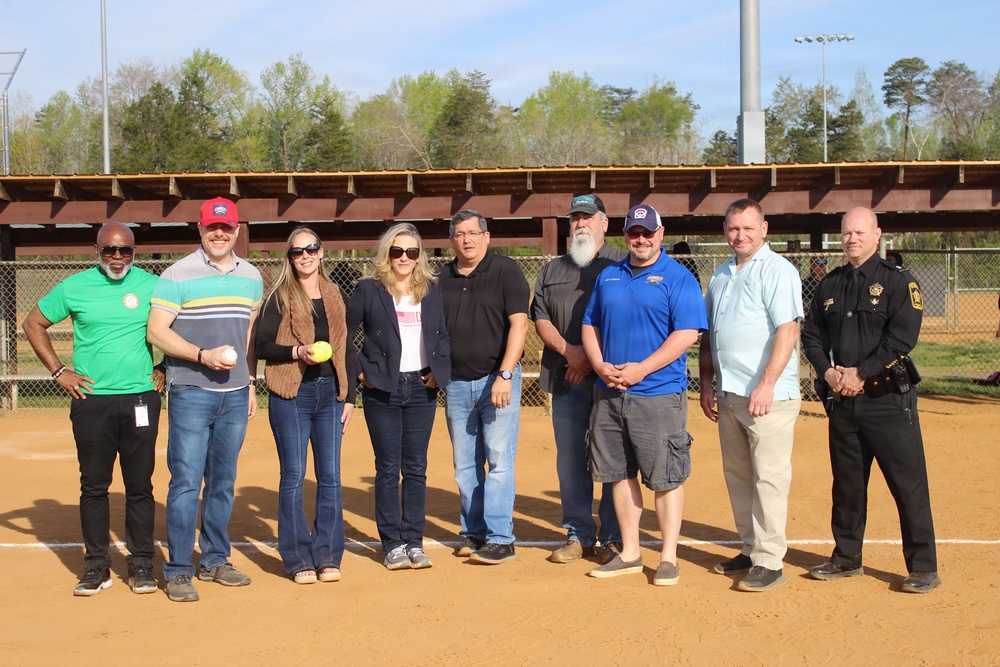
Courtesy Photo | U.S. Army Reserve Staff Sgt. Fred Brown, a mass communication specialist and president of the Spotsylvania County Little League, stands with state Sen. Tara Durant, Del. Phillip Scott and local civic leaders during Opening Day ceremonies in Spotsylvania County, Virginia, April 11, 2026. The festivities reached a high point when Scott threw out the ceremonial first pitch to officially start the season, as both lawmakers recognized the profound impact of community volunteerism. see less
| View Image Page
Service Beyond the Uniform: Finding a New Mission Between the Chalk Lines
Selfless service. From day one of basic training, the concept is woven into our very DNA, but what does it really mean? For some, it means putting themselves on the line for their country. For others, it means elevating the needs of others above their own. These definitions, and perhaps a hundred more, are entirely correct.
In a world where we are constantly glued to our devices, it is easy to forget what those words demand in practice: service without self. As a young Soldier, I do not think I truly grasped the weight of that core value.
My first duty station sent me to Wiesbaden, Germany, where I was on my own for the first time. Making friends was easy. I would do physical training, go to work at the American Forces Network, hit the gym and head back to the barracks. I explored Germany on the weekends, but something felt missing. I just did not know what it was.
After covering a story on the local middle school football team, I was invited to help out. I was no football expert, nor did I play extensively growing up, but the idea of getting on the field and helping kids seemed like fun. Before I knew it, I was a volunteer coach, traveling with the team around the country as they played other Department of Defense school teams. We were not terribly good, but it was a rewarding experience. I found myself dedicating countless hours to learning the game and devising new drills. The only pause in my coaching career was my first deployment to Afghanistan. Upon returning to Germany, I picked up exactly where I left off. I spent hours upon hours on that field, and I remain grateful to my chain of command for giving me the latitude to do so. Even then, my leaders recognized the value of community engagement and encouraged me to pursue it. Without that early support, taking that first step into volunteerism would have been much harder. Looking back, I realize I was learning the practical application of selfless service, even if I did not fully comprehend it at the time.
After finishing my final years on active duty, I transitioned to the Army Reserve and settled in Virginia. Years later, when my son turned 6, I signed him up for Little League. Football was great, but baseball had been my true passion since I was a young child. I grew up watching the game and played from coach pitch, with my uncle serving as my very first head coach, all the way until I was 16.
As a lifelong fan of baseball at all levels, I was incredibly excited to watch my son play and hoped he would fall in love with the game the same way I did. Then the email arrived: "Welcome to the team. ... I’m looking for an assistant coach." I had a dozen reasons to pass the request off to other parents. I was busy working in Washington, D.C. My Army Reserve unit was preparing for several upcoming missions. I had three children, and honestly, I was looking forward to just sitting on the sidelines and cheering for my son. Without much prompting, my wife asked me if I had told the head coach I would help. She knew me too well and was already drafting a response to volunteer my time.
Once again, I was back on the field, trying to herd cats by teaching 6- and 7-year-olds how to execute the basics and have fun. I quickly realized that coaching was not just about fielding ground balls or hitting a pitch. It was about translating the core values I learned in the Army, like resilience, teamwork and leadership, into lessons a 7-year-old could understand. I was not just building better baseball players; I was trying to build better citizens.
Over those first few weeks, my wife noticed a change in my demeanor. I seemed lighter and happier. Just like in Germany, a piece of my life had been missing without me realizing it. Transitioning from active duty to the Reserves and civilian life often leaves veterans feeling untethered. You miss the daily camaraderie and the unified mission. I did not realize how much I missed being part of a tight-knit squad until I found myself standing in a dugout. The local Little League became my new unit, and ensuring these kids had a great season became my new mission.
At the same time, I realized communities across our nation are starving for reliable leaders. Civic organizations, youth sports programs and local boards desperately need people who know how to organize, communicate effectively and show up consistently. Veterans possess these exact skills in abundance. I learned a vital lesson: Our communities need us just as much as we need them.
Coaching was just the beginning. Later that year, the league's board of directors sent out a notice looking to fill the information officer position. I recognized an opportunity to support the league using the public affairs and communications skills I had developed professionally.
Since 2021, I have served on the board of directors for the Spotsylvania County Little League, which supports more than 700 athletes between the ages of 6 and 16 each season. I joke that I must have an aversion to free time because I no longer have any. I give it all to my community. If I am not managing a team or acting as an assistant coach, I am umpiring games. On any given Saturday, I spend up to 12 hours at the diamond. When I am not between the chalk lines, I am talking with families and mentoring our young athletes. Along the way, I also discovered how incredibly fun softball is. I am now a huge advocate for the sport and work hard to increase community awareness and support for our softball programs.
I capped off 2024 by being elected president of the board. Stepping into this role, I relied heavily on the foundation the military gave me. The leadership skills, knowledge and Army values ingrained in me over my career directly shaped how I approach this community position. Knowing how to build consensus, manage logistics and lead with integrity are all traits I learned in uniform, and they are essential when guiding an organization of this size. Today, I facilitate partnerships with community leaders at the local and state levels.
Working with these officials helps bring greater awareness to our league and our ultimate goal: getting every kid on the field. More importantly, it shows our families that their local and state leaders actively support them and are invested in their children's futures. I am exactly where I want to be. Baseball is my passion, but being an active, reliable pillar of my community is what truly feeds my soul.
Looking back on both my Army career and my years of volunteering, one constant stands out: the backing of great leaders. I have been incredibly fortunate to have military and civilian leadership that not only supported but actively encouraged me to become a bigger part of my community. When leaders prioritize service outside the workplace, it empowers their people to make a real difference. Without that strong foundation of support, finding the time and energy to get involved is a much steeper climb.
Selfless service has taken on a much broader meaning as I have gotten older. In the military, service is our job. We are ordered to be there. In the civilian world, selfless service is a choice made every single day. It costs you your weekends, your evenings and your energy. But when you step onto a dirt field exhausted from a long workday and see the smiles on the athletes' faces, the return on investment is immeasurable. Even when I am tired from a full day of work, if I see a game does not have an umpire, I put my gear on and get back on the field.
Serving means more than just wearing a military uniform. It is about being part of something larger than yourself, which is a major reason many of us join the armed forces in the first place. Finding that same sense of purpose outside the military has made me feel deeply connected to my community and my country. By donating my time and effort to help others, I am serving as more than just an Army Reserve Soldier. I am truly living up to the Army Reserve motto of being "Twice the Citizen."
I challenge my fellow veterans who might be feeling untethered to step out your front door and find your next unit. The missions are out there, waiting for someone to step up. I also challenge military and civilian leaders to look at your formations and your employees. Give them the encouragement and the latitude to serve outside the workplace. When you empower your people to build up their communities, you are building better citizens, and a stronger country, in the process

 Subscribe






