Courtesy Photo |
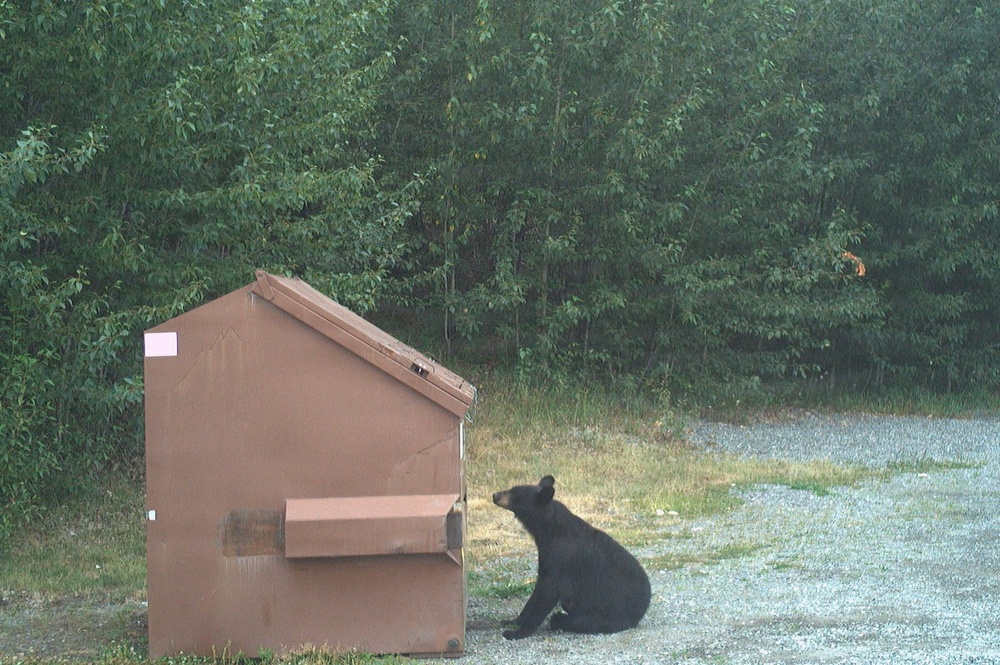
A bear looks at a wildlife-resistant dumpster at Joint Base Elmendorf-Richardson,......read moreread more
Courtesy Photo | A bear looks at a wildlife-resistant dumpster at Joint Base Elmendorf-Richardson, Alaska. JBER is transitioning to wildlife-resistant steel-lidded dumpsters across the installation to help reduce wildlife access to food waste and improve installation safety. (Courtesy Photo) see less
| View Image Page
JOINT BASE ELMENDORF-RICHARDSON, ALASKA, UNITED STATES
A base-wide effort to reduce human-wildlife encounters is underway at Joint Base Elmendorf-Richardson, focusing on a familiar but often overlooked issue – trash disposal. Approximately 400 plastic-lidded dumpsters across the base will be replaced beginning in mid-May, with completion expected early July.
The initiative, led by the installation’s wildlife program, focuses on replacing the plastic-lidded dumpsters with new wildlife-resistant models to prevent animals from accessing food waste. The change targets unsecured trash which increases wildlife activity in the area.
“Plastic-lidded dumpsters are easily accessed by wildlife, providing an easy food source that draws bears into the cantonment area,” said Colette Brandt, JBER Wildlife Program manager. “When bears make a mess, it also attracts birds, which increases our Bird/Wildlife Aircraft Strike Hazard risk – especially since most of the cantonment is within a controlled area designed to prevent wildlife from entering in.”
The new dumpsters feature heavy-duty steel lids that are far more effective at keeping out bears, birds and other wildlife. By limiting access to trash, the new lids will significantly improve safety by reducing the number of wildlife drawn into the area.
“The current plastic lids simply are not wildlife-resistant,” Brandt said. “Local wildlife, particularly bears, can easily lift or break them to access human food waste, which leads to food-conditioned animals losing their natural fear of humans.”
This project focuses on the six- and eight-cubic yard dumpsters used by units and facilities. Aurora Housing manages waste disposal for the residential neighborhoods and is working to transition housing areas into wildlife-resistant roll-carts.
“The trade-off is that they are heavier and require more physical effort to open and latch,” Brandt said. “There is a critical caveat: they must be used correctly. An unlatched lid, an overflowing dumpster or trash left on the ground completely negates the safety benefits of the new lids.”
Brandt said she understands there will be a temptation for personnel to leave the heavy lids open or just stack trash on top.
This effort relies on the entire community. By taking a few extra steps to properly secure and latch dumpsters, personnel help prevent human-wildlife conflict and keep the installation safe.
“Proper waste disposal is a life, safety and readiness requirement, not just a housekeeping task,” she added. “Hardware is only half the solution; human behavior and use is the other half.”
Almax McCoy, a 773d Civil Engineer service contract representative, said, the new steel lids have a heavier strut and are more difficult to use than the old plastic one. He said that it will take a bit more time and effort for personnel to properly dispose of their trash and secure the latches.
“We can fabricate the best wildlife-resistant dumpsters around, but they are only as good as user interaction allows,” said McCoy. “Proper refuse disposal and dumpster security are paramount in mitigating human-wildlife conflict.”
![]()If you see wildlife, maintain a safe distance and contact the JBER Conservation Law Enforcement by calling 673d Security Forces at 907-552-7070 if animals are in trash or residential areas.

 Subscribe






