America 250 Robins legacy: Brief history of Robins AFB during WWII era
Photo By C Arce |
As America marks 250 years of American independence, Team Robins is proud to honor the......read moreread more
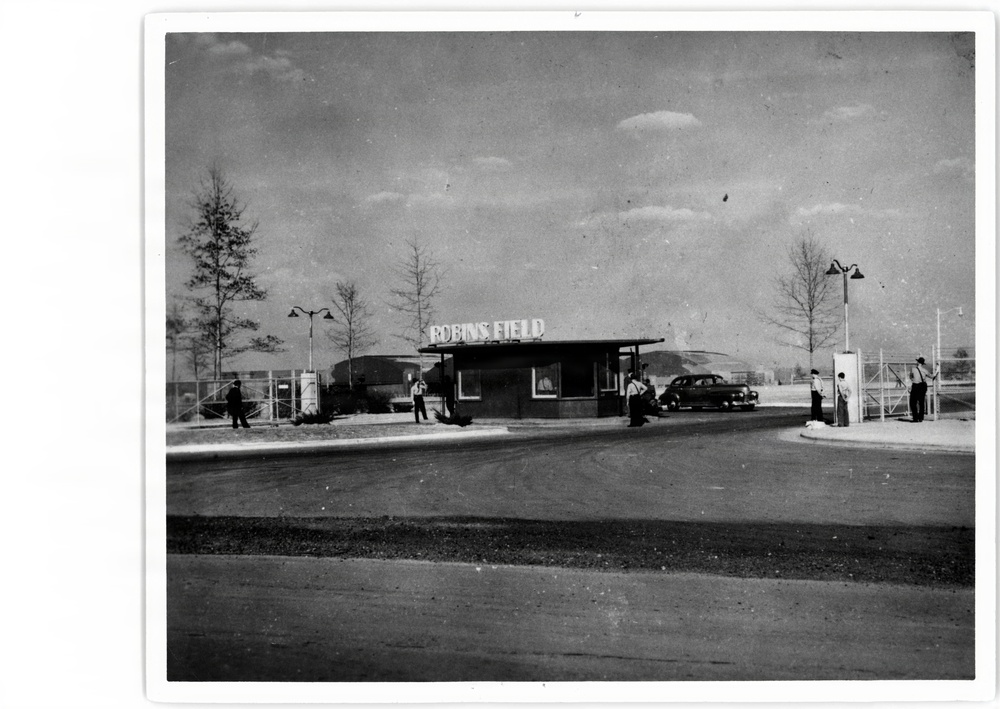
Photo By C Arce | As America marks 250 years of American independence, Team Robins is proud to honor the nation's history, values and all those who have served in defense its freedom. The construction of Robins Air Force Base, Georgia, began Sept. 1, 1941, and all three phases were completed April 10, 1943. (Courtesy photo) see less
| View Image Page
America 250 Robins legacy: Brief history of Robins AFB during WWII era
When the War Department gave official approval for the construction of an Army Air Depot in Georgia June 14, 1941, leadership believed it would be part of a long-range plan to prepare American defenses in case of war. Instead, the Japanese bombing of Pearl Harbor gave urgency to the construction of this vital military base. Construction had officially begun on the new Georgia Air Depot, located 16 miles south of Macon, Georgia, Sept. 1, 1941.
The name of the new air field and depot honored the memory of Brig. Gen. Augustine Warner Robins, one of the Army Air Corps’ first general staff officers and commander of the Fairfield Air Intermediate Depot, Ohio, from 1921 to 1928; and deputy commander of the Materiel Division, Wright Field, Ohio, from 1931 to 1933, and commander from 1935 to 1939.
Spurred on by the Japanese bombing of Pearl Harbor and American entry into World War II, builders completed the new airfield’s industrial and cantonment areas by August 31, 1942. The second and third phases were completed by April 10, 1943. As a rule, parades and military celebrations were held to a minimum during World War II, particularly in the early years when the outcome was still in doubt. Neither the president nor U.S. military leaders deemed it appropriate to hold formal military ceremonies since nothing had been won as of April 1943.
However, in the case of Warner Robins Army Air Depot, the local citizenry was so enthusiastic and so insistent that the depot commander, Col. Charles E. Thomas, agreed to hold the dedication ceremonies anyway. An earlier example of this local enthusiasm had been the willingness of Wellston city fathers to rename their town to Warner Robins Sept. 1, 1942. This action allowed Thomas to name both the field and the depot after his mentor and friend, the late Robins.
“It is most gratifying that such an important project bears the name of one who held supply and maintenance functions so close to his heart, and who inspired so many improvements in the performance of these functions,” Thomas said during a dedication ceremony for Robins.
Known as the Georgia Air Depot during the early days, the depot's name has had many incarnations during its history. During World War II, it was re-designated seven times. It was known as the Southeast Air Depot, Wellston Air Depot, Wellston Army Air Depot, Warner Robins Army Air Depot, Warner Robins Air Depot Control Area Command, Warner Robins Air Service Command, and Warner Robins Air Technical Services Command.
Throughout the war, the installation performed an essential role in winning and restoring peace. Not only did depot personnel repair aircraft weapon systems, such as the B-17, B-25 and B-29, but they also maintained spares, trained Air Corps troops and overseas repair personnel, flight tested aircraft, and trained pilots.
Originally, Robins Field consisted of just over 3,000 acres valued at $1 million. The original construction cost just over $20 million. Today, Robins AFB is situated on over 8,000 acresof an upper coastal plain, of which 2,300 acres are natural wetlands and 1,150 acres are timberlands.
NEWS INFO
Date Taken:
04.24.2026
Date Posted:
05.01.2026 08:51
Story ID:
564079
Location:
ROBINS AIR FORCE BASE, GEORGIA, US
Web Views:
30
Downloads:
0
PUBLIC DOMAIN
This work, America 250 Robins legacy: Brief history of Robins AFB during WWII era, must comply with the restrictions shown on https://www.dvidshub.net/about/copyright.