
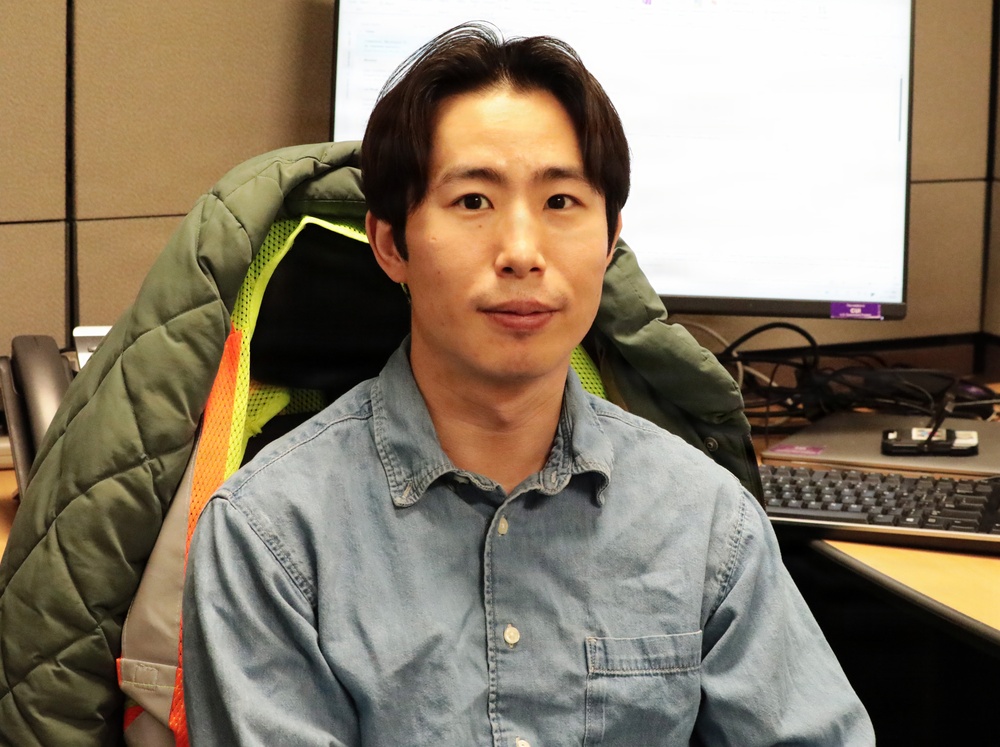
Photo By Monique Freemon | CAMP HUMPHREYS, South Korea – Staff Sgt. Kidam Paik, a former SkillBridge Program...... read more read more
CAMP HUMPHREYS, South Korea – When Staff Sgt. Kidam Paik was contemplating his future career, he wanted to ensure it would benefit society. Hence, he decided to pursue a degree in road development. Kidam’s ambition was to build road systems in low- and middle-income countries to improve their infrastructures.
Prior to joining the military, Kidam moved from Cheongju, South Korea to the U.S. at 20-years-old. His described his first time in America are a little bit “shocking,” but continued to live in the U.S. for three years. Kidam attended The University of North Carolina to study road surveillance and traffic-related systems.
“I didn’t know how to speak English to be honest. I had a language barrier. It was hard for me to be honest to understand people, but I just kept communicating with people in English. And then day-by-day my English improved,” Paik said.
After college, Kidam enlisted in the military as 11B or an Infantry Man. They https://www.goarmy.com/careers-and-jobs/ground-forces/firearms-ammunition/11b-infantryman. As he completed his service, Kidam wanted to venture back into civil engineering via USACE FED’s SkillBridge Program.
“This program offers an unrivaled opportunity for servicemembers exiting the military to work in a professional civilian environment. Serving at the Far East District is comparable to work at a large construction firm,” said Lt. Col. Robert B. Howell, Deputy Commander, U.S. Army Corps of Engineers – Far East District.
Driven by a desire to build real roads, he followed a metaphorical path to USACE FED as a SkillBridge intern. The experience strengthened his communication skills and deepened his understanding of construction in a military environment.
Stacey Young, Chief of Workforce Management Office, USACE FED, said the SkillBridge Program allows members to gain experience in the civilian world and “make them more competitive when job hunting.”
Meet Staff Sgt. Paik One of his favorite moments includes going to construct sites, particularly FED’s $115 million aviation project.
“I feel better there because I get active and look around and see what is going on; and the workers teaching me what is happening at the project site,” Kidam said.
He said the program helped him test his interest to ensure if this was the right career for him to venture into.
Can you tell us about your background and what led you to join the military? PAIK: I was born and raised in South Korea, and later I studied at a university in the United States. While I was building my life in the U.S., I had the opportunity to join the U.S. Army. One of my motivations was to earn an U.S. citizenship, but it was also a personal decision. I chose to serve in the U.S. Army because I wanted to contribute to the country where I planned to build my future, challenge myself and grow through meaningful service and leadership.
What is one lesson from your time in service that you will carry with you into civilian life? PAIK: Before I joined the Army, I was clumsy and always doing things last minute. I wasn’t familiar with American culture yet, and I had a language barrier too. After seven years of service, the military really made me a squared-away person—more disciplined, organized and reliable. I also became a weapons instructor and taught Soldiers how to operate and maintain Army weapon systems. That experience gave me a lot of confidence, especially in communicating clearly and working with all kinds of people.
Why did you choose to participate in the SkillBridge program, and how did you find this opportunity? PAIK: In the Army, when you’re getting close to Permanent Change of Station (PCS) or Expiration Term of Service (ETS), your workload often slows down because you need time to prepare for your next step. I already prepared for my ETS, so I had more time than usual. I didn’t want to waste that time; and I wanted to do something productive that would help my transition. That’s when I learned about the SkillBridge program; and realized I could gain real civilian experience before separating. That’s how I found the opportunity and why I chose to participate.
What drew you to the U.S. Army Corps of Engineers or this particular role for your internship? PAIK: When I was at university, I studied road surveillance and traffic-related systems. While I was looking for a SkillBridge program, I wanted something that connected to my academic background and provided real professional experience. FED was the best fit for me because the work relates to infrastructure, safety and operational planning. It allows me to apply what I learned in school in a real-world environment.
What has your experience been like working for FED? PAIK: Before starting SkillBridge, I didn’t really understand how construction projects worked in the military. But after working here for almost four months, I’ve learned how the system operates—how projects are coordinated, how communication flows between teams and how standards and timelines are managed.
How does your current role in the internship align with your long-term goals? PAIK: My long-term goal is to continue in a federal/public-service career. This internship aligns with that because it’s teaching me how federal and military organizations operate. It’s also helping me translate my military experience into civilian terms and build a network and experience that supports my next step.
What advice would you give to those who want to participate in the SkillBridge program? PAIK: If there’s a SkillBridge program that matches your interests, I recommend you go for it. Get the experience and get hands-on exposure. You’ll gain real-world skills, build confidence and learn how the civilian workplace functions. Overall, you’ll get a lot more positive outcomes than negatives.
What’s been the most challenging part of transitioning from military to civilian work? PAIK: I think the most challenging part is getting used to a different culture. In the military, everything is mission-focused and there are clear standards. Someone tells you the mission and you execute it. In civilian life, that structure isn’t always there. No one is going to tell me what to do step-by-step, so I have to be the one leading my own life—setting goals, managing my time and staying accountable.
What has been the most rewarding part of transitioning from military to civilian work? PAIK: The most rewarding part is seeing how much I’ve grown. The military prepared me—from someone who didn’t know much about America prior to my service—to adapt, communicate and try new things with confidence. It helped me build discipline and a strong mindset, and now I feel ready for the next chapter.
Have your goals or vision for the future changed since starting this internship? If so, how? PAIK: Honestly, yes. Coming from a combat Military Occupational Specialty, I’m used to fieldwork and prefer an active job. SkillBridge gave me a positive experience and helped me confirm what I want long term. I’m currently pursuing federal law enforcement, and after my separation from the military, I plan to attend a federal law enforcement academy.
His final thoughts, “Thank you to all the people I worked with in the Family Housing Resident Office and wish the best luck for them.”
For more information on USACE FED or the SkillBridge Program, check out the links below:
| Date Taken: | 04.20.2026 |
| Date Posted: | 04.23.2026 18:50 |
| Story ID: | 563184 |
| Location: | CAMP HUMPHREYS, KR |
| Web Views: | 43 |
| Downloads: | 0 |

This work, SkillBridge Spotlight Series: 10 Questions with Staff Sgt. Kidam Paik, by Monique Freemon, identified by DVIDS, must comply with the restrictions shown on https://www.dvidshub.net/about/copyright.


No keywords found.





