
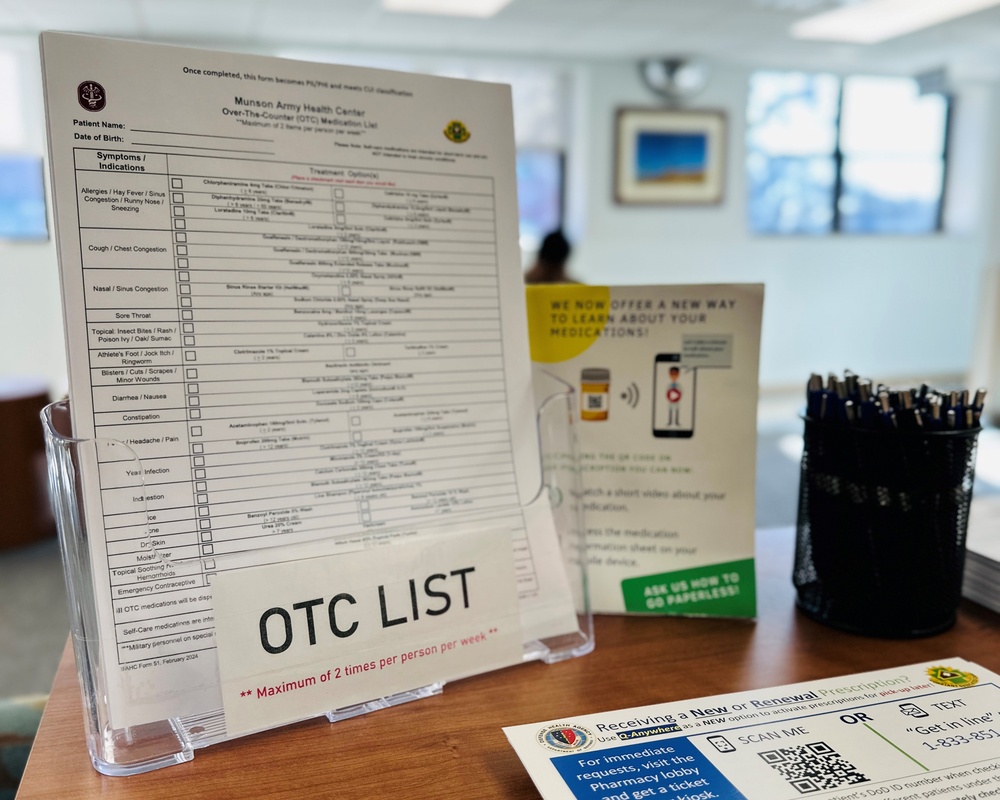
Photo By Maria Christina Yager | For many veteran seasonal allergy sufferers, relief may be found from over-the-counter...... read more read more
FORT LEAVENWORTH, Kansas -- As spring arrives, some beneficiaries may begin to experience the familiar symptoms of seasonal allergies—sneezing, congestion, itchy eyes, and runny nose. While often mild, these symptoms can impact sleep, focus, and overall well-being if left unmanaged.
Managing seasonal allergies is not just about comfort—it supports overall health, readiness, and quality of life. Addressing symptoms early can help prevent complications and keep Soldiers in the fight.
Managing Symptoms Early
According to the Centers for Disease Control and Prevention, seasonal allergies—also known as allergic rhinitis—occur when the immune system reacts to allergens such as pollen from trees, grasses, and weeds.
For many individuals, seasonal allergies can be managed with simple self-care measures and over-the-counter medications.
Munson Army Health Center offers beneficiaries select, over-the-counter allergy medications at no cost for short-term use through the pharmacy. These medications may help relieve common symptoms and may be a good first step in managing mild to moderate allergies.
“Starting treatment early—before symptoms peak—can make a significant difference,” said Lt. Col. Reginald Trevino, Munson Army Health Center Deputy Commander for Clinical Services and an internal medicine physician. “Many patients find relief with over-the-counter options when used consistently and as directed, especially at the beginning of allergy season.”
To help reduce impact of seasonal allergies, beneficiaries may:
• Monitor local pollen levels and limit outdoor exposure during peak times
• Shower and change clothes after spending time outdoors
• Keep windows closed and use air conditioning when possible
• Begin OTC medications early in the allergy season for best results
Munson’s pharmacy team can assist patients in selecting appropriate over-the-counter medications available at no cost for short-term symptom relief.
When to Self-Treat vs. When to Seek Care While many allergy symptoms can be managed at home, there are times when it’s important to consult a healthcare provider.
Self-care may be appropriate if symptoms are:
• Mild and predictable during allergy season
• Improving with OTC medications
• Not interfering with daily activities
Contact your healthcare team if symptoms are:
• Persistent or worsening despite OTC treatment
• Causing significant discomfort or disrupting sleep or daily life
• Accompanied by fever, severe sinus pain, or signs of infection
• Requiring ongoing medication beyond short-term use
“For patients who need long-term management, it’s important to involve a physician or provider,” Trevino added. “They can help develop a plan that safely controls symptoms over time and ensures the right medications are used.”
A prescription is required for long-term use of certain allergy medications to ensure appropriate care and monitoring.
For a list of over-the-counter medications available from Munson review the over-the-counter section on pharmacy webpage at https://munson.tricare.mil/Health-Services/Pharmacy
If you have questions about managing your symptoms or available medications, contact the Munson Army Health Center pharmacy or your primary care team.
| Date Taken: | 04.08.2026 |
| Date Posted: | 04.08.2026 14:33 |
| Story ID: | 562249 |
| Location: | FORT LEAVENWORTH, KANSAS, US |
| Web Views: | 137 |
| Downloads: | 0 |

This work, Seasonal Allergies on the Rise: What You Need to Know and How Munson Can Help, must comply with the restrictions shown on https://www.dvidshub.net/about/copyright.

No keywords found.





