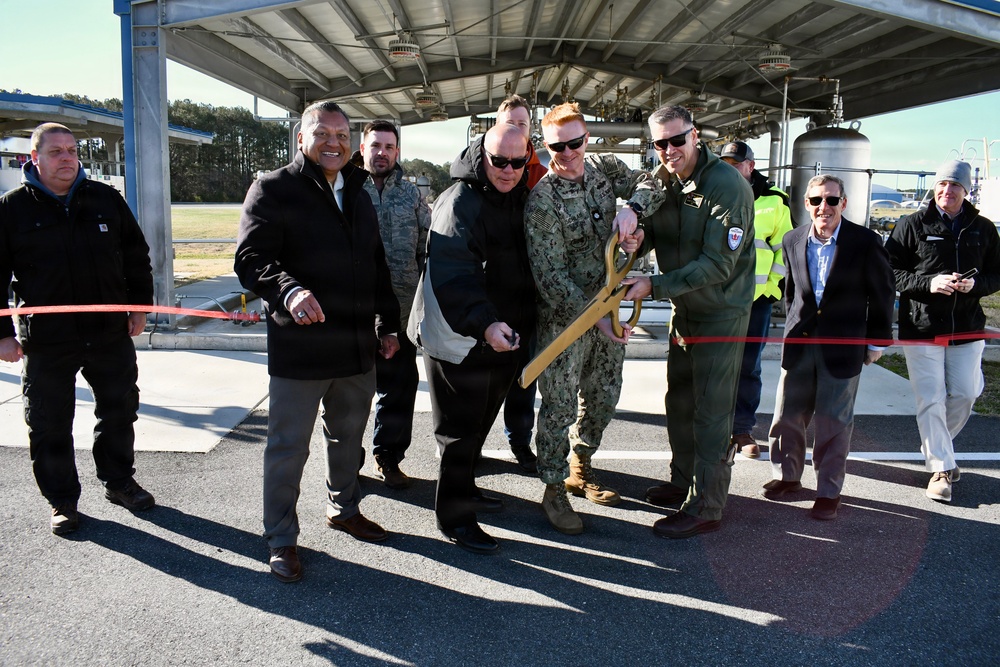
Photo By Chief Petty Officer Patrick Gordon | PATUXENT RIVER, Maryland (March 17, 2026) - NAS Patuxent River leadership cuts the ribbon on its refurbished hot pit refueling station March 17. The multi-year $3.9 Sustainment, Restoration, and Modernization project significantly enhances the air station's ability to support rapid-turnaround flight operations and ensure full compliance with NAVAIR safety standards. see less
| View Image Page
NAS Patuxent River Completes $3.9 Million Hot Pit Refurbishment Project
Naval Air Station Patuxent River officially marked the completion of a multi-year Sustainment, Restoration, and Modernization (SRM) project for its "hot pit" refueling stations with a ribbon-cutting ceremony on March 17.The $3.9 million investment, which began following a ground-breaking in April 2021, significantly enhances the air station's ability to support rapid-turnaround flight operations and ensure full compliance with NAVAIR safety standards.
“In the world of naval aviation, every second counts; hot pit refueling allows fixed and rotary-wing aircraft to refuel while their engines are still running,” saidTony Ramirez, NAS Patuxent River Installation Fuels Officer. “By eliminating the need for a full shutdown and a slow transition to a hangar, the process keeps aircraft mission-ready and drastically reduces turnaround times.
Ramirez explained that while hot refueling is inherently more complex, the time saved makes it the ideal way to refuel. Eliminating the engine shutdown and restart cycle reduces turnaround time from over an hour to less than 15 minutes.
"It keeps our pilots in the air and on schedule, rather than waiting for a fuel truck," he added.
The upgrade was a necessary upgrade given the technological advancements in naval aviation over the past forty years, much of which was developed at NAS Patuxent River. The existing facility relied on 1980s-era tactical equipment and lacked modern filtration and automated control systems. The refurbishment overhauled the piping supports and overall infrastructure, which had begun to show signs of degradation.
The ribbon cutting celebrated five years of planning and execution, providing a modernized environment for ground crews who must navigate the hazardous intake and blast zones of live aircraft to ensure the mission remains on track.

 Subscribe






