
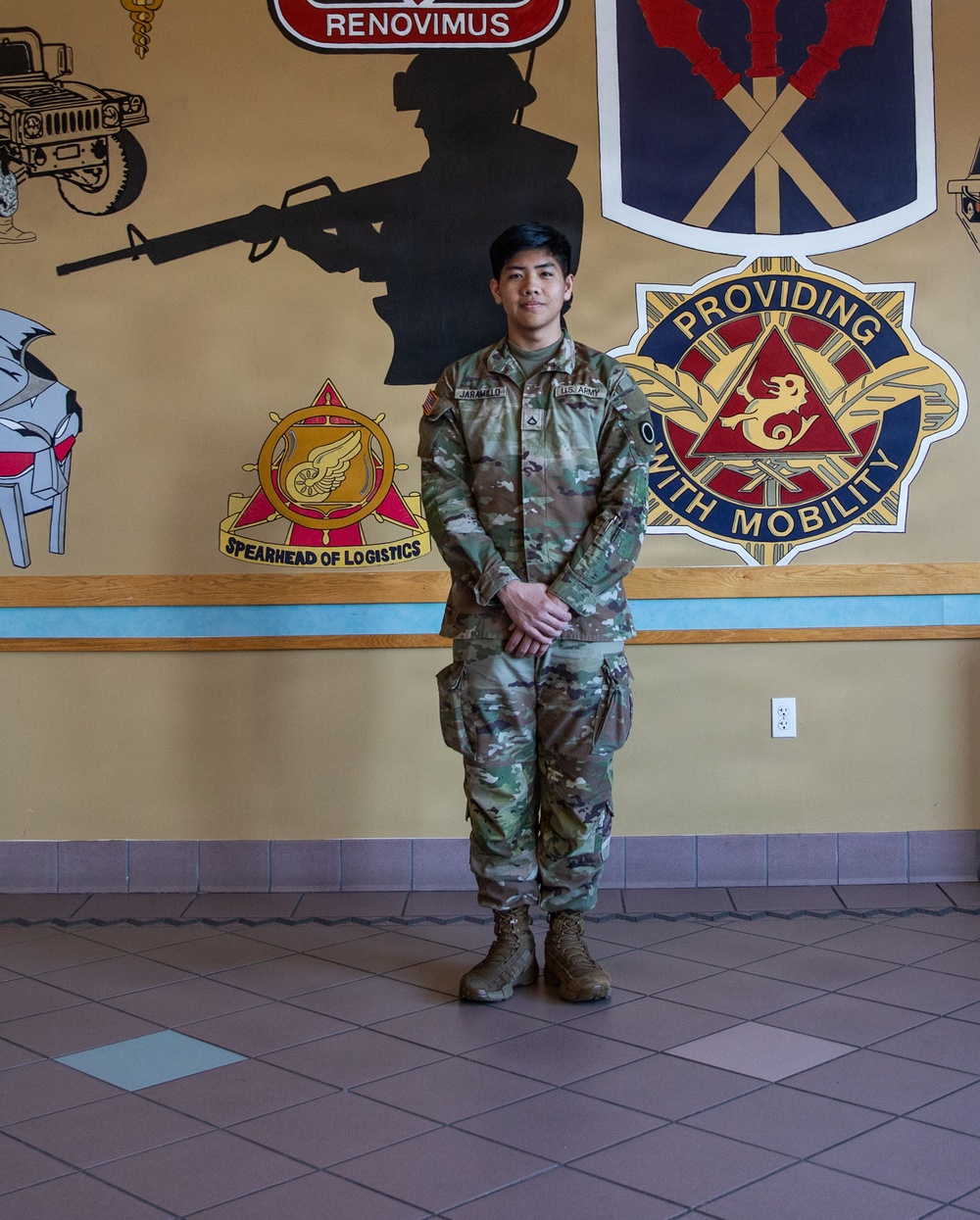
Photo By Sgt. Sar Paw | Pfc. Ceejay B. Jaramillo, an army culinary specialist (92G), and the inaugural honor...... read more read more
JOINT BASE LEWIS-McCHORD, Wash. The Tactical Foodservice Readiness Training Center at Joint Base Lewis-McChord reached a major milestone Feb. 5 when its inaugural iteration, Class 26-01, completed its first official training cycle as the Army’s newest field feeding initiative.
Sustainment leaders on JBLM initiated the TFRTC to strengthen the Culinary Specialist (92G) workforce, improve technical proficiency and reinforce long-term readiness across the installation. The center delivers consistent, hands-on, scenario-based training that prepares 92Gs for the demands of expeditionary feeding in large-scale combat operations. By investing in professional development, leader growth and holistic support, the TFRTC directly addresses the factors that contribute to 92G attrition and turns those challenges into opportunities to build a more resilient, confident and capable food service force.
The two-week course seeks to train and develop 92Gs through immersive instruction focused on field feeding operations, equipment readiness and large-scale food service support. Instructors lead training in both tactical and garrison environments, enabling Soldiers to refine expeditionary feeding, sanitation, safety and equipment maintenance skills required to support commanders in any operational setting.
The 15 Soldiers in Class 26-01 completed two weeks of intensive training with field feeding equipment, SERVSAFE certification and familiarization with food trucks and kiosk-based feeding platforms. The course also incorporated daily physical readiness training and specialized resiliency instruction through Project Seneca, a JBLM initiative that strengthens the holistic readiness of Culinary Specialists.
Project Seneca targets the unique stressors and operational demands placed on 92Gs by connecting Soldiers with Holistic Health and Fitness (H2F) subject-matter experts. The program focuses on current trends and assesses needs within the 92G population while reinforcing resilience, productivity and awareness of Army resources through intentional, whole-person care.
Soldiers in the program improve resilience, increase productivity and strengthen connection to Army support systems, generating long-term benefits for the force. The data from Project Seneca allows leaders to justify future investments in H2F staffing and facilities, giving a vision of a scalable model that units can adapt across echelons.
"The TFRTC is a significant force multiplier for JBLM. It's not just about improving cooking skills; it's about forging culinary specialists who are genuine sustainment warriors,” said Chief Warrant Officer 4 Dwight Fleary, Command Food Advisor for I Corps. “By integrating advanced field training with holistic resilience programs like Project Seneca, we are empowering our Soldiers with the confidence and technical expertise to support the warfighter in any environment. This initiative directly enhances our installation's readiness and ensures our culinary teams are prepared for the complex demands of future large-scale operations.”
The course aims to build proficiency on key feeding platforms such as Assault Kitchen, Containerized Kitchen and Mobile Kitchen Trailer through curriculum that directly supports the Army’s field feeding requirements for large-scale combat operations. Soldiers certify on wartime feeding missions, improve unit-level feeding readiness and strengthen sustainment integration across Class I planning, LOGPAC operations and support to brigade support areas and combat trains command posts.
Leader development remains a core component of the course. Instructors coach Culinary Specialists to conduct tactical planning, forecast sustainment requirements and execute rapid displacement and survivability tasks, essential for supporting dispersed, mobile and contested operations across the Indo-Pacific.
Pfc. Ceejay Jaramillo, TFRTC inaugural honor graduate, said he believes that he is now “more confident and better prepared to meet expectations as a 92G.” He emphasized, “the training helps bridge the gap between AIT instruction and real-world field feeding operations.”
With the graduation of TFRTC Class 26-01, field feeding across JBLM is taking on a new shape as these inaugural graduates begin delivering scalable, sustainable, culinary capabilities that strengthen warfighter readiness and reinforce the Army’s commitment to feeding the fight with speed, precision and expertise.
| Date Taken: | 02.05.2026 |
| Date Posted: | 03.18.2026 13:52 |
| Story ID: | 559306 |
| Location: | JOINT BASE LEWIS-MCCHORD, WASHINGTON, US |
| Web Views: | 127 |
| Downloads: | 0 |

This work, Forging Culinary Readiness: TFRTC Graduates First Class at JBLM, by CPT Francesca Hamilton, identified by DVIDS, must comply with the restrictions shown on https://www.dvidshub.net/about/copyright.


No keywords found.





