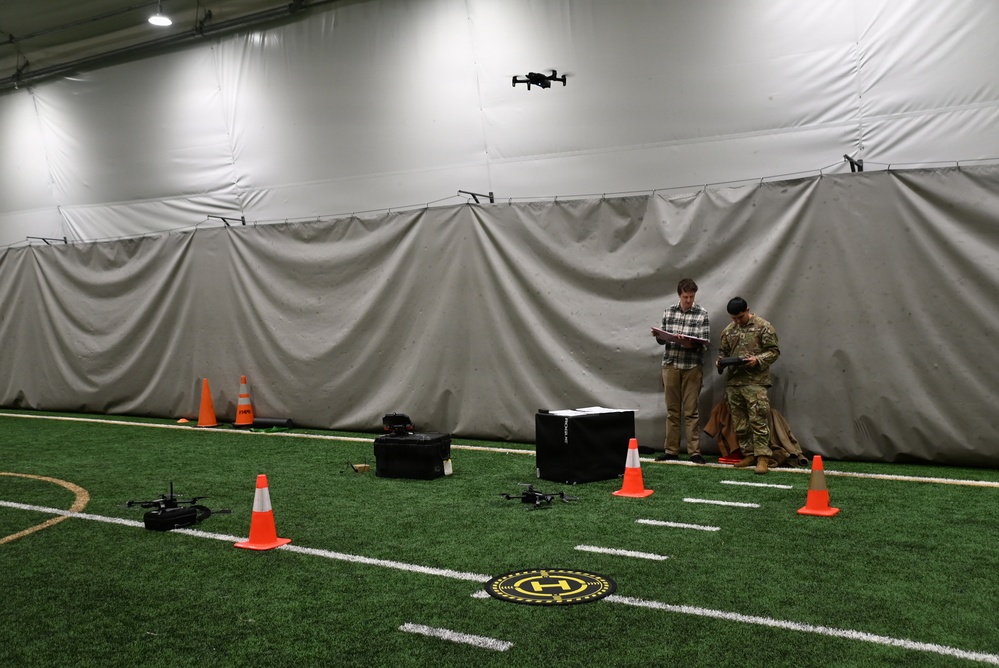
In a significant advancement for military medical logistics, Keller Army Community Hospital (KACH) has secured critical flight approvals, marking a new phase for its ambitious drone delivery program, Project MARS (Medical Autonomous Resupply System). This development propels the hospital's initiative to integrate unmanned aircraft into its operations, building on its foundational partnership with the United States Military Academy’s (USMA) Robotics Research Center.
Project MARS recently received a Certificate of Authorization (CoA) from the Federal Aviation Administration (FAA), delegated through the US Army Aeronautical Services Agency (USAASA), on January 8, 2026. This landmark approval authorizes KACH to conduct Visual Line of Sight (VLOS) drone flights across West Point until January 2028. Following this, the West Point Garrison Commander also granted approval on January 20, clearing the skies for the project to transition from planning to active operations.
"This is a pivotal moment for Project MARS and our vision for the future of military healthcare," said Col. Sean J. Hipp, the hospital commander. "Receiving FAA approval allows us to move beyond theoretical planning and into the practical application of this transformative technology. We are now officially cleared to put our training and research into practice, refining the systems that will improve the delivery of healthcare at Keller while also providing invaluable training opportunities to KACH soldiers and USMA Cadets."
The approved flights will adhere to strict safety protocols, including operating during daylight hours, staying below 400 feet, and publishing a Notice to Airmen (NOTAM) 24 to 72 hours before any flight. These initial reconnaissance missions are designed to confirm radio communication stability, validate pre-identified safe abort areas, and assess environmental factors along planned routes.
This operational phase brings a new level of realism and purpose to the collaboration between KACH and the USMA’s Electrical Engineering and Computer Sciences department. While the initial effort focused on closing the training gap for Army Medical Department (AMEDD) personnel, the program now provides a live environment for developing and testing the very systems designed by USMA cadets.
"Our collaboration has always been about creating practical, effective solutions. Now, we can begin the crucial work of route reconnaissance and validation," explained Lt. Col. Samuel Teague, the Project MARS Officer in Charge. "Every flight will provide essential data that helps us build a robust, reliable network for autonomous medical resupply. We are moving from the lab to the landscape, ensuring our systems are prepared for the complexities of real-world environments."
With a comprehensive risk assessment deeming the operations "LOW" risk and all remote pilots fully qualified, Project MARS is methodically advancing toward its goal. The initiative not only promises to enhance the patient experience and streamline garrison medical logistics but also serves as a vital blueprint for the future of prolonged field care on the battlefield. This approval marks a concrete step forward, turning the vision of immediate, medical access into an operational reality.
| Date Taken: |
02.06.2026 |
| Date Posted: |
02.06.2026 11:43 |
| Story ID: |
557619 |
| Location: |
WEST POINT, NEW YORK, US |
| Web Views: |
132 |
| Downloads: |
0 |
PUBLIC DOMAIN

This work, From the Lab to the Landscape: FAA approval allows new phase for KACH’s Project MARS, by Robert K Lanier, identified by DVIDS, must comply with the restrictions shown on https://www.dvidshub.net/about/copyright.