Counterdrug Program Enhances Law Enforcement Readiness Through Tactical Medicine Training
Photo By Peter Chang |
Instructors from the Washington National Guard's Western Regional Counterdrug Training......read moreread more
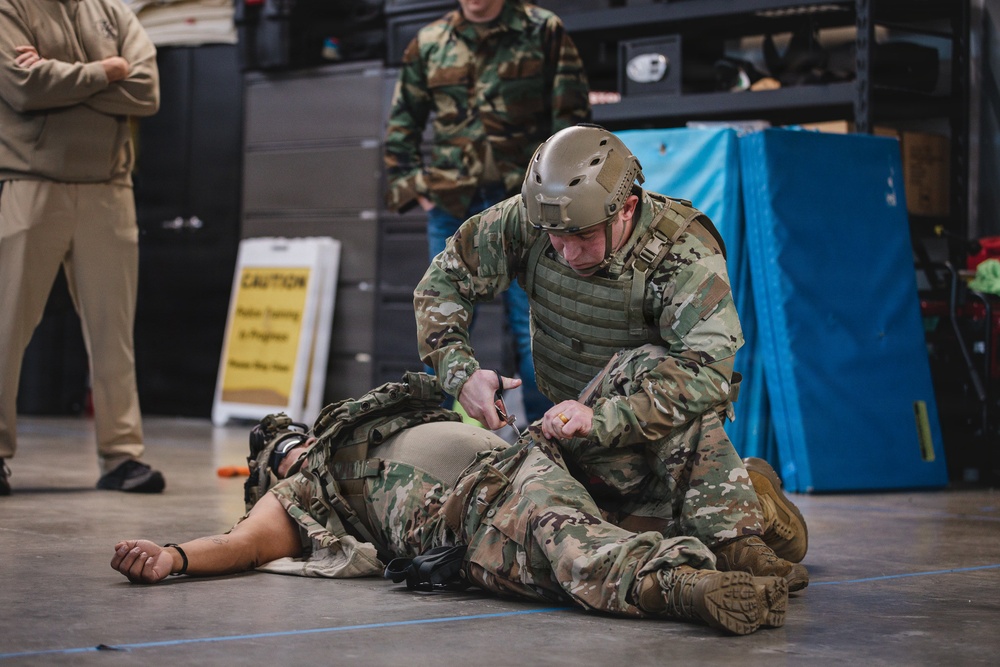
Photo By Peter Chang | Instructors from the Washington National Guard's Western Regional Counterdrug Training Center conduct a enhanced tactical medicine course with the Ridgefield Police Department in Ridgefield, Wash, Dec. 11, 2025. Enhanced Tactical Medicine course is designed to teach Law Enforcement Officers and other first responders how to treat and manage trauma patients in a civilian tactical environment. (U.S. National Guard photo by Peter Chang) see less
| View Image Page
Counterdrug Program Enhances Law Enforcement Readiness Through Tactical Medicine Training
When seconds matter and help is still minutes away, the ability to stop severe bleeding or stabilize a wounded person can mean the difference between life and death. To ensure law enforcement officers and first responders are prepared for those moments, the Washington National Guard’s Counterdrug Program, through the Western Regional Counterdrug Training Center (WRCTC), trained regional agencies in advanced, life-saving tactical medicine during a two-day course in Ridgefield, Wash., Dec. 10-11, 2025.
“The importance of working with our law enforcement partners is equipping them with the tools and resources needed to provide life-saving treatment while they’re out enforcing the law,” said 1st Sgt. Jordan Peterson, a tactical medicine instructor with the Washington Regional Counterdrug Training Center.
Through the WRCTC, Guardsmen provide counternarcotic and support training to federal, state, local, and tribal law enforcement agencies, community-based organizations, and military personnel to help disrupt and defeat drug trafficking and transnational criminal organizations that threaten U.S. national security and public safety.
As part of the school house curriculum, the enhanced tactical medicine course is designed to prepare law enforcement officers and first responders to treat and manage trauma patients in a civilian tactical environment. The 16-hour, two-day course combines classroom instruction with hands-on skills training, teaching participants how to deliver life-sustaining care in high-threat conditions. The second day culminates in evaluated scenarios that require students to apply both tactical movement and emergency medical treatment under pressure.
“The tactical medicine training we provide equips law enforcement officers with life-saving skill sets for themselves and for citizens,” Peterson said. “It makes our communities overall a safer place.”
Instructors leverage both overseas and domestic military experience to convey lessons learned in hostile environments, enabling students to identify and treat the leading causes of preventable death across multiple phases of a tactical response. The Counterdrug Program has supported law enforcement efforts since the 1980s, with the tactical medicine mission operating under WRCTC since 2017 and continuing to expand its offerings.
“We offer a wide range of programs, including hazmat support, tactical skills, and a brand-new counter-unmanned aircraft systems program,” Peterson said. “I find this job incredibly rewarding because I’m able to pass on lessons learned through military training and combat experience to help equip our law enforcement partners with the medical skills needed to make our communities safer.”
Law enforcement agencies and organizations interested in WRCTC training opportunities can request support through the center’s website at [https://www.wrctc.org/](https://www.wrctc.org/)

 Subscribe






