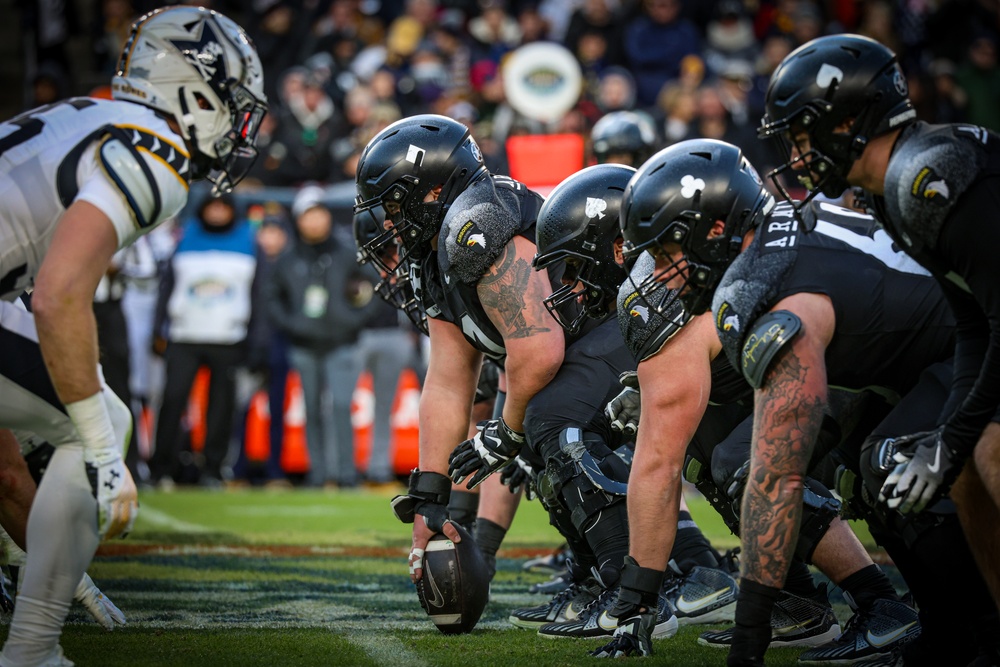
As college football season gets underway, it’s worth remembering that the games we cheer for are also linked to one of the most ambitious brain health research efforts ever undertaken. Ten years ago, the Department of Defense (now Department of War) and the NCAA launched a bold partnership: the Concussion Assessment, Research and Education program, better known as the NCAA-DOD Grand Alliance CARE Consortium. The idea was simple but powerful — by combining the experiences of athletes and service members, researchers could better understand traumatic brain injury and concussion, improving safety and care both on the athletic field and in the line of duty.
“What began as a research collaboration has grown into the largest concussion and TBI study in history,” said Dr. Paul Pasquina, professor and chair of the department of physical medicine and rehabilitation at the Uniformed Services University of the Health Sciences. “More than 60,000 student-athletes and service members have participated, generating insights that have transformed how concussions are recognized, diagnosed, and managed.”
CARE has helped to define the natural history of concussion, advance the science of recovery, and guide evidence-based policy changes across sports and the military.
In recent years, the partnership expanded through the Service Academy Longitudinal mTBI Outcomes Study, referred to as SALTOS.
“By following cadets and midshipmen across their academic and military training, SALTOS is uncovering how brain injuries affect long-term readiness, performance, and health,” added Pasquina.
Together, CARE and SALTOS represent a model of cross-sector collaboration — universities, clinicians, military researchers, and athletes working side by side.
The results have been profound and impactful. Findings from these initiatives have informed concussion protocols used across the NCAA, influenced U.S. military health policies, and sparked new innovations in diagnostics, imaging, and biomarkers.
“As we reflect on a decade of CARE and SALTOS, it’s clear that this partnership has done more than advance science — it has improved outcomes and led to further changes that aim to reduce head impact exposures and concussions,” said Dr. Deena Casiero, NCAA chief medical officer. “By uniting athletes and service members in this research, we’ve accelerated knowledge in ways that would have been impossible alone. This collaboration continues to set the standard for how we protect brain health, both on the field of play and in service to our nation.”
As the collaboration marks its tenth year, the mission is far from complete.
“The results from CARE/SALTOS have helped shift the culture,” said Ms. Kathy Lee, director, of Warfighter Brain Health Policy. They encourage early reporting, address the stigma of injury, and emphasize that protecting the brain is essential to long-term readiness. The next decade promises advances in precision medicine, digital health tools, and preventive strategies.”
And just as athletes and warfighters both push themselves to the limit — one in pursuit of victory, the other in defense of our nation — CARE and SALTOS remind us that protecting the brain is key to sustaining peak performance, resilience, and readiness for all who play and all who serve.
| Date Taken: |
09.17.2025 |
| Date Posted: |
09.17.2025 10:41 |
| Story ID: |
548388 |
| Location: |
US |
| Web Views: |
494 |
| Downloads: |
1 |
PUBLIC DOMAIN

This work, A decade of impact: 10 Years of U.S. military partnership with NCAA improves concussion research and care, by Derik Crotts, identified by DVIDS, must comply with the restrictions shown on https://www.dvidshub.net/about/copyright.