by Lori S. Stewart, USAICoE Command Historian
28 JULY 1917
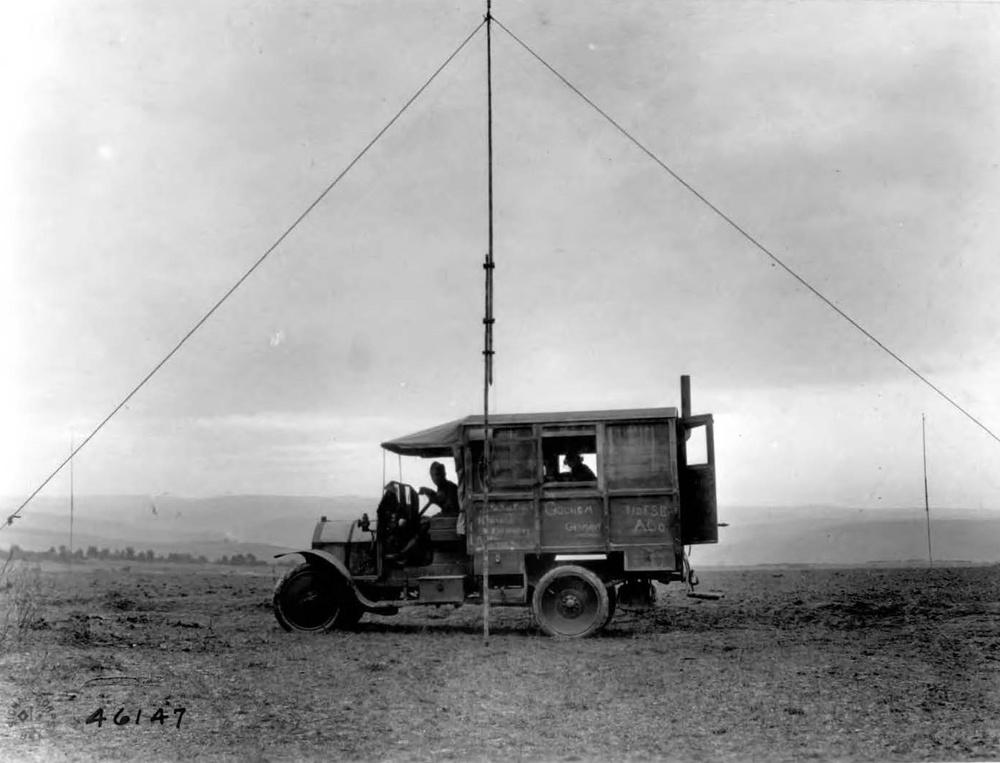
On 28 July 1917, Capt. Frank Moorman formed the American Expeditionary Forces (AEF) Radio Intelligence Section (RIS). While establishing early American tactical signals intelligence (SIGINT), Moorman’s RIS battled challenges of personnel, poorly informed commanders, and lapses in communication security.
The first widespread use of radio technology for military communications occurred during World War I. The ease of intercepting radio messages quickly spurred advances in encryption and decryption of codes and ciphers. When British intelligence informed Brig. Gen. Dennis Nolan, the AEF G-2, that two-thirds of the enemy’s divisions had been identified by intercepting and decoding Germany’s radio messages, Nolan acknowledged the U.S. was woefully unprepared for such efforts. On 28 July 1917, he tasked Capt. Frank Moorman to form the AEF’s RIS, also known as G-2 A6.
Moorman, a 40-year-old Coast Artillery officer, was acting director of the Signal School at Fort Leavenworth before the war. Arriving in France, he understood little more than his mission: to read and decipher German radio messages. Starting from scratch, Moorman soon built a successful collaborative network that provided the AEF with reliable intelligence throughout the war.
The U.S. Army’s Signal Corps, which had responsibility for code compilation and communications security, figured prominently in Moorman’s network. Their own Radio Intelligence Service, later renamed the Radio Section, established, operated, and maintained listening stations close to the front. Personnel manning these stations intercepted and copied enemy radio messages around the clock. The Signal Corps turned recorded messages over to RIS personnel at each Army headquarters for decipherment and analysis using keys provided by G-2 A6. The most difficult codes and ciphers and potentially important messages were passed up to Moorman’s section.
The U.S. Army’s first foray into tactical signals intelligence surpassed the efforts of its Allies. Its eight listening stations intercepted more than 72,000 messages and 238,000 telephone calls. Additionally, personnel located enemy radio stations, constructed net diagrams, intercepted and located radio signals from airplanes ranging for hostile artillery, policed U.S. Army telephone lines near the front for operational security, and distributed American trench codes. They also helped develop enemy order of battle through traffic analysis by using call signs and knowledge of German communication protocols.
In December 1917, the RIS intercepted a transmission indicating a pending enemy barrage targeting a U.S. division co-located with the French. The RIS passed this intelligence to frontline headquarters in time to allow the Allies to unleash a counter-battery attack. Successes like this won over commanders skeptical of code and cipher work, but they also exposed a vulnerability. Moorman cautioned that his system was successful primarily because of the static nature of trench warfare. Its value decreased with a more mobile enemy as the RIS could not maintain close contact long enough to establish listening stations and install necessary equipment.
In 1920, Moorman passed his insights on to officers of the Military Intelligence Division. His most pressing problem? “The difficulty in finding men who could actually think without a guardian was surprising. It is hoped that one of the aims of the future will be to develop this ability in men chosen for code and cipher work.” Another obstacle was educating commanders about code and cipher work. “What [headquarters] wanted us to do was pick out the important messages, decode them, and let the rest go.…It was a matter of considerable difficulty to make them see…that the Germans did not tag their important messages before sending them.” Equally important was educating troops about the importance of safeguarding their own communications. Moorman warned, “It is a sacrifice of American lives to unnecessarily assist the enemy in the solution of our code.” Too often, soldiers mishandled codes and refused to “[observe] the ‘foolish’ little details that the code man insists on.” Moorman correctly predicted these issues would endure in the future.
----
"This Week in MI History" publishes new issues each week. To report story errors, ask questions, or be added to our distribution list, please contact: TR-ICoE-Command-Historian@army.mil.
| Date Taken: |
07.21.2023 |
| Date Posted: |
07.21.2023 15:12 |
| Story ID: |
449766 |
| Location: |
US |
| Web Views: |
150 |
| Downloads: |
0 |
PUBLIC DOMAIN

This work, CPT Moorman Forms Radio Intelligence Section in France (28 JUL 1917), by Lori Stewart, identified by DVIDS, must comply with the restrictions shown on https://www.dvidshub.net/about/copyright.

 Subscribe





