
 Subscribe
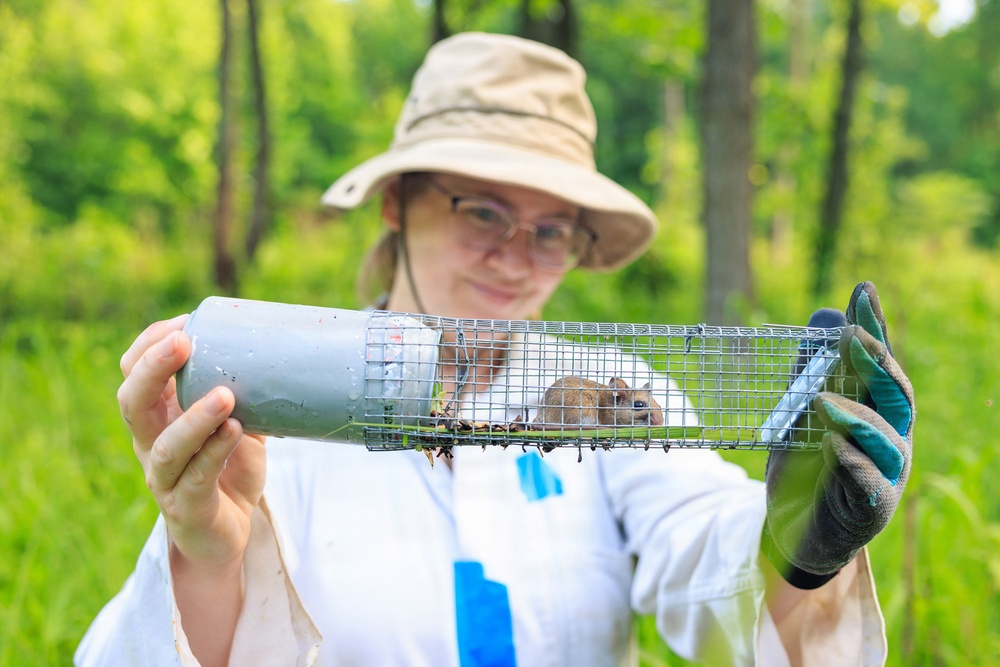
Dr. Robyn Nadolny, Chief, Vector-Borne Disease Branch, Defense Centers for Public Health - Aberdeen, examines a white-footed mouse captured in a humane trap during a field study on Thursday June 11, 2026 at Aberdeen Proving Ground, Maryland. Dr. Nadolny and her team collect ticks from wildlife and tests the ticks and the mammals for pathogens, which helps identify and mitigate public health threats in the area. Diseases like Lyme disease, Rocky Mountain spotted fever, and ehrlichiosis can severely impact a service member's health, leading to lost duty days and long-term health complications, thereby degrading mission readiness. Understanding emerging tick-borne risks allows the military to implement targeted preventative measures, such as treated uniforms, landscape management programs, tailored health briefings, and targeted diagnostic testing (Defense Health Agency - Public Health photo by Graham Snodgrass).
| Date Taken: | 06.11.2026 |
| Date Posted: | 07.24.2026 11:19 |
| Photo ID: | 9830142 |
| VIRIN: | 260611-D-KQ948-1076 |
| Resolution: | 3000x2000 |
| Size: | 974.44 KB |
| Location: | ABERDEEN PROVING GROUND, MARYLAND, US |
| Web Views: | 22 |
| Downloads: | 1 |

This work, Understanding emerging tick-borne risks at Aberdeen Proving Ground [Image 3 of 3], by Graham Snodgrass, identified by DVIDS, must comply with the restrictions shown on https://www.dvidshub.net/about/copyright.


No keywords found.




