
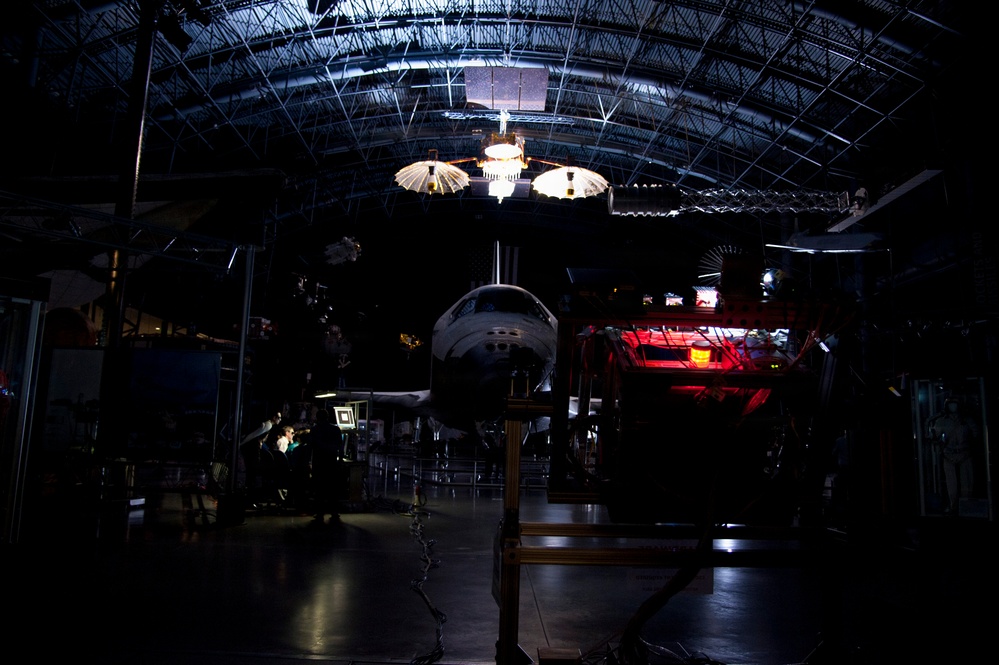
The Smithsonian Imaging Test is part of a larger Phoenix mission risk reduction effort. Flight traceable instruments, including visible light cameras, stereo cameras, LIDAR, and Flash LIDAR, were used to gather images and 3D point clouds of satellite targets similar to those the Phoenix mission may service on orbit. This data is being used to evaluate sensor performance, validate sensor requirements, and to develop machine vision algorithms. These results will reduce overall mission risk by providing verification and validation of sensor selection, early enough in the mission development cycle to make adjustments as needed without impacting mission cost or schedule. POC Steven Butcher (Contractor). Code 8210
| Date Taken: | 07.16.2026 |
| Date Posted: | 07.16.2026 11:47 |
| Photo ID: | 9814079 |
| VIRIN: | 130313-N-NO204-1238 |
| Resolution: | 3000x1996 |
| Size: | 1.36 MB |
| Location: | WASHINGTON, DISTRICT OF COLUMBIA, US |
| Web Views: | 36 |
| Downloads: | 2 |

This work, From Sketch Pad to Launch Pad: U.S. Naval Research Laboratory’s Space Robotics Revolution [Image 7 of 7], by Daniel Parry, identified by DVIDS, must comply with the restrictions shown on https://www.dvidshub.net/about/copyright.


From Sketch Pad to Launch Pad: U.S. Naval Research Laboratory’s Space Robotics Revolution
No keywords found.





