
Courtesy Story | Defense Threat Reduction Agency's Chemical and Biological Technologies Department | 10.22.2020
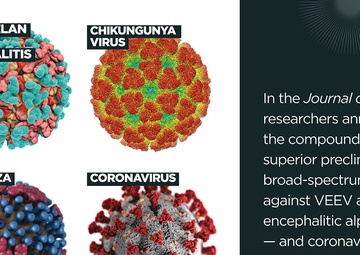
Threat-agnostic medicines are critical when dealing with unknowns such as COVID-19. What if one antiviral pill could counter several biological threat agents? While broad-spectrum antibiotics have existed for almost one hundred years, broad-spectrum antivirals are relatively new and few in number. With aid from the Defense Threat Reduction Agency’s (DTRA) Chemical and Biological......
Courtesy Story | Defense Threat Reduction Agency's Chemical and Biological Technologies Department | 10.22.2020
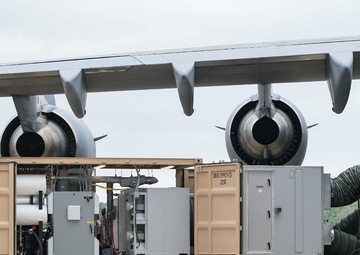
During the ongoing COVID-19 pandemic, the U.S. Department of Defense (DoD) has quickly and safely transported COVID-19-infected warfighters and civilians by aircraft to hospitals for care. Inside the aircraft, patients rested in biocontainment systems to prevent aerosolized severe acute respiratory syndrome coronavirus 2 (SARS-CoV-2), the virus that causes COVID-19, from infecting the aircrew......
Courtesy Story | Defense Threat Reduction Agency's Chemical and Biological Technologies Department | 10.06.2020
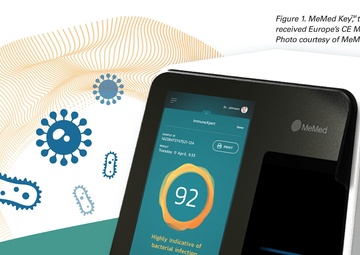
“I woke up with a cough and a sore throat. What should I do? Should I go to work? Should I see a doctor?” Without answers, these questions promote uncertainty, stress, and the potential for the symptoms to become worse, and during the COVID-19 pandemic, the answers are even more necessary as close to symptom onset as possible. If the cause of the illness is bacterial, then an antibiotic is......
Courtesy Story | Defense Threat Reduction Agency's Chemical and Biological Technologies Department | 10.06.2020
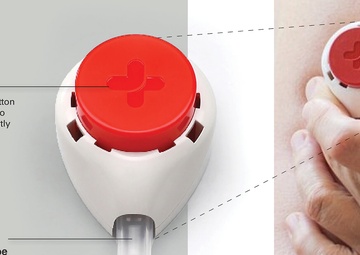
When caring for sick warfighters on the battlefield, medics need to be able to draw blood efficiently and quickly. The volume of blood collected needs to be enough to perform diagnostic tests that identify disease or an exposure to a chemical or biological threat agent, so medics draw blood from the vein to collect the quantity needed. They use many tools: needles, syringes, and test tubes to......

Courtesy Story | Defense Threat Reduction Agency's Chemical and Biological Technologies Department | 08.12.2020
DTRA CB is learning why one stubborn bacterium just loves humans so much. In a large family, there is at least one rebel. In the bacterial family of Burkholderia, which includes over 100 siblings, Burkholderia pseudomallei is this outlier because of its ability to virulently infect humans. The U.S. Centers for Disease Control and Prevention labels B. pseudomallei as a Category B bioterror......
Courtesy Story | Defense Threat Reduction Agency's Chemical and Biological Technologies Department | 07.30.2020
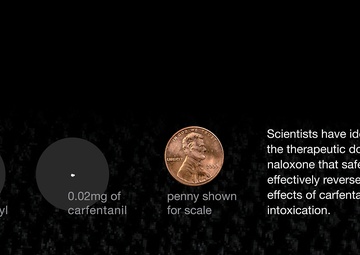
The first wave of deaths in the opioid epidemic began in 1999. By 2018, more than 450,000 Americans had died from opioid intoxication or overdoses,1, 2 and synthetic opioids had established themselves as an emerging threat to warfighters and first responders. An antidote for an opioid overdose is naloxone, but the amount that reverses an overdose of a natural opioid, such as morphine, is not......
Courtesy Story | Defense Threat Reduction Agency's Chemical and Biological Technologies Department | 07.30.2020
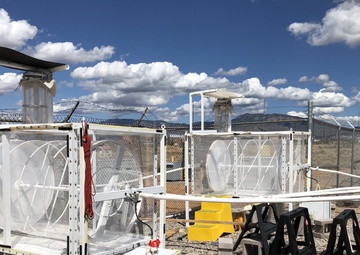
A biological threat agent explodes out of a metal tube and travels toward a formation of warfighters. Thousands of aerosolized agents speed through the air. While some agents infect warfighters, others remain in transport or slam into rocks, trees, and the ground. Aerosolized agents that linger in the open-air environment, before decontamination efforts begin or even during that time when they......




