
Courtesy Story | Defense Threat Reduction Agency's Chemical and Biological Technologies Department | 02.07.2017
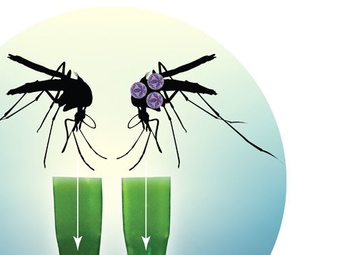
Zika is the latest mosquito-borne disease to capture media attention, but mosquito-transmitted diseases are not new. In fact, malaria originated in Africa around 2700 BC and yellow fever more than 400 years ago. Currently, 10 mosquito-related diseases pose a threat to public health and warfighter safety, making early detection a priority for the Defense Threat Reduction Agency’s Joint......

Courtesy Story | Defense Threat Reduction Agency's Chemical and Biological Technologies Department | 10.20.2016
FORT BELVOIR, VA - In new research funded by the Defense Threat Reduction Agency's Joint Science and Technology Office (JSTO) and performed by U.S. Naval Research Laboratory (NRL) scientists, shark antibodies are proving to offer new alternatives to chemical and biological threat detection and treatment tools. In an era of Department of Defense belt-tightening, the goal is to find more......
Courtesy Story | Defense Threat Reduction Agency's Chemical and Biological Technologies Department | 06.30.2016
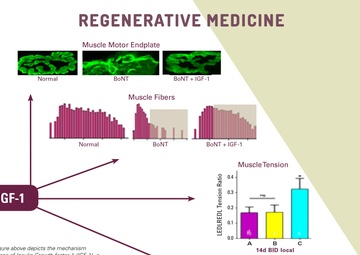
Engineered by the Canadian weapons program in 1939, Botulinum neurotoxins (BoNTs), once known as Agent X, are some of the most lethal toxins available. Although Canada did not produce a biological weapon using BoNTs, the United States, Japan, Germany, former Soviet Union and Iraq successfully engineered BoNTs for use as a weapon of mass destruction....
Courtesy Story | Defense Threat Reduction Agency's Chemical and Biological Technologies Department | 05.24.2016
Much like the skin is the body’s first line of protection, a warfighter’s uniform acts in a similar way against chemical and biological threats. However, the research, development and production of uniforms to equip more than two million troops does not come at a small cost. To address this issue, the Defense Threat Reduction Agency’s Joint Science and Technology Office, in collaboration......




