
Photo by Matt Gonzales | Marine Corps Systems Command | 04.04.2019
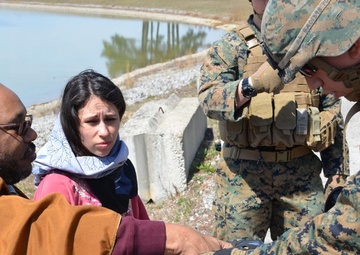
A Marine uses a biometric system to collect the fingerprints of exercise participants during a humanitarian aid disaster relief scenario. In April 2019, a group of Marines and civilians participated in a series of roleplaying activities to test two intelligence systems the Corps is considering as a replacement biometric system. (U.S. Navy photo by Keystella Mitchell)...
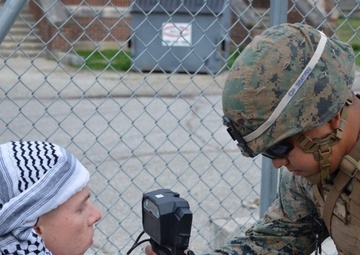
Photo by Matt Gonzales | Marine Corps Systems Command | 04.03.2019
A Marine employs a biometric system to examine the profile of an exercise participant at an Entry Control Point. In April 2019, a group of Marines and civilians participated in a series of roleplaying activities to test two intelligence systems the Corps is considering as a replacement biometric system. (U.S. Navy photo by Keystella Mitchell)...
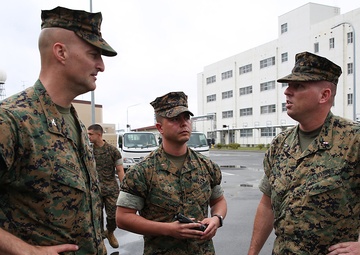
Photo by Sgt. Jessica Quezada | Marine Corps Air Station Iwakuni | 06.07.2016
From left to right, U.S. Marine Corps Col. Daniel Shipley, commanding officer of Marine Aircraft Group 12, Chief Warrant Officer Jonathan B. Davis, Chemical, Biological, Radiological and Nuclear officer in charge with MAG-12, and Chief Warrant Officer Christopher Joy, CBRN defense officer with 3rd Marine Division, CBRN defense platoon, Headquarters Battalion, III Marine Expeditionary Force,......
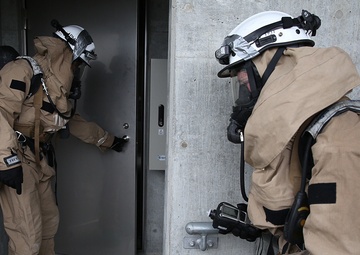
Photo by Sgt. Jessica Quezada | Marine Corps Air Station Iwakuni | 06.07.2016
U.S. Marines from 3rd Marine Division, Chemical, Biological, Radiological and Nuclear defense platoon, Headquarters Battalion, III Marine Expeditionary Force, prepare to enter a room suspected of hazardous materials during exercise Habu Sentinel 16 at Disaster Village, Marine Corps Air Station Iwakuni, Japan, June 7, 2016. As the annual capstone exercise for the division’s response element,......
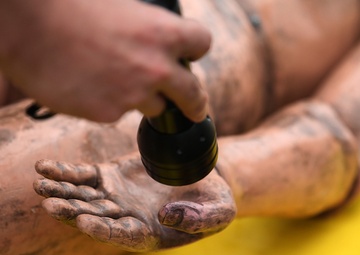
Photo by Sgt. Jessica Quezada | Marine Corps Air Station Iwakuni | 06.07.2016
Simulated casualties are screened for chemicals after decontamination during exercise Habu Sentinel 16 at Disaster Village, Marine Corps Air Station Iwakuni, Japan, June 6, 2016. As the annual capstone exercise for the 3rd Marine Division, Chemical, Biological, Radiological and Nuclear defense platoon, Headquarters Battalion, III Marine Expeditionary Force, response element, this event......
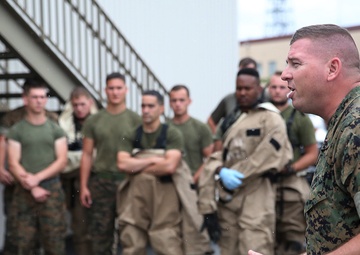
Photo by Sgt. Jessica Quezada | Marine Corps Air Station Iwakuni | 06.07.2016
U.S. Marine Corps Chief Warrant Officer Christopher Joy, Chemical, Biological, Radiological and Nuclear defense officer with 3rd Marine Division, CBRN defense platoon, Headquarters Battalion, III Marine Expeditionary Force, mentors his Marines before they respond to a simulated CBRN threat during exercise Habu Sentinel 16, at Disaster Village, Marine Corps Air Station Iwakuni, Japan, June 6,......
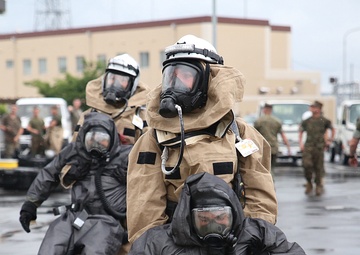
Photo by Sgt. Jessica Quezada | Marine Corps Air Station Iwakuni | 06.07.2016
U.S. Marines from 3rd Marine Division, Chemical, Biological, Radiological and Nuclear defense platoon, Headquarters Battalion, III Marine Expeditionary Force, evacuate simulated casualties during exercise Habu Sentinel 16 at Disaster Village, Marine Corps Air Station Iwakuni, Japan, June 7, 2016. As the annual capstone exercise for the division’s response element, this event encompasses......
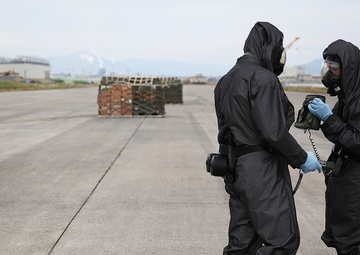
Photo by Sgt. Jessica Quezada | Marine Corps Air Station Iwakuni | 06.06.2016
U.S. Marines from 3rd Marine Division, Chemical, Biological, Radiological and Nuclear defense platoon, Headquarters Battalion, III Marine Expeditionary Force, prepare to respond to contaminated cargo during exercise Habu Sentinel 16 at Marine Corps Air Station Iwakuni, Japan, June 7, 2016. Marine Aerial Refueler Transport Squadron (VMGR) 152, stationed at MCAS Iwakuni, assisted in the scenario......




