
Courtesy Photo | This year’s National Preparedness Month theme, "Americans Stand Ready," announced by...... read more read more
 Subscribe
FORT BRAGG, N.C. — As the nation marks September as National Preparedness Month, Fort Bragg leadership is calling on all Soldiers, civilian employees, and military families to actively build personal and household resilience.
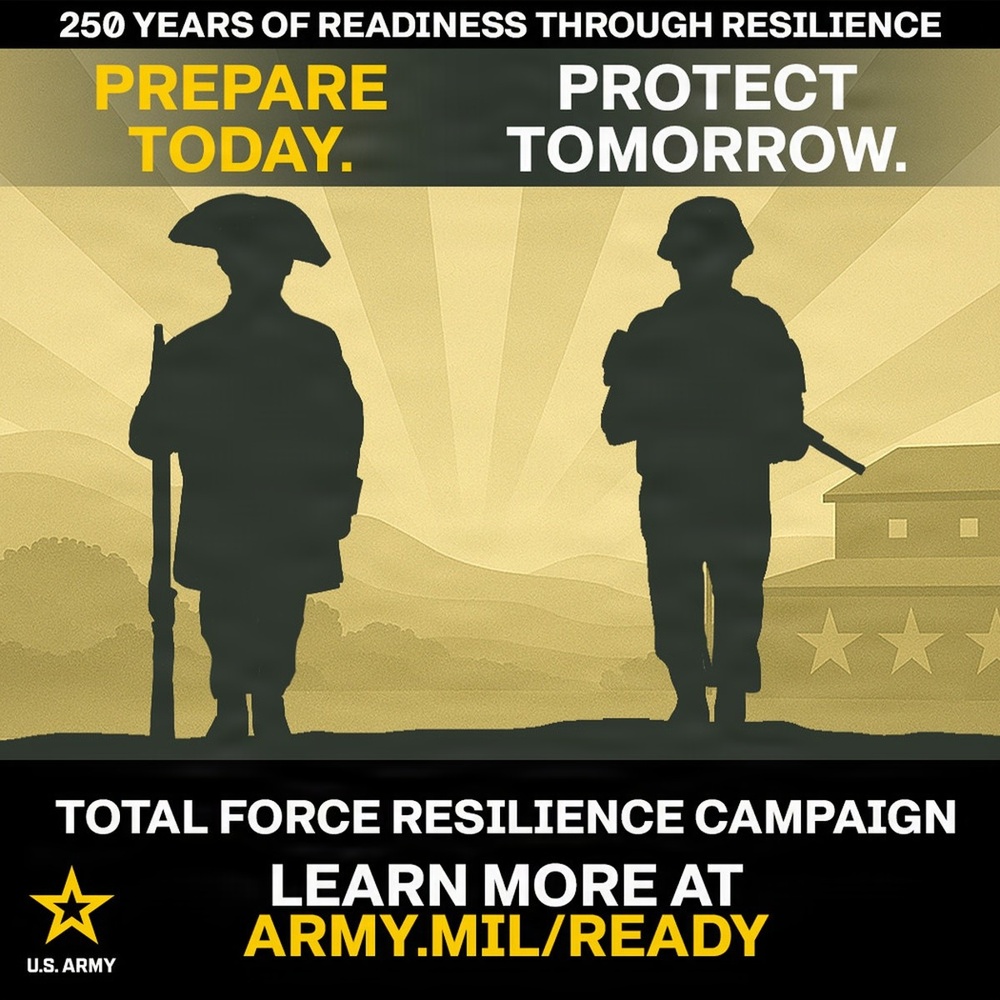
This year’s national theme, "Americans Stand Ready," announced by the Federal Emergency Management Agency (FEMA), aligns directly with the Department of War’s Total Force Resilience Campaign and the 2026 National Resilience Strategy. The campaign emphasizes a critical military and civic truth: self-reliance is a patriotic duty that preserves emergency response capacity for the most critical lifesaving missions during a crisis.
"Readiness is not just an individual or unit requirement on the battlefield, it is a baseline necessity at home," said Robert Lacey, Emergency Management Specialist with Fort Bragg’s Directorate of Plans, Training, Mobilization and Security. "When a major crisis strikes, local emergency services and military assets must prioritize immediate life-saving missions and critical infrastructure repair. Personal self-reliance during the initial hours of a disaster is a mission-essential capability that keeps our force operational and our families safe."
Disaster response operations follow a structured timeline. Understanding this timeline helps families prepare for what to expect during a major incident.
The Immediate Crisis (0 to 72 Hours) During the initial three days of a major disaster, emergency services and military resources are rapidly mobilizing. Response assets prioritize mass casualty rescue, command centers, and critical infrastructure. During this window, families must be fully self-sufficient, relying entirely on pre-staged kits and emergency plans.
The Sustained Response (72+ Hours) Once critical roadways are cleared, distribution of water, food, medical aid, and power restoration begins to reach the broader community. At this stage, people must ensure they have access to public information and maintain contact with their chain of command.
Avoiding the Cost of Complacency Emergency services coordinators cite three common pitfalls that place families and operations at risk during unexpected emergencies.
Take Charge of Your Readiness Preparing is an active duty, not a passive task. Fort Bragg leadership is urging Soldiers, civilians and military families to review their household and vehicle preparedness this month.
Every household should secure a minimum of 72 hours of essential supplies, including:
Taking these steps helps ensure our families remain safe when a crisis strikes and enables our first responders to focus on critical missions.
For more information on family emergency planning and checklists, visit http://www.fema.gov/
About Fort Bragg Fort Bragg is the "Home of the Airborne and Special Operations Forces," serving as one of the largest military installations in the world. Housing premier rapid-deployment forces, the installation remains dedicated to maintaining global readiness, supporting military families, and fostering resilient community partnerships.
*Release written with AI assistance.
| Date Taken: | 09.15.2026 |
| Date Posted: | 09.15.2026 13:07 |
| Story ID: | 574760 |
| Location: | FORT BRAGG, NORTH CAROLINA, US |
| Hometown: | EAST FAYETTEVILLE, NORTH CAROLINA, US |
| Web Views: | 20 |
| Downloads: | 0 |

This work, Fort Bragg Aligns with National Campaign: 'Americans Stand Ready' for National Preparedness Month, must comply with the restrictions shown on https://www.dvidshub.net/about/copyright.


No keywords found.




