
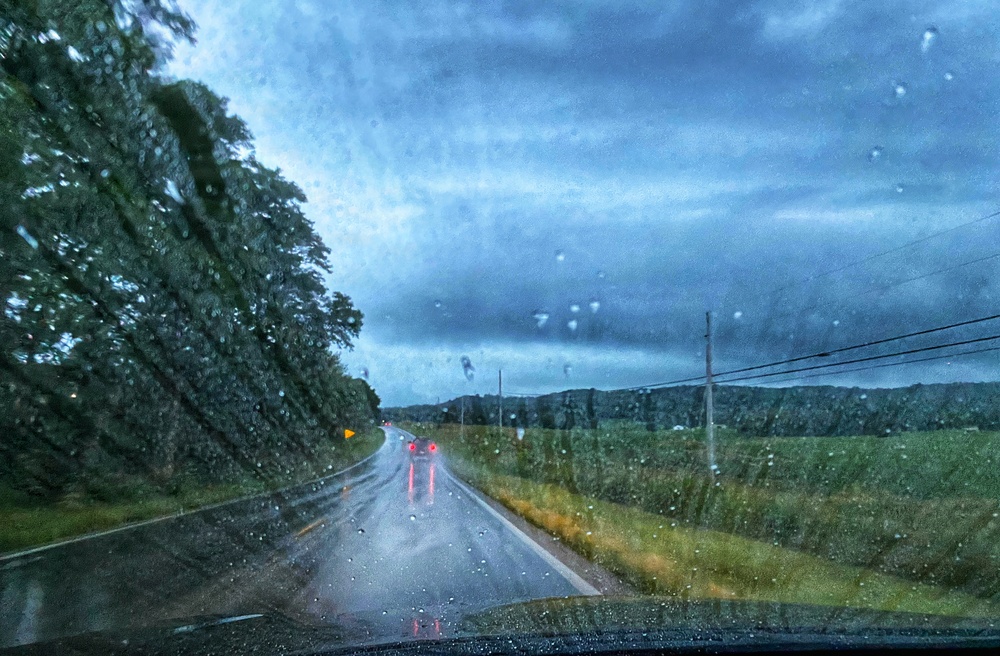
Photo By Eric Pilgrim | The storms of life are going to come. What you do to prepare for them can make a big...... read more read more
FORT KNOX, Ky. — Disasters strike almost every day somewhere around the world.
Everything from wildfires to floods, hurricanes, earthquakes, wind and hail, blizzards, tornadoes and more are oftentimes unpredictable and have the potential to destroy massive swaths of land and countless lives. They also come with a substantial financial loss.
As a result, preparedness cannot be just a one-and-done generic checklist. It must be an active, ongoing strategy that can be adjusted to fit the emergency. Question is: if a disaster strikes tomorrow, are you financially prepared for it?
National Preparedness Month is observed every September to promote proactive disaster planning. Established in 2004, three years after the events of Sept. 11, 2001, leaders use it to emphasize education and awareness to remind others to get ahead of the wave by taking proactive measures before emergencies happen.
While physical survival is vital, disaster readiness can still be a financial challenge. Household recovery depends on immediate cash liquidity [accessibility], proper insurance underwriting, personal record protection, credit defense shield and access to federal recovery mechanisms.
True financial preparedness goes beyond food and water.
During the first 30 days after an event, known as the “post-disaster” period, out-of-pocket expenses hit immediately and typically range from $3,500 to more than $8,000. These costs are incurred long before insurance claims are filed or federal aid, such as FEMA or SBA loans, is offered.
A structured financial plan defines potential expenses involved in a disaster and critical operational steps that require consideration. Here are some things to consider:
· Develop an action plan. Have a concrete plan in place to manage expenses before relief arrives. The plan should include: o Costs for medical expenses (out of network clinic co-pays and prescription refills), lodging and travel costs to include fuel, hotel stays, and more o Home or business emergency costs could include protective measures such as tarps, tree removal, window boarding and water extraction services. o Daily living costs, which may include eating out due to kitchen loss, buying non-perishable foods, generator fuel due to power outages, and more o Apparel and basic needs: replacing work clothes, buying protective gear and purchasing essential hygiene products
· Have basic survival expenses on hand. Don’t forget that when a disaster strikes, it frequently causes local economic and workplace interruptions. Plan for the following: o Possible economic shutdown due to natural disaster o Loss of income due to work disruption o Are ATMs or banks open for business should an outage occur? Do you have a stash of cash? Maintain small bills (1’s, 5’s, 10’s and 20’s) stored safely in a location that is easily accessible. o Are your vital financial records and other pertinent documents safe? Where do you keep them?
· Conduct an insurance policy review. A proactive review of your policy identifies exclusions and verifies replacement costs and out-of-pocket deductibles before a disaster strikes. o Insurance adjustor costs or claims o Coinsurance compliance – Does dwelling coverage meet the standard 80% to avoid pro-rated penalties? o Consider costs you would be required to pay that the insurance doesn’t cover. o Review deductibles. o What is included in the homeowner’s insurance policy, and what is excluded? Water backups, sump overflow or basement damage are often excluded from the standard homeowner’s policy. What is the cap on flood insurance? Do you have a dedicated water backup or storm riders? o Determine replacement costs (structure and contents) and review declarations to verify what your policy offers: what-if scenarios; rebuilding costs; extra rider coverage.
· Proof of loss. Most policies require the policyholder to identify losses within 60 days of the event. Without documented proof, the standard 40-70% depreciation schedules apply. o A pre-disaster walkthrough might include a video that is encrypted in a cloud drive. This includes opening closets, drawers, cabinets, the attic, garage and storage shed. Determine the age and approximate value. o Capturing specific information, including make and model, serial number and barcode on all electronics, tools, major appliances and the HVAC. o Consider an appraisal not only for your home and property but jewelry, firearms, silverware and fine art: (standard policies cap on jewelry at around $1,500 total). o Your post disaster damage walk-through … document every compromised structure as soon after the disaster as safely possible.
· Credit management. Missing payments during displacement can severely damage your credit score. There are specific protections that can mitigate this risk: o You can invoke post-disaster defense mechanisms. o Contact mortgage services, auto lenders or credit card issuers early. You might invoke the FEMA disaster declaration number if you have missed payments. o The FCRA & Cares Act Protection enforces if an account was current prior to a disaster. The creditor must continue reporting as current during relief period. o You can negotiate post-forbearance modification if you get behind on your mortgage. o You can include a statement signifying the disaster code AW (affected by natural disaster) on the three major credit reporting files (Experian, Equifax and TransUnion). o You could consider the Home Equity Line of Credit (HELOC) to serve as backup line of credit.
· Relief recovery o FEMA – there are grants for the uninsured for essential housing and basic needs. There are usually capped limits; but in some cases, they do not require repayment. o SBA loans – low interest loans from the Small Business Administration up to $500,000 for residence repairs and up to $100,000 for personal property replacement with a repayment plan for up to 30 years. o Secure 2.0 Qualified Disaster Distribution – enables you to withdraw up to a $22,000 penalty free from your 401(k) or traditional IRA. The 10% early withdrawal fee is waived; tax liability is spread evenly over three years with full repayment permitted within the three years. o Losses can be deducted on the current year’s tax return. However, your affected area must be a federally declared disaster.
· Safeguarding vital records o Securely and discreetly store scanned PDFs of your actual insurance binder, your inventory video, or documents like deeds, titles, account numbers, birth certificates and passports among many others. o Keep paper originals and emergency cash in a portable home waterproof/fireproof lockbox or safe, or in a bank safety deposit box. Secure physical and digital copies of policy numbers, claim numbers, mortgage servicer contact information and any other important account/PIN numbers with your documents. o Verify your policies replacement costs and any riders.
The bottom line! Physical safety can ensure survival during a disaster, but financial preparedness can ensure full recovery from it. Taking proactive steps to quantify cash reserves, close underwriting gaps and safeguard vital documents will transform financial recovery from a crisis into an executable plan.
Peace of mind during a storm is built in advance of it.
For financial questions, make an appointment with an Army Community Services financial counselor in-person or by calling 502-624-5989.
| Date Taken: | 09.15.2026 |
| Date Posted: | 09.15.2026 12:49 |
| Story ID: | 574758 |
| Location: | FORT KNOX, KENTUCKY, US |
| Web Views: | 22 |
| Downloads: | 0 |

This work, Calm during the storm: Protect your financial future from disasters before they hit, must comply with the restrictions shown on https://www.dvidshub.net/about/copyright.


No keywords found.





