
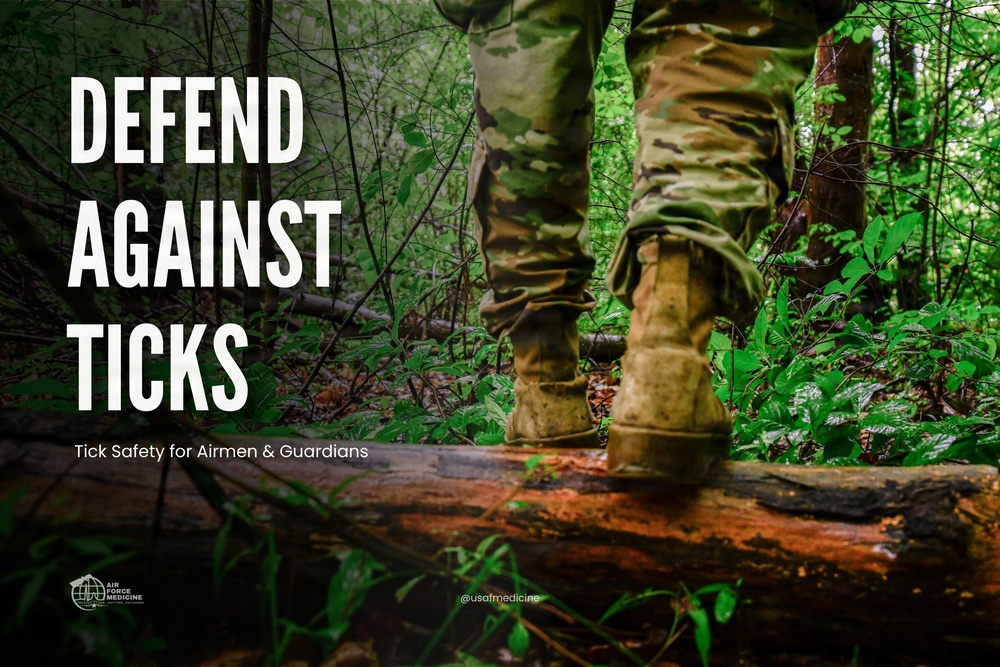
Photo By Jazmine Gutter-Robbins | Graphic outlining tick safety for Airmen and Guardians. (U.S. Air Force graphic by...... read more read more
For Airmen and Guardians, readiness means protecting their health wherever their day takes them, including on wooded trails, grassy training areas, field exercises and during time outdoors with family.
Ticks are typically small in size, but some may transmit diseases that can significantly impact military readiness. These parasitic arachnids are most active as the season warms into spring and summer months, though service members must remain alert to tick exposure, which can occur year-round.
The Department of War closely monitors tick-borne diseases since symptoms can quickly compromise an Airmen or Guardian’s physical readiness, resulting in lost duty days and potential long-term health complications.
“Practicing personal protective measures against ticks is a direct action to preserve force health, maintain operational strength and ensure mission readiness,” said U.S. Air Force Lt. Col. Timothy Davis, medical entomology consultant and theater preventive medicine flight commander at Kadena Air Base, Japan.
While Lyme disease is one of the most recognized tick-borne illnesses in the United States, the Department of War and Centers for Disease Control and Prevention also monitor cases for Rocky Mountain spotted fever, anaplasmosis, ehrlichiosis and babesiosis.
Know about alpha-gal syndrome
Lone star tick bites can also trigger alpha-gal syndrome, an allergic condition that can have lasting implications for those affected. Unlike Lyme disease, which is caused by bacteria, AGS involves an immune response to alpha-gal, a sugar molecule found in most mammals.
AGS reactions can be delayed for several hours after consuming mammalian meat and byproducts or other goods containing alpha-gal. Symptoms can range from hives and gastrointestinal problems to more serious allergic reactions.
For service members, the condition can present unique challenges to nutrition and field operations. Davis noted that an AGS diagnosis may require careful planning around military meals and other deployment considerations.
Build layers of protection
The most effective way to prevent tickborne illness is to reduce the chance of being bitten. Davis shared personal protective measures outlined in Armed Forces Pest Management Board Technical Guide 36, identifying this resource as a primary reference used by public health and preventive medicine personnel to train Airmen and Guardians on personal protection before field exercises and deployments.
Steps to Prevent Tick Bites
Post-outdoor tick check
Davis emphasized that tick prevention does not end when outdoor activity is over.
After spending time outdoors, check your entire body for ticks. Pay particular attention to areas such as behind the knees, under the arms, around the waist, behind the ears and along the scalp. Showering soon after outdoor activity can also help remove unattached ticks.
Despite the risk of tick exposure, Davis said these proactive measures can contribute to increased safety when outdoors.
“Do not let the threat of ticks slow you down or keep you inside,” he said. “Physical fitness, mental resilience, and family bonding are built outdoors. By taking a few proactive minutes to apply repellent and treat your gear, you can safely enjoy the outdoors, stay fit, remain healthy, and be ready to win when the nation calls!”
Got a tick bite?
If an attached tick is found, remove it promptly with fine-tipped tweezers. Service members should also pay attention to changes in their health following potential exposure.
Early symptoms associated with tickborne illnesses can include fever, fatigue, headache, muscle or joint aches and a rash. Davis said that the rash does not always appear in the classic “bull's-eye” pattern and may instead appear as a solid pink-to-red patch.
If symptoms develop after spending time in an area where ticks are present, seek medical evaluation and tell your healthcare provider about the potential exposure. Davis recommended informing providers about recent field training, land navigation or time spent in wooded or grassy areas because that information can help inform the evaluation.
The Defense Health Agency offers free tick testing and pathogen identification, through milTICK, to Department of War personnel and dependents based in the United States. The CAC-enabled dashboard also monitors cases of various tickborne illnesses across statewide installations.
Visit the DHA tick webpage for more information.
| Date Taken: | 09.01.2026 |
| Date Posted: | 09.01.2026 14:38 |
| Story ID: | 573696 |
| Location: | FALLS CHURCH, VIRGINIA, US |
| Web Views: | 16 |
| Downloads: | 0 |

This work, Tick prevention begins before stepping outdoors, by Maristela Romero, identified by DVIDS, must comply with the restrictions shown on https://www.dvidshub.net/about/copyright.

No keywords found.





