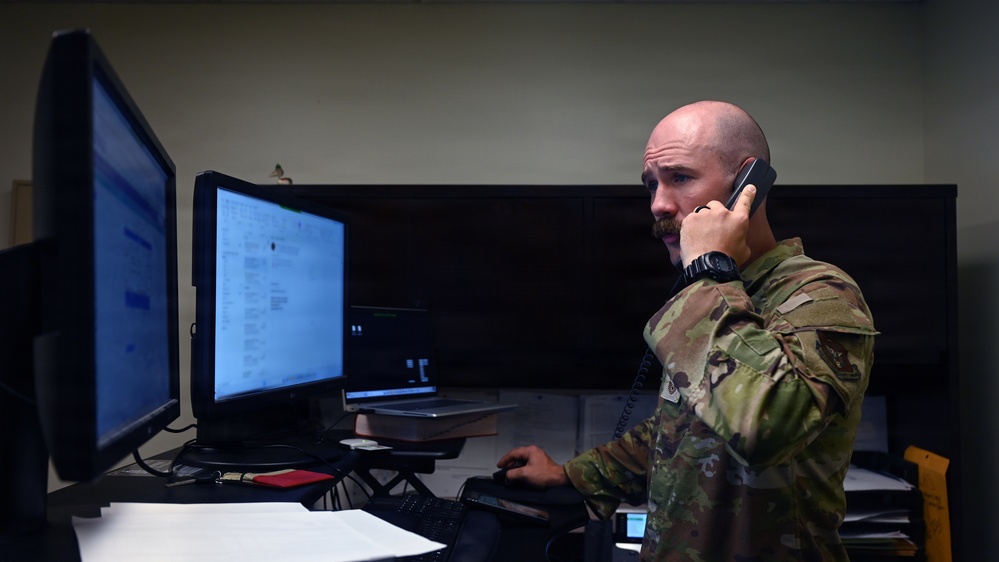
Photo By Jessica Kendziorek | Master Sgt. Ryan Wallace, 403rd Logistics Readiness Squadron section chief of ground transportation, works on preparing equipment for deployers, scheduling training, and organizing fleet resources. He is responsible for managing 19 shops and handling unit deployment manager responsibilities. (U.S. Air Force photo by Jessica L. Kendziorek) see less
| View Image Page
KEESLER AIR FORCE BASE, MISSISSIPPI, UNITED STATES
When traditional Air Force reservists—part-time service members who balance civilian careers with military service—arrive for their monthly Unit Training Assembly they have approximately 16 hours to hone their combat readiness.
The transition from civilian life to military execution is coordinated by the 403rd Wing’s full-time civilian workforce and Air Reserve Technicians during the month.
Air Reserve Technicians, or ARTs, are unique career professionals who work as full-time federal civilian employees during the week and serve as uniformed military reservists in the same unit on UTAs, which are commonly referred to as drill weekends. Without these full-time personnel, the wing's daily mission would pause between training assemblies.
"Our ARTs and civilian workforce provide the continuity that keeps the wing operating between UTAs," said Chief Master Sgt. Tige Platt, 403rd Wing command chief. "Without our full-time workforce, we would spend much of each UTA trying to restart the organization instead of advancing the mission."
Maintaining daily momentum falls on full-time leaders who spend weekdays preparing equipment, scheduling training, and organizing resources.
For Master Sgt. Ryan Wallace, 403rd Logistics Readiness Squadron section chief of ground transportation, weekdays focus on this preparation. His duties include managing the 403rd Wing fleet across 19 shops and handling unit deployment manager responsibilities, such as tracking training, reviewing forms, and scheduling appointments.
This weekday groundwork is vital to the execution of the drill weekend. Wallace coordinates tasks ranging from borrowing heavy vehicles from active-duty counterparts to arranging late-night shuttles for reservists flying in on scheduled military charter flights, commonly referred to as "rotators," from Houston and Atlanta. By preparing these assets and securing vehicles on Friday, the squadron ensures training can be completed during the UTA, rather than spending drill time moving cargo pallets.
Platt said this weekday coordination makes the military's Total Force model—which integrates active-duty, Guard, and Reserve components—highly effective.
Throughout the week, the full-time staff works to resolve administrative bottlenecks, monitor medical readiness, and prepare equipment. Platt said resolving these issues early protects part-time Airmen from administrative delays, allowing reservists to focus on training and individual readiness when they arrive.
"Our reservists should not have to spend Saturday morning waiting for the wing to get ready for them," Platt said. "We need to be ready when they walk through the door."
Successful preparation results in purposeful activity on a Saturday morning. When Airmen understand their objectives and begin training on schedule without equipment delays, it reflects the coordination completed by the full-time staff days prior.
In addition to managing equipment and resources, full-time personnel hold the wing's institutional memory, which is critical during sudden, real-world taskings. Wallace utilizes the wing’s contacts to quickly source deployers and pull up-to-date rosters, bypassing the need to wait for a drill weekend.
Once the UTA weekend arrives, the operational focus for these full-time leaders shifts from day-to-day tasks to instruction and evaluation. Platt emphasized that this hands-on mentorship is a key component of the program. Experienced ARTs do not just teach junior Airmen how to perform a task; they explain how that task connects to the broader combat mission, preserving critical knowledge for the next generation.
According to Platt, a well-prepared drill weekend directly impacts the retention of traditional reservists, who balance civilian careers and families with the demands of military service.
"Every hour spent waiting for paperwork, equipment, system access, or instructions is an hour we cannot use to improve mission readiness," Platt said. "When Airmen leave a drill weekend knowing they became more proficient, contributed to the mission, and were part of an organization that valued their time, they are more likely to continue serving."
Platt said that the dedication of the full-time staff also honors the civilian employers who support their employees' military service. Because of the weekday preparation by ARTs and civilians, reservists are provided with a productive and meaningful training environment, allowing Airmen to remain ready to deploy at a moment's notice and return to their civilian workplaces knowing their military time was used well.

 Subscribe






