
(e.g. yourname@email.com)

Forgot Password?

    Digital Visual Information Distribution System Logo

    JBLM teens brief Garrison commander, spur changes for youth

    JBLM teens brief Garrison commander, spur changes for youth

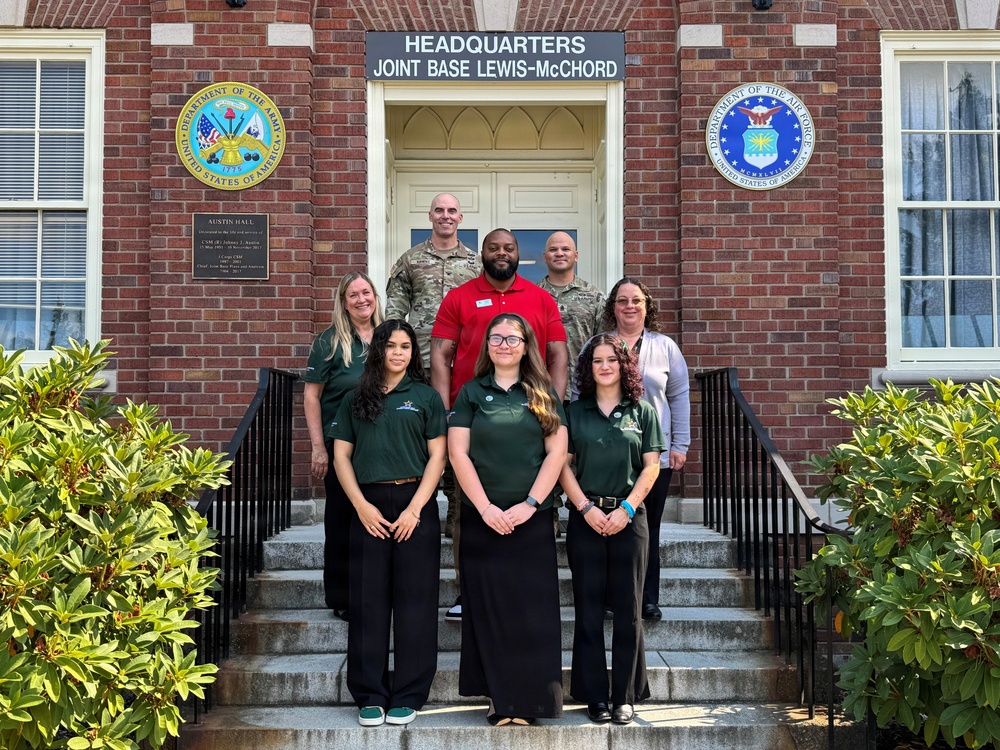
    Photo By Allison Hoy | (From back, left to right) Joint Base Lewis-McChord Garrison Commander Col. Joseph...... read more read more

    TACOMA, WASHINGTON, UNITED STATES

    08.28.2026

    Story by Allison Hoy 

    Joint Base Lewis-McChord Public Affairs Office     

    JBLM teens brief Garrison commander, spur changes for youth

    JOINT BASE LEWIS-McCHORD, Wash. – Three Joint Base Lewis-McChord teenagers took the helm at Garrison Headquarters on August 26, briefing Garrison leadership on top issues faced by military youth and proposed solutions.

    Their presentation, including information from the 2026 Department of War’s Joint Service Teen Council and Installation Management Command’s Youth Leadership Forum, led JBLM’s command team to begin addressing the issues, discussing potential actions to further prepare the base’s youth for future success, prevent negative peer culture and substance abuse, and ensure teens have access to available programs and resources.

    All of the young women are active members of JBLM’s Hillside Youth Center, Lewis Main; attend Lakes High School in Lakewood; and have participated in various leadership organizations, including the Military Teen Ambassador Steering Committee and Pacific Teen Council.

    Peyton Cryder, 16, briefed first. The 2026 Washington State Military Youth of the Year has visited the Pentagon twice, where she spoke about military youth issues. When addressing JBLM Garrison Commander Joseph Handke, Garrison Command Sgt. Maj. Ronald Hansen, and Garrison Chief of Staff Greta Buccellato, she described the Joint Service Teen Council’s 2026 themes.

    “The Joint Service Teen Council is a council that brings together military teen leaders from all military branches and gives them an opportunity to speak up about important issues they face on their installations,” Cryder explained. “After sorting through 60 different issues, we narrowed it down to three military-wide issues that I’ll be briefing you on today.”

    The Joint Service Teen Council topics covered and recommended solutions included:

    1. Teen program support and protection: Protecting teen programs’ funding, staffing and resources.
      • “Our recommendation to solve this issue is to make teen programs essential, so they receive the proper funding, support and protection they need,” Cryder said.
    2. Teen road to future success: Equipping teens with the knowledge and skills necessary for workforce, college and life preparation.
      • “The recommendation for this issue is to create and expand future-ready programs that teach teens these skills through fun, engaging and hands-on activities, instead of just lectures and Power Points,” Cryder said.
    3. Access and availability: Ensuring teen programs and resources are effectively marketed and broadly accessible, specifically emphasizing support for mental health and overall well-being.
      • “Being a part of a military family and moving around a lot can make it hard to find support and stay connected,” Cryder said, recommending the creation of “a hub where it’s easy to find resources, information about programs, scholarships, mental health support, and other resources.”
      • Additional recommendations were “a system where teens who live off base still have access to the program and all of its benefits,” and “to include teens in the decision-making, asking the teens what they need and why, through surveys, focus groups, and teen councils, and use the feedback to improve programming,” Cryder said.

    Natalia Souffront-Ramos, 17, the 2025 Washington State Military Youth of the Year, and Taylor Bridges, 15, briefed the Garrison Command Team on the top four issues and suggested solutions discussed at the Youth Leadership Forum. The forum unitesteen representatives from across IMCOM, Army Reserve and Army National Guard garrisons to discuss issues, determine suggestions for change, and give their peers a unified voice.

    The Youth Leadership Forum topics covered and recommended solutions included:

    1. Substance abuse
      • “Youth are afraid to ask for help because they worry about the punishment, stigma or the consequences they may face or their family,” Souffront-Ramos said. “Our first recommendation is an anonymous system that would give them a safer first step to reach out. This could include anonymous texting, calling or online reporting where youth can ask questions or get connected to resources without immediately identifying themselves.”
      • Souffront-Ramos also recommended promoting real-life testimonials. “Hearing from somebody who has personally experienced … substance abuse can make that issue feel more real and relatable,” she said. “With this, it can help with recovery and getting the support that they need without feeling the fear or shame.”
    2. Negative peer culture
      • Souffront-Ramos recommended the creation of “standardized guidance that would make expectations and responses more consistent” regarding the handling of bullying, peer pressure and negative behavior, adding that “the guidance should also teach youth how to recognize bullying, exclusion, harassment, and unhealthy peer pressure.”
      • Additionally, Souffront-Ramos suggested preventing a negative peer culture by “creating a peer-led, positive culture program,” explaining that “a peer-led program could train other youth leaders to promote inclusion teamwork.”
    3. Essential skills
      • Bridges suggested offering interactive, peer-to-peer classes on essential life skills, including financial literacy, taxes, job applications and cooking.
    4. Job opportunities
      • Bridges recommended more job options and increased opportunities for job-shadowing and internships.
      • Bridges also suggested presentations on youth-focused entrepreneurship: “We would have guest speakers come in and explain how it works: How to start a business, how to maintain a business, how to brand yourself, and everything that we would need to start a business,” she said.

    The teens’ presentation was well-received.

    “I just have a very deep respect for military families, especially for military kids,” Handke said at the end of their briefing. “So, thank you very much for everything that you’re doing. This is great. I’m looking forward to working with you on these issues as we go forward.”

    The young women left the Garrison Headquarters feeling confident that they were helping to effect change for JBLM teens.

    “I think our voices were heard and I think that we got our point across, and I can’t wait to see what the future looks like,” Cryder said.

    To learn more about JBLM’s Hillside Youth Center, visit https://jblm.armymwr.com/programs/youth-center.

    NEWS INFO

    Date Taken: 08.28.2026
    Date Posted: 08.28.2026 17:28
    Story ID: 573503
    Location: TACOMA, WASHINGTON, US

    Web Views: 23
    Downloads: 0

    PUBLIC DOMAIN




