
Photo By Jeffrey Prater | Personnel from various USACE districts attend the USACE Prospect course on...... read more read more
At the heart of the U.S. Army Corps of Engineers (USACE) recreation and environmental stewardship missions lies a simple truth: we cannot do it alone. The sheer scale of managing our nation's water resources requires collaboration, innovation, and dedicated allies. Recently, this collaborative spirit was on full display during the USACE Prospect course on Partnerships in Natural Resource Management (NRM), an enlightening training event designed to empower our personnel with the capabilities of USACE NRM Partnership Authorities.
Led by Heather Burke, the USACE National Partnership and Volunteer Program Manager, alongside several expert members of the Partnership Advisory Committee, the course provided a comprehensive roadmap for navigating the various avenues of collaboration. From grassroots volunteer efforts to complex interagency agreements, attendees learned how to effectively leverage these tools to enhance USACE projects nationwide.
Beyond the invaluable curriculum, it was the instructors' engaging approach and dedication that truly set the tone for the week. Student feedback was incredibly positive, with participants highlighting the stellar dynamic in the classroom.
"They are great speakers, keeping the class engaged and making connections for those of all levels," noted one student when reflecting on the instruction. "With a highly diverse group of individuals, this type of dynamic teaching style is necessary."
Another student expressed deep gratitude for the supportive environment fostered by the leadership team: "I am so thankful for the willingness to engage with the students throughout the week. I have never had the instructors so willing to get to know the students during and after class that I really appreciated it. Keep up the great work!"
The Toolkit: Understanding Partnership Authorities
Navigating the landscape of USACE partnerships requires a solid understanding of the authorities derived from Water Resources Development Act (WRDA) legislation and governed by ER 1130-2-500. During the course, participants explored the full spectrum of partnership types, which range from the simple to the highly structured.
Key topics included the nuances of Challenge Partnerships, which allow USACE to team up with non-federal public entities and nonprofits (and even international partners) to complete projects on Corps-maintained lands. Contrary to popular belief, these agreements do not mandate a strict 50/50 cost share, offering much-needed flexibility.
The class also took a deep dive into the Handshake Program, an incentive initiative offering seed money from Headquarters to encourage partnering. While a Challenge Partnership Agreement is required for a Handshake project, the funds allow projects to flourish through a mix of partner contributions, including cash, volunteer labor, and materials.
Other critical partnership tools discussed included:
For personnel looking to determine the best path forward, the course highlighted the NRM Gateway as the ultimate resource, particularly the "Partnerships Agreement Decision Tree," which guides users to the correct authority for their specific needs.
This resource-rich approach resonated deeply with the class. When asked which subjects were most beneficial, one student shared, “Honestly, I enjoyed hearing of all the different types of partnerships that are available to us, depending on what fits the situation most appropriately. I think it was also great to learn about all the resources available to us on the gateway!”
Telling the USACE Story: The Role of Public Affairs
While the course heavily focused on the recreational partnerships business line, one of its most valuable takeaways was the intersection of NRM and Public Affairs (PA).
Many park rangers in attendance were actively developing their skill sets but realized they lacked the knowledge of how to effectively interact with their public affairs teams. When NRM professionals understand how to engage with the public, NGOs, state, tribal, and other federal authorities, it unlocks incredible potential. By bridging this gap, PA teams can better assist NRM staff in amplifying their successes, highlighting partner contributions, and ultimately telling the USACE story to a broader audience.
Putting it into Practice: The New England District Field Trip
The absolute highlight of the Prospect course was the opportunity to step out of the classroom and see these concepts in action. The class embarked on an awesome field trip to the Cape Cod Canal, hosted by the USACE New England District (NED).
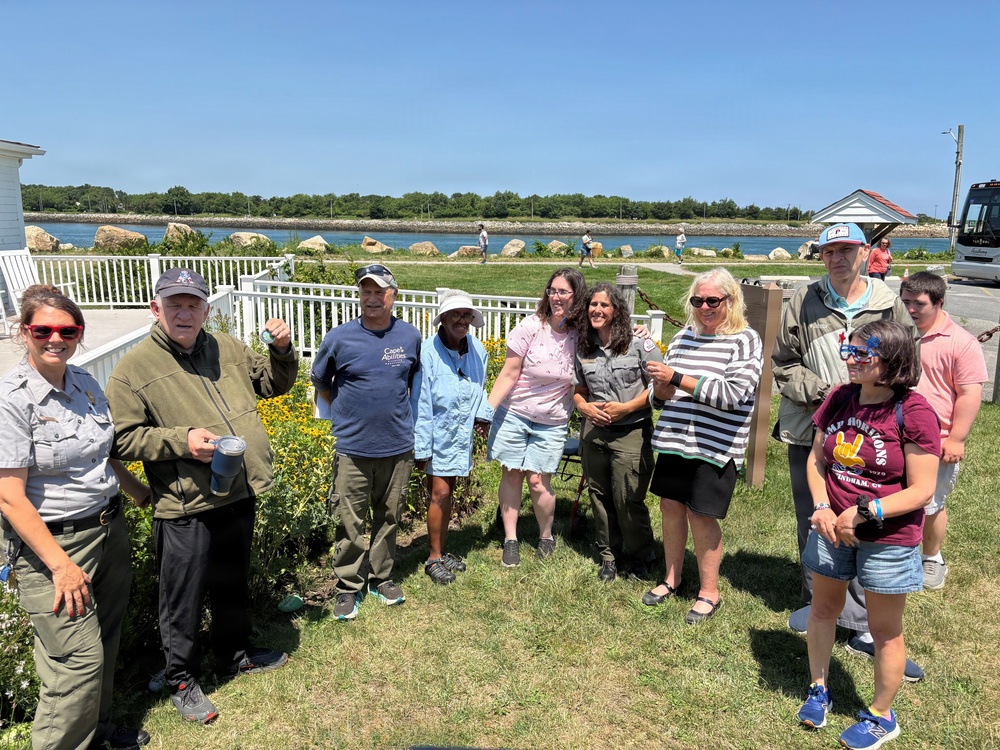
Starting at the NED Field Office, the group was warmly welcomed by Park Rangers Samantha Gray and Elisa Carey, who expertly led the day’s events. It was here that the power of partnerships came to life as the class was introduced to key NED partners, including AmeriCorps Cape Cod, Cape Abilities, and several dedicated volunteers.
The first stop was the Centralized Marine Traffic Control Center. This vital facility monitors all vessel traffic along the Cape Cod Canal greater than 65 feet in length, providing participants with a behind-the-scenes look at the vigilant operations required to keep this bustling waterway safe and efficient.
Next, the group visited the USACE Herring Run Recreational Area. Participants received a fascinating presentation on the local fish ladder, a critical piece of environmental infrastructure that allows river herring to make their arduous journey upstream to spawn in the waters of Great Herring and Little Herring Ponds. It was a perfect demonstration of USACE’s commitment to environmental stewardship and habitat restoration.
The Visitor Center Experience
The field trip culminated at the Cape Cod Canal Visitor Center, where the class received an in-person briefing from Cape Abilities, followed by a tour of the incredible facility and a well-earned lunch.
The Visitor Center is a masterclass in public engagement and education, offering deep insights into the rich history, fascinating features, and daily operations of the Cape Cod Canal. Inside, visitors discover a free, family-friendly museum packed with interactive exhibits designed for all ages. Guests can board a retired 40-foot US Army Corps of Engineers patrol boat, scan live radar and camera images to track vessels currently in the waterway, or even captain a virtual tugboat through the canal's currents. Additional exhibits allow visitors to investigate the cargo of transiting ships, discover local wildlife, and view a captivating film on the canal's history.
A Parade of Vessels
The Cape Cod Canal itself provides a unique, close-up view of maritime traffic as vessels utilize the strategic route between Cape Cod Bay and Buzzards Bay. From the banks of the canal, visitors can observe everything from the simple, rugged lines of a working harbor tug to sleek luxury yachts, massive cargo ships, jumbo car carriers, and commercial cruise lines. For the NRM Prospect class, the timing of the visit offered a truly special treat. As they observed the waterway, several majestic tall ships were transiting the canal, making their way to participate in the Sail4th 250 in New York and Sail Boston events. It was a breathtaking sight and a fitting conclusion to a course dedicated to preserving and managing the nation's incredible natural and recreational resources.
Ultimately, the Partnerships in NRM course proved that whether negotiating a Challenge Partnership Agreement, accepting a local contribution, or working alongside dedicated groups like Cape Abilities, the future of USACE projects relies on the strength of our alliances. By working together, we can ensure that engineering marvels like the Cape Cod Canal continue to serve, educate, and inspire for generations to come.
| Date Taken: | 08.17.2026 |
| Date Posted: | 08.18.2026 14:01 |
| Story ID: | 572673 |
| Location: | PALM BEACH GARDENS, FLORIDA, US |
| Web Views: | 19 |
| Downloads: | 0 |

This work, Building Bridges: Navigating USACE Partnerships in Natural Resources Management, by Jeffrey Prater, identified by DVIDS, must comply with the restrictions shown on https://www.dvidshub.net/about/copyright.


No keywords found.





