
 Subscribe
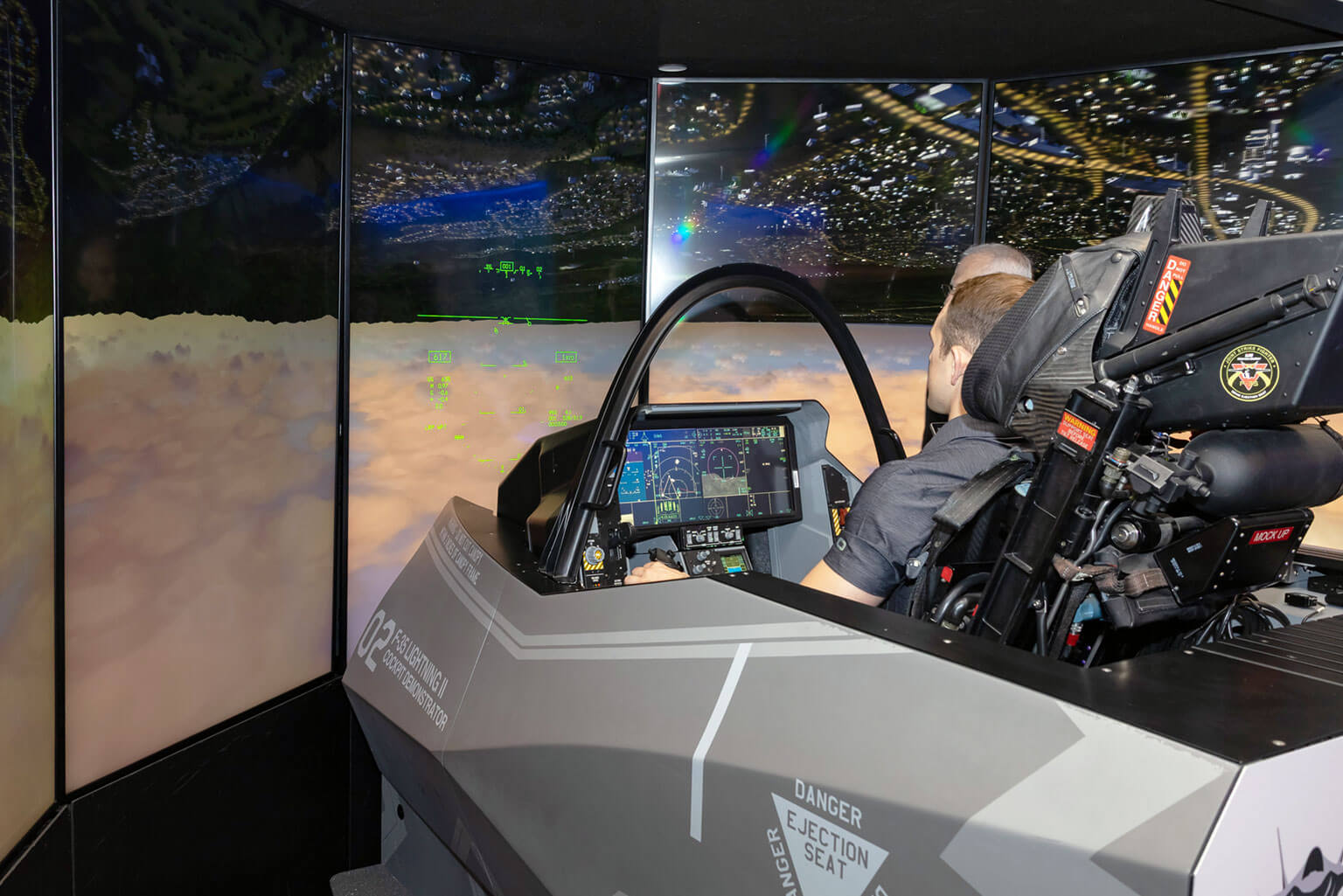 Cadet 1st Class Garrett Clark operates an F-35 simulator during his Cadet Summer Research Program 2026 experience at Lockheed Martin in Fort Worth, Texas. In addition to contributing to the ePilot research project, Clark gained exposure to aerospace engineering and aircraft design through hands-on experiences with industry professionals. (Photo courtesy of Garrett Clark)
By SSgt Michael Ward
U.S. Air Force Academy Strategic Communications
U.S. AIR FORCE ACADEMY, Colo. –During summer 2026, 287 USAFA cadets participated in Cadet Summer Research Program (CSRP), conducting research through more than 100 partnerships with military, government and industry organizations.
Cadets worked on projects spanning the Academy’s Strategic Research Areas, including artificial intelligence, aerospace engineering, cyber operations, space domain awareness and national security. Their research took them to organizations across the Department of Defense, federal government and defense industry.
The program provides cadets with an intensive undergraduate research experience focused on operationally relevant challenges. Through mentored research, cadets apply classroom knowledge while developing technical expertise, critical thinking and problem-solving skills applicable to their future roles as https://www.airforce.com/ and https://www.spaceforce.com/ officers.
Cadets conducted research across the Academy’s Strategic Research Areas, contributing to projects involving artificial intelligence, aerospace engineering, cyber operations, space domain awareness and national security challenges.
Cadet 1st Class Garrett Clark operates an F-35 simulator during his Cadet Summer Research Program 2026 experience at Lockheed Martin in Fort Worth, Texas. In addition to contributing to the ePilot research project, Clark gained exposure to aerospace engineering and aircraft design through hands-on experiences with industry professionals. (Photo courtesy of Garrett Clark)
By SSgt Michael Ward
U.S. Air Force Academy Strategic Communications
U.S. AIR FORCE ACADEMY, Colo. –During summer 2026, 287 USAFA cadets participated in Cadet Summer Research Program (CSRP), conducting research through more than 100 partnerships with military, government and industry organizations.
Cadets worked on projects spanning the Academy’s Strategic Research Areas, including artificial intelligence, aerospace engineering, cyber operations, space domain awareness and national security. Their research took them to organizations across the Department of Defense, federal government and defense industry.
The program provides cadets with an intensive undergraduate research experience focused on operationally relevant challenges. Through mentored research, cadets apply classroom knowledge while developing technical expertise, critical thinking and problem-solving skills applicable to their future roles as https://www.airforce.com/ and https://www.spaceforce.com/ officers.
Cadets conducted research across the Academy’s Strategic Research Areas, contributing to projects involving artificial intelligence, aerospace engineering, cyber operations, space domain awareness and national security challenges.
CSRP places cadets in environments where problems often do not have a predetermined solution. Cadets are given complex challenges and must develop solutions through research, collaboration and independent problem solving.
Dr. Jana Weiner, assistant director of Research Curriculum and Program, said research provides cadets with an opportunity to grow through uncertainty and develop the initiative required of future officers.
“Undergraduate research is widely recognized as a high-impact practice that enhances student learning and development, and CSRP extends that impact directly into officer development,” said Weiner.
Cadets also encounter setbacks throughout their projects and must adapt and communicate. Those experiences reinforce the importance of resilience, teamwork and relying on the expertise of others.
“Effective officers do not need to know everything, but they do need to ask good questions, admit gaps and rely on the expertise of the people around them,” said Weiner.
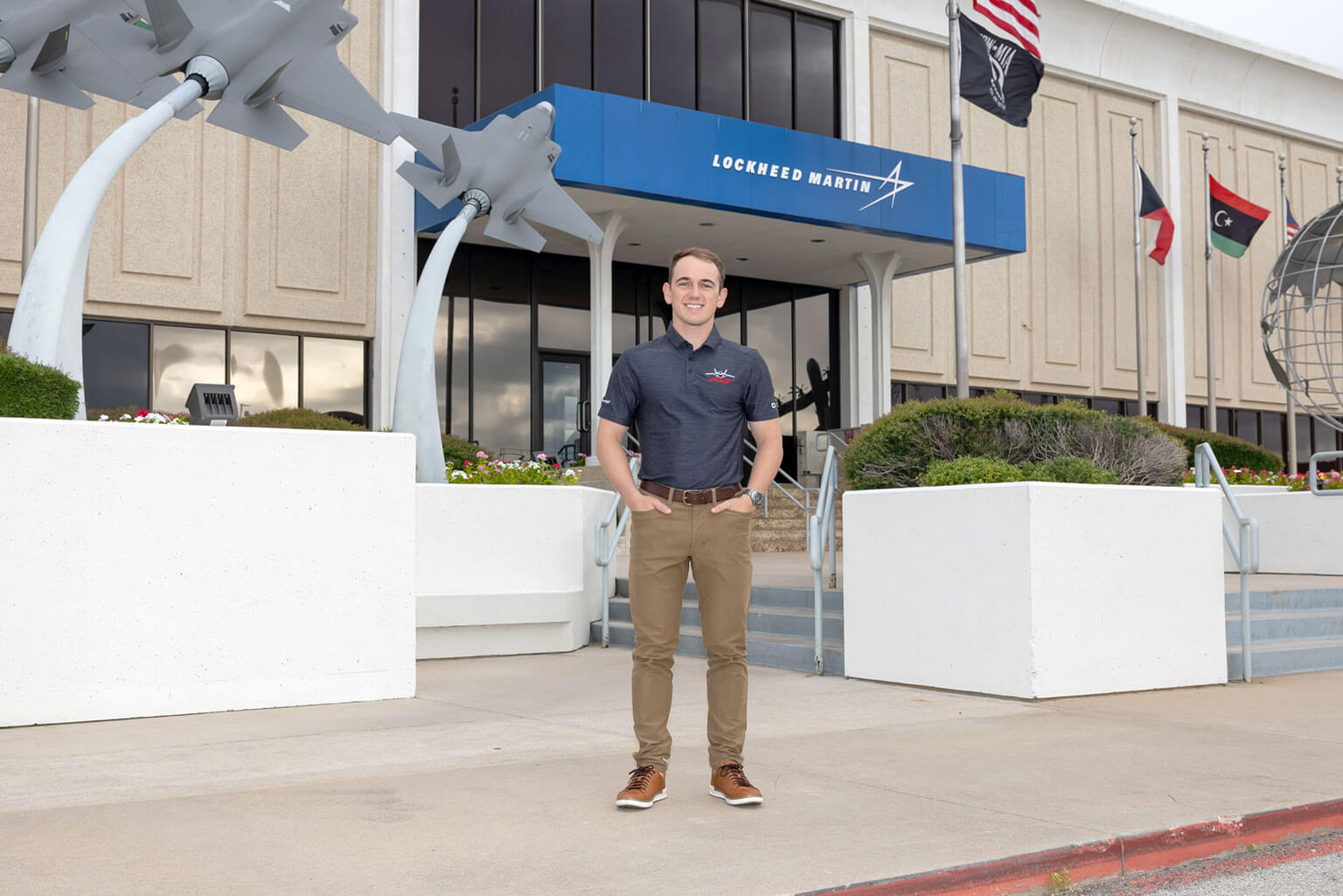 Cadet 1st Class Garrett Clark poses at Lockheed Martin in Fort Worth, Texas, where he participated in the Cadet Summer Research Program 2026. Clark collaborated on the ePilot project, using Model Based Systems Engineering to help develop a virtual copilot concept designed to improve pilot awareness, safety and mission effectiveness. (Photo courtesy of Garrett Clark)
Cadets work alongside engineers, scientists, military leaders and subject matter experts on research supporting military and national security challenges. At Lockheed Martin, Cadet First Class Garrett Clark worked on the ePilot project, a collaboration between Lockheed Martin and the Netherlands Aerospace Centre focused on developing a virtual copilot capable of monitoring pilot physiological and cognitive states. The project examines how technology can reduce pilot workload, improve situational awareness and enhance mission effectiveness. Clark used Model-Based Systems Engineering to develop system architecture that translates the concept into a functional design. “Real-world engineering isn’t about finding one right answer. It is about solving complex problems through collaboration, communication and continuous learning,” said Clark. Working alongside experienced engineers and mentors gave Clark insight into the defense industry while helping him develop skills he will carry into his Air Force career. “This experience gave me a firsthand look at how the defense industry and the Air Force work together to develop the technology our warfighters depend on,” said Clark. “It reinforced the importance of leading technical teams, thinking critically and embracing innovation to solve tomorrow’s operational challenges.” Beyond his research, Clark gained exposure to aerospace operations through opportunities such as touring the F-35 production line, flying the F-35 simulator and exploring cockpit design principles.
At Los Angeles Air Force Base, Cadet Second Class David Park worked with the 61st Communications Squadron to explore potential application of artificial intelligence at the squadron level, including ways to improve performance and automate processes. Park also helped define the role and qualifications of a Defensive Cyberspace Workforce Framework position. The experience gave him an opportunity to work alongside Air Force leaders and cybersecurity professionals while learning how emerging technologies are integrated into operational environments. “The most valuable experience has been the various mentorship opportunities from Los Angeles Air Force Base enlisted and officers, which has shown me the different pathways available for me to take and how leadership at every level matters,” said Park.
Cadet 1st Class Lily Johnson worked with the Defense Threat Reduction Agency and the National Nuclear Security Administration, gaining experience at the intersection of national security, international partnerships and the nuclear enterprise.
Through an academic study with U.S. Indo-Pacific Command, Johnson examined allied perspectives on extended deterrence and force posture in the region.
At NNSA Headquarters, Johnson explored the nation’s nuclear weapons enterprise and how technical innovation supports strategic objectives.
“Being at NNSA gave me exposure to real-world connections to the classroom, showing how nuclear physics and engineering are applied to carry out political objectives and meet military needs,” said Johnson.
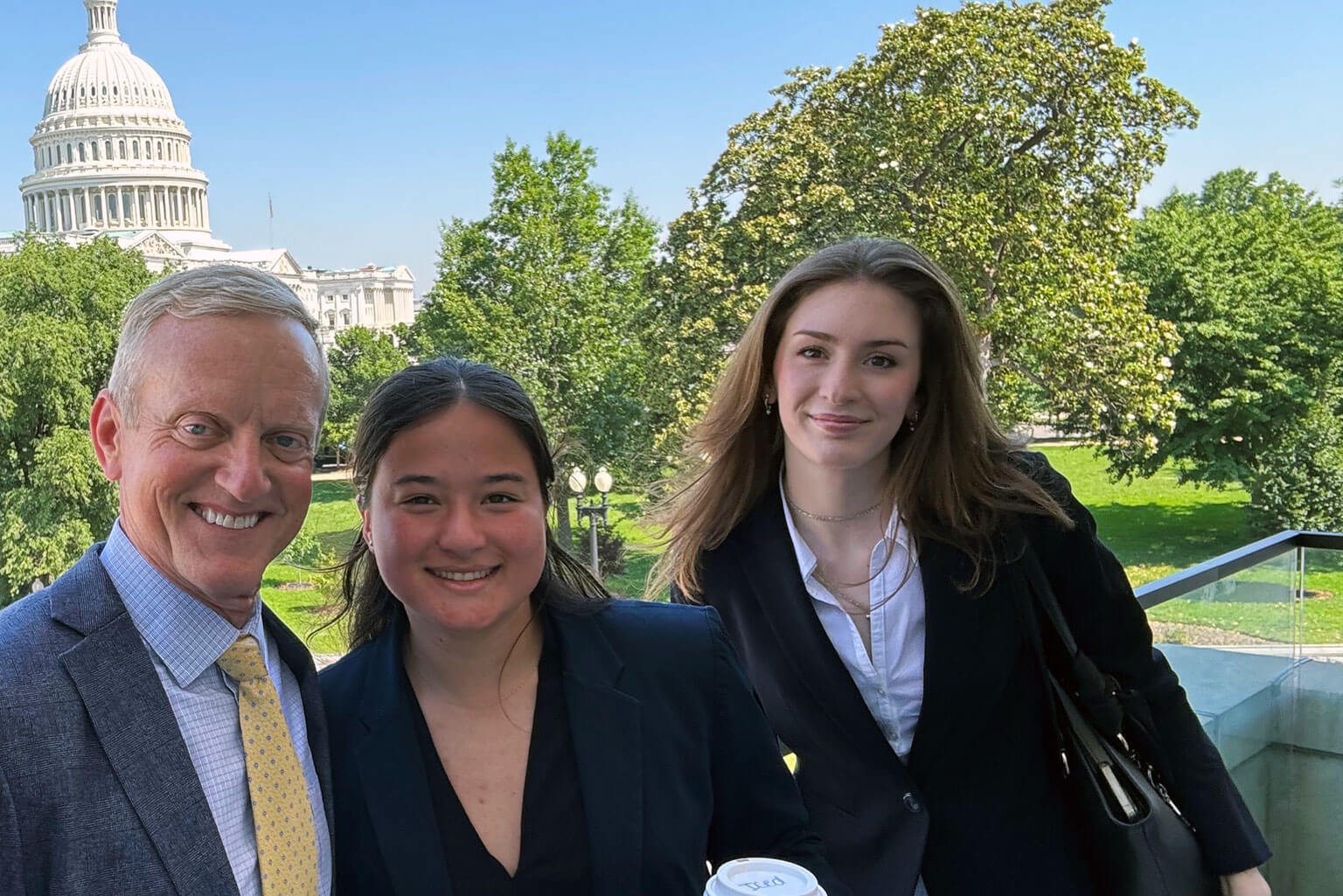 Cadet 1st Class Lily Johnson (center) poses with Paul Huffman (left), director of the Front Range Consortium, and Ava Knox (right), a student at the University of Colorado Colorado Springs, during her Cadet Summer Research Program 2026 experience in Washington, D.C. Johnson participated in research with the Defense Threat Reduction Agency and the National Nuclear Security Administration, examining extended deterrence, force posture in the Indo-Pacific region and the nation’s nuclear enterprise. (Photo courtesy of Lily Johnson)
CSRP bridges classroom learning and operational application by giving cadets experience addressing research challenges before entering the Air Force or Space Force. Weiner said the program helps cadets develop a clearer understanding of their future careers by exposing them to current and former military leaders, senior civilians and subject matter experts. Through these interactions, cadets gain insight into the operational Air Force and Space Force and the type of leaders they hope to become. Cadets return to the Academy with navigating uncertainty, collaborating across disciplines and approaching problems that may not have an obvious solution. Weiner said she hopes cadets leave the program with sharper critical-thinking skills, a better understanding of the challenges facing the Department of the Air Force and a renewed sense of purpose as future officers. “Curiosity, intellectual humility and comfort with uncertainty are not research skills; they are leadership skills,” said Weiner.
| Date Taken: | 08.14.2026 |
| Date Posted: | 08.14.2026 17:19 |
| Story ID: | 572473 |
| Location: | U.S. AIR FORCE ACADEMY, COLORADO, US |
| Web Views: | 12 |
| Downloads: | 0 |

This work, Cadet Summer Research Program 2026 Prepares Cadets For Future Missions, by SSgt Michael Ward, identified by DVIDS, must comply with the restrictions shown on https://www.dvidshub.net/about/copyright.




